Why Dragon Talks

Welcome to Dragon Talks, a space for students, practitioners, and therapists of Chinese medicine. Here, we explore classical wisdom and modern insights together, sharing practical guidance, reflections, and inspiration for your journey in healing and learning.
Paul Freedman shares reflections on Classical Chinese Medicine and Japanese acupuncture, inspired by the teachings of the Shang Han Za Bing Lun, The Yellow Emperor's Classic, bridging ancient wisdom with modern clinical insight.
At Dragon Talks, everyone can enjoy free insights, reflections, and resources on Chinese medicine and Japanese acupuncture. For those who want to go deeper, our premium subscription offers exclusive content: in-depth articles, case studies, teaching notes, and advanced reflections designed for students, practitioners, and therapists looking to expand their understanding and clinical skills.
Join our community to access more detailed guidance, practical tools, and ongoing learning opportunities — whether you’re just starting out or are an experienced practitioner.
The Dragon
The dragon represents the ancient wisdom of Chinese Medicine and so it is fitting to call my website Dragon Talks.
The dragon represents the transformational energy around us and I hope that the knowledge I share will help you.
The ancient Chinese believed they are descendants of the Dragon. How can this be? Everybody knows dragons do not exist Mister Freedman.
The Dragon in ancient Chinese thought and Daoism mean the same thing. What does, Ming men, Taiji, Yin and Yang Qi, Yuan qi, and Qian Heaven have in common? The symbolism of the Dragon represents them all.
The symbol of the Dragon is related to the symbol of Taiji. It is the Taiji, or Supreme ultimate that allows for the resurgence of life and renewal of the cycle of becoming, being, decay, and oblivion.
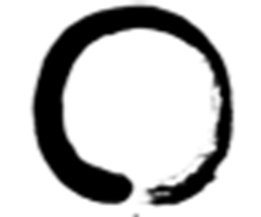
The symbol of Taiji is a circle.

The symbol of Taiji was originally a snake devouring itself.
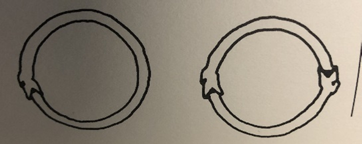
This symbol tuned into the Yin and Yang Qi symbol we know in the west.
The curved line in the ancient Chinese character for Dragon is taken from the character of the Snake. The character for Snake becomes the character for Dragon by adding arms and legs.
The ancient Chinese Character for Dragon is script.
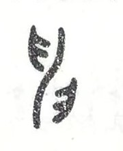
The modern character for Dragon

In this radical the bottom left is the dragon mouth, the upper left is the head, the right is the body, lower right is the tail.
What does the Dragon represent? It is the Taiji or Supreme ultimate that allows for the resurgence of life and renewal of the cycle of becoming, being, decay, and oblivion. The Taiji is what starts each cycle. The Dragon is what starts the transformation cycle.
Miyoko Nakano suggests how the earliest form of the Dragon derived from the image of a Snake devouring itself. This is related to the Taiji symbol where each half represents a Snake/Dragon devouring the other.
Fujido Etymological Dictionary states; The Dragon is a mythical animal that looks like a giant Snake. It has four legs, horns, and long whiskers. The Dragon creates the clouds and causes rain to fall to the ground.
The transformative energy of Yang causes the clouds to form, which then turn into rain. The Yang nature of the Dragon is what brings Water to life.
The Dragon clearly represents that of deep, generative, cosmic forces. The Dragon makes the Fire come out. The generative energies are activated and the nutritive yin Fire comes into play. The association of the Water symbol furthers the description of the Kidney energy as primary and creative.
It is Ming men and the Dragon that connect us to the Dao. In the Tong Su Shang Han Lun commentary from 1916 it is written; The existence of the root is described as Dantian in Daoism, and as Ming men in the Nan Jing.
The existence of the root is referring to the Source. Ming men is another word for the Yuan qi or Heavenly qi, or Pre-natal qi, or Dragon fire.
The Dragon represents the Qian Heaven, the Original qi, and the transformative power of Yang qi. Therefore it is part of the eternal Dao. Therefore we are descendants of the Dragon fire. This Dragon fire is distributed in our body by the San jiao.
Sugiyama states; The San jiao and the moving Qi between the kidneys are basically the same thing, but later they divide. The San jiao is the primary verbal knowledge of the medical Dao.
The Moving qi between the Kidneys is felt around the navel, which is the center of our body.
What do we seek with Chinese Medicine?
All Chinese Medicine must be based on certain governing principles to be considered Chinese Medicine. These principles are reflected in the following text from the Classic text Huang Di Nei Jing Su Wen. The title of this text can be translated as the Yellow Emperor’s Classic.
Yellow Emperor’s Classic;
Huang Di, As for Yin and Yang, they are, the Dao of Heaven and Earth, the fundamental principals governing the myriad beings, father and mother to all changes and transformation.
The basis and beginning of generating life and killing, the palace of Spirit brilliance.
To treat diseases, one must search for the Basic.
Yin and Yang qi are the way in which nature changes and transforms. They govern all living beings and are the source of the Spirit brilliance. The palace of Spirit brilliance is referring to the Source. This Source is where Yin and Yang qi come from. The word brilliance denotes a form of Yang qi and is synonymous with the Dragon. It is the Taiji which is the Source of Yin and Yang qi.
To treat disease we are told to look for it in the Basic. The Basic is seen as synonymous with the Taiji. The Taiji is the Source of all the Yin and Yang qi in the universe before it divides. As evidenced by the following texts.
Zhou Yi; The Great ultimate Taiji, is where the Basic qi is still blending or swirling before Heaven and Earth are divided.
Shou Wen; The Basic qi divides. The light , clear, Yang part becomes Heaven. The heavy, unclear, Yin part becomes Earth.
Basic qi is related to the cycles of birth, death, and rebirth.
Hou Han Shu; All living things have Qi, they are born and then they die. This is the common cycle of Heaven and Earth. This is nature. Death is when the Basic qi leaves the body and the Hun disperses, returning to the Root, returning to the beginning, returning to the cycle.
Unlock the Wisdom of the Dragon
Subscribe to Dragon Talks and awaken the transformational energy of the Chinese Dragon within your practice. Dive deeper into Chinese medicine, gain exclusive insights, and let ancient wisdom inspire your growth as a healer and student.
About this site
Dragon Talks is an independent publication launched in July 2025 by Paul Freedman. If you subscribe today, you'll get full access to the website as well as email newsletters about new content when it's available. Your subscription makes this site possible, and allows Dragon Talks to continue to exist. Thank you!
Access all areas
By signing up, you'll get access to the full archive of everything that's been published before and everything that's still to come. Your very own private library.
Fresh content, delivered
Stay up to date with new content sent straight to your inbox! No more worrying about whether you missed something because of a pesky algorithm or news feed.
Meet people like you
Join a community of other subscribers who share the same interests.
Start your own thing
Enjoying the experience? Get started for free and set up your very own subscription business using Ghost, the same platform that powers this website.