Choosing Between Bai Zhu and Cang Zhu

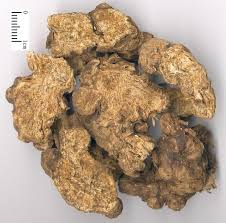
I came across an interesting comment in my book Jin Gui Yao Lue. "At the time of the Jin Gui Yao Lue writing, the two medicinals bai zhu and cang zhu were not differentiated from one another."
So, how to choose between Bai zhu Atractylodis macrocephalae rhizome and Cang zhu, Atractylodis rhizome. Which should you use for water qi?
Chapter 14 Line 5 Interior water manifests in yellowing and swelling in the whole body and head and eyes, a sunken pulse, and inhibited urination causing water disease.
If urination becomes spontaneously uninhibited, this means fluid collapse, which causes thirst. Yue bi jia zhu tang governs.
If we look at the trigram for Water we see two broken Yin lines with one solid Yang line in the middle. The solid Yang line represents Fire. Water contains Yang. Yang brings life to Water. Swelling of the body indicates a loss of Yang qi.

Tai yang is all the Yang of the body, it supports the surface, but also the interior. When the Yang qi fails to open the surface of the body cools off, but also the interior. It is the Lungs that are easily affected by the loss of Yang qi.
It is the sunken pulse that indicates this pattern is related to Water qi. Shao yin belongs to the South and Fire. It is the Tai yang that belongs to the North and Water. The sunken pulse describes a situation where Yang Fire is weak. The Yang Fire fails to transform fluids, which accumulate and cause pathology.
The following Line describes the pathology of Water qi.
Chapter 14 Line 3 Sunken and slippery pulses at the inch position reflect water qi in the middle; with a swollen face and eyes with heat effusion, this condition is named wind water. This appears with eyelids that are slightly swollen as if one had just gotten out of bed. With throbbing of the neck vessel, frequent coughing, and pitting of the hands and feet that does not spring back; this condition is wind water.
This formula transforms water. Fluid damage or collapse causes thirst. Thirst is a failure of Yang in transforming fluids.
If urination becomes spontaneously uninhibited, this means fluid collapse, which causes thirst. Yue bi jia zhu tang governs.
Yue bi jia zhu tang
ma huang 18 shi gao 24 sheng jiang 9 da zao 9 zhi gan cao 6 bai zhu 12
Is Cang zhu better for this formula, Let's take a look.
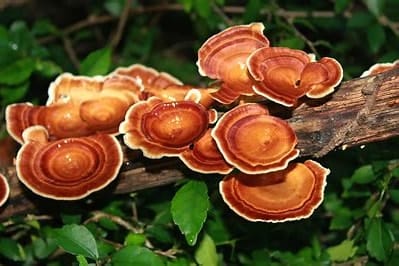
Bai zhu, Atractylodis macrocephalae rhizome
Warm, bitter, and sweet, bai zhu warms and dries Earth, and promotes urination.
It tonifies Tai yin qi of Spleen and Lung and strengthens the Spleen by drying and draining dampness, which allows normal function to return. It metabolizes fluids and so creates room for healthy new fluids.
Bai zhu does treat external cold and dampness.
Chao bai zhu, Atractylodis macrocephalae rhizome praep Earth stir fried
Stir frying with Earth makes it even more drying of fluids than unprepared bai zhu.
Flavors & nature: Sweet, bitter, and slightly astringent; warm.
Cang zhu, Atractylodis rhizome
Pungent, bitter, and warm, it promotes sweating and eliminates dampness, and is the main herb for dispelling cold dampness from the Tai yin channel.
Eliminates middle burner dampness and dries the Spleen.
Dries Earth dampness and disperses with bitter and pungent.
Conclusion
In choosing between bai zhu and cang zhu you need to decide how much dispersing and drying do you need to treat the Water qi.
If there is a great need to transform Water then the pungent Yang herb cang zhu is a better choice.