Jin Gui Yao Lue Lines

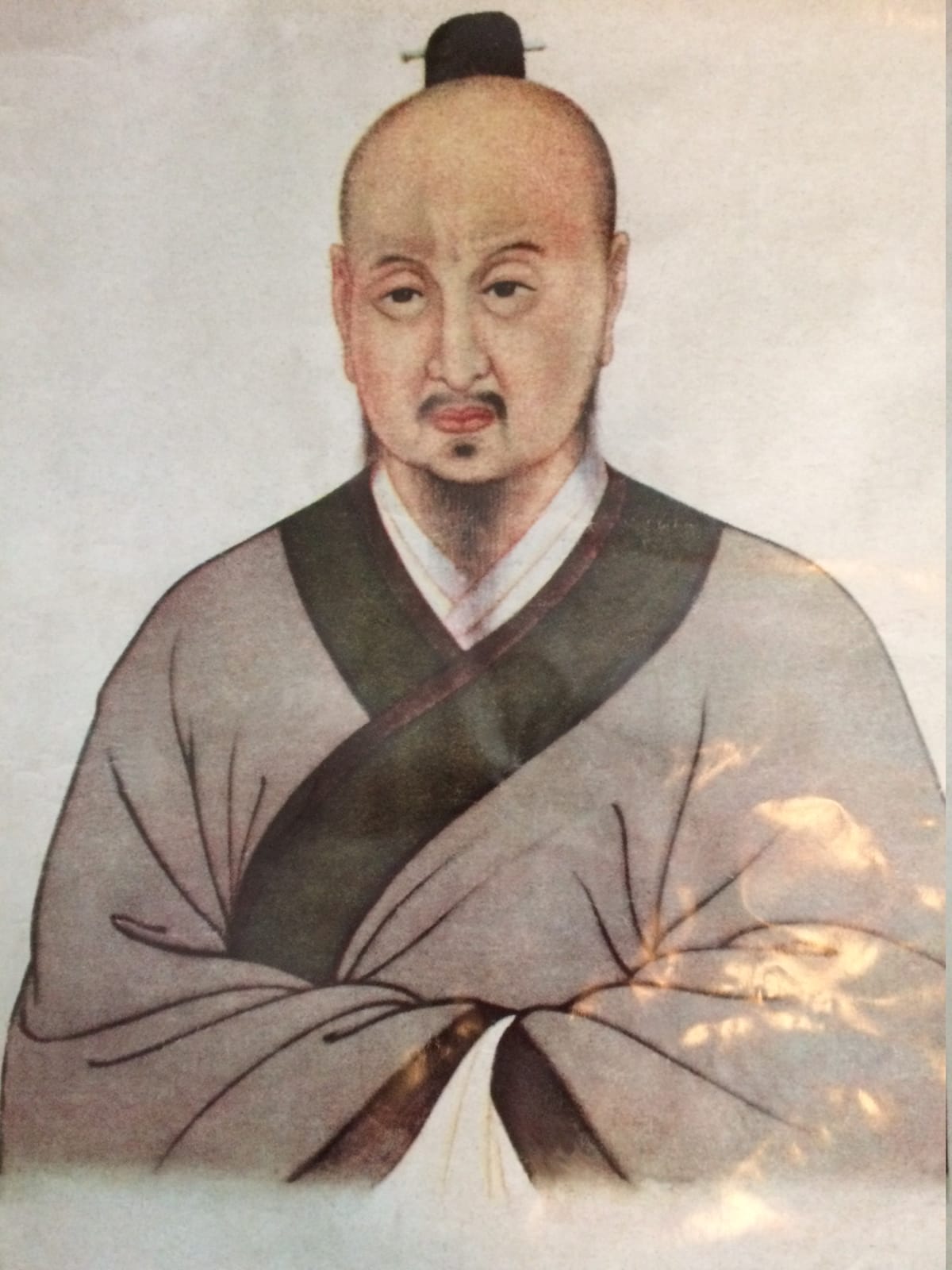
Chapter 1
Chapter 1 Line 1 Question: "Superior practitioners treat diseases before they arise. Why is this?"
The master said: "Treating disease before it arises means that when one sees a liver condition for example, one will know that the liver condition will pass to the spleen, and also that spleen must first be firmed. When the spleen remains effulgent at the end of each season, it will not contract evil, so it need not be supplemented.
Ordinary practitioners do not know about the passage of disease. When they see a liver condition, they do not understand the need to firm the spleen and they simply treat the liver."
For liver conditions, supplement with sourness, assist with burnt or bitter flavors, and benefit and regulate with sweet-flavored medicinal. Sourness enters the liver, burnt and bitter flavors enter the heart, and sweetness enters the spleen.
The spleen can damage the kidney, and when kidney qi is weak, water fails to move.
When water fails to move, heart-fire becomes exuberant and damages the lung. When the lung is damaged, metal qi fails to move, and when metal qi fails to move, liver qi becomes exuberant. Therefore, firm the spleen and the liver will recover spontaneously.
This describes the principal mystery of treating the liver through supplementation of the spleen. For liver deficiency, apply this method; do not apply it for excess patterns.
The classic states 'Do not drain deficiency or replenish excess. Supplement the insufficiency, and reduce the superabundance'. This is the meaning; it also applies to the other viscera.
Chapter 1 Line 2 Human beings are endowed with the five natural laws, and they also grow through the influence of wind-qi. Wind-qi can engender the myriad of things, but it is also capable of causing harm to the myriad of things; just as water helps a boat to stay afloat, it can also cause it to sink.
If the true origin of the five viscera is free, then a person will be in harmony. Guest qi and evil wind may strike, often leading to death. For thousands of disasters, the causes include not more than three aspects. Firstly, the channels and collaterals contract evils which later enter the viscera and bowels; this is an internal cause.
Secondly, the passage of blood in the vessels of the four limbs and nine orifices becomes congested; this is due to evil striking the skin at the exterior.
The third includes sexual intemperance, incised wounds, and animal and insect wounds. Measuring these three, all causes of disease are included. If a person can nourish himself and remain cautious, and not let evil wind invade the channels and collaterals; or if he can treat the evil as soon as it strikes the channels and collaterals before it has passed to the viscera and bowels; or if he applies conduction exercises, exhaling and inhaling, acupuncture and moxibustion, or medicinal paste rubbing as soon as sensations of heaviness and stagnation occur in the four limbs, the nine orifices would not become blocked. Furthermore, he should obey the laws and avoid animal harm, restrain sexual activity, regulate heat, cold, bitterness, sourness, acridity, and sweetness with clothing and diet, and not let his body become debilitated; then diseases will have no access to the interstices (cou li). Cou is the place where the three burners connect with the true origin; it is also from whence qi and blood spring. Li is the grain of the skin and organs.
Chapter 1 Line 3 Question: "Patients display qi and color as observed on the face. I wish to hear an explanation."
The master said, "A green-blue color on the bulb of the nose reflects abdominal pain, and with aversion to cold, the condition is terminal. Slight blackness on the bulb of the nose reflects water qi. A yellow complexion reflects cold in the chest. A white complexion indicates blood collapse. With a slightly red facial complexion in the wrong season, the condition is terminal. Gaping eyes reflect tetany, which is also terminal. In addition, a green-blue facial complexion indicates pain, black indicates taxation, red indicates wind, yellow indicates difficult defecation, and a fresh bright facial complexion indicates lodged rheum."
Chapter 1 Line 4 The master said: "A quiet patient with a tendency to cry out from shock has disease in the joints, a low and faint voice, and the disease is between the heart and diaphragm; with a fine and long voice, the disease is located in the head."
Chapter 1 Line 5 The master said, "Breathing with raised shoulders reflects hardness in the heart.
Breathing that induces qi ascent in the chest results in cough. Breathing with gaping of the mouth and shortness of breath reflects lung wilting and foaming at the mouth."
Chapter 1 Line 6 The master said: "Slightly rapid inhalation reflects disease in the middle burner. An excess pattern can be cured by purgation, but a deficiency pattern is terminal. With disease in the upper burner, inhalation is skipping; with disease in the lower burner, inhalation is long. These are both difficult to treat. When breathing is accompanied by generalized shaking, the condition is terminal."
Chapter 1 Line 7 The master said: "The movement of the pulse at the inch opening should manifest in accordance with the effulgent time period of the viscera. For example, the color of liver effulgence is green-blue, and each of the four seasons also has a corresponding color.
When the associated color of the liver is supposed to be green-blue, but it is white instead, this is not the correct color; nor does the pulse reflect the corresponding time.
All of these manifestations indicate disease."
Chapter 1 Line 8 Question: "There are cases where the season has not arrived, but the climate has; where the season has arrived, but the climate has not; where the season has arrived, but the previous climate remains; and where the season has arrived, but in excess. What does this mean?"
The master said, "At midnight on the sixtieth day after the winter solstice, shaoyang arises. During the time of shaoyang, yang begins to engender and the weather becomes warm. When before the sixtieth day, the weather becomes warm, this is a time when 'the season has not arrived, but the climate has'. If after the sixtieth day, the weather has not become warm, this is 'the season has arrived, but the climate has not'. If after the sixtieth day, great cold still remains, this is 'the season has arrived, but the previous climate remains'. If after the sixtieth day, the weather is as warm as the fifth or sixth month of midsummer, this is 'the season has arrived, but in excess."
Chapter 1 Line 9 The master said: "A patient with a floating pulse in the front position indicates disease of the exterior; a floating quality in the rear indicates disease of the interior that manifests with lumbar pain, back rigidity, and an inability to walk. There will be shortness of breath and exhaustion."
Chapter 1 Line 11 Question: "The pulses at the inch opening are sunken, large, and slippery. Sunken reflects excess, and slippery reflects qi; the excess contends with qi. Blood and qi entering the viscera will result in death, and entering the bowels will result in resolution. This is called sudden reversal. What does it mean?"
The master said: "Green-blue lips and mouth with generalized cold indicates blood and qi entering the viscera, which will result in death. If the body is in harmony and spontaneous sweating occurs, this indicates blood and qi entering the bowels, which will result in resolution."
Chapter 1 Line 12 Question: "Deserted pulses with entering of the viscera will result in death, where entering the bowels will result in resolution. Why is this?"
The master said: "Not only in one disease, but in all hundred diseases this is so. For example, a wet spreading sore that flows from the mouth to the four limbs can be treated, and yet one that flows from the four limbs to the mouth is untreatable. Diseases of the exterior are treatable; those which enter the interior are terminal conditions."
Chapter 1 Line 14 Question: "Among diseases, there are those which require urgent rescue of the interior and those which require urgent rescue of the exterior. What does this mean?"
The master said: "For diseases that follow purgation where incessant clear food diarrhea and generalized pain occur, urgently rescue the interior. After treatment, with generalized pain and regular elimination, urgently rescue the exterior."
Chapter 1 Line 15 For intractable disease accompanied by a sudden illness, one should primarily treat the sudden illness, and then the intractable disease.
Chapter 1 Line 16 The master said: "Diseases of the five viscera can be cured by their appropriate correspondences. Diseases of the five viscera have their own aversions; each follows their corresponding disinclinations and so become affected. If there are foods that the patient has always resisted, and he suddenly desires them, there will be heat effusion."
Chapter 1 Line 17 For all diseases of the viscera, when attacking, attack according to their reliance. If there is thirst, apply zhu ling tang. This principle can be applied to other diseases.
Another version, All diseases in the viscera, if they are to be attacked, should be attacked in accord with what evil the patient has contracted. For example, for thirst, I give zhu ling tang.
Chapter 2
Chapter 2 Line 1 Tai yang disease with heat effusion and absence of sweating but with aversion to cold is referred to as hard tetany.
Chapter 2 Line 2 Tai yang disease with heat effusion and sweating but with no aversion to cold is referred to as soft tetany.
Chapter 2 Line 3 Tai yang disease manifesting with heat effusion and sunken fine pulses is called tetany. This is difficult to treat.
Chapter 2 Line 4 In tai yang disease, excessive use of the sweating method leads to tetany.
Chapter 2 Line 5 Wind disease will lead to tetany when treated with purgation. With sweating methods, hypertonicity is certain to occur.
Chapter 2 Line 6 For a person with sores, even though there is generalized pain, he should not be treated with sweating, or tetany will occur.
Chapter 2 Line 7 For a person with sores, even though there is generalized pain, he should not be treated with sweating, or tetany will occur.
Chapter 2 Line 8 Sudden abdominal distention indicates that the condition is on the verge of resolution. If the pulses are the same as before, or hidden and wiry, tetany remains.
Chapter 2 Line 9 The pulses of tetany, when pressed, are as tight as a cord and palpable from the inch to the cubit position.
Chapter 2 Line 10 Tetany conditions accompanied by moxibustion sores are difficult to treat.
Chapter 2 Line 11 When tai yang disease appears with all signs present, but with stretched stiffness of the body, and the pulses are sunken and slow; this is called tetany. Gua lou gui zhi tang is indicated.
Chapter 2 Line 12 For tai yang disease manifesting with an absence of sweating but with scant urine, qi surging upward in the chest, clenched jaw, and appearing on the verge of hard tetany; ge gen tang is indicated.
Chapter 2 Line 13 For the disease of tetany manifesting with fullness in the chest, clenched jaw, an inability to lie flat, and hypertonicity of the feet, grinding of the teeth is certain to occur. Da cheng qi tang can be applied.
Chapter 2 Line 14 Tai yang disease manifesting with pain of the joints and vexation, and with sunken and fine pulses; this is called damp impediment. The indicators for damp impediment include inhibited urination, but the stools are free. Primarily disinhibit urine.
Chapter 2 Line 15 A person suffering from dampness presents with generalized pain, heat effusion, and a smoky yellow discoloration of the body.
Chapter 2 Line 16 A person suffering from dampness presents with sweating from the head only, a stiff back, and a desire to be covered with quilts by the fire; after premature purgation, hiccoughing, fullness in the chest or inhibited urination, and a coating seems to appear on the tongue. This is attributed to heat in the cinnabar field and coldness in the chest. The person is thirsty with a desire to drink water, but he is unable to do so, thus there is dry mouth and vexation.
Chapter 2 Line 17 After applying purgation in persons suffering from dampness, if there is sweating on the forehead, slight panting, and uninhibited urination, the condition is terminal. If there is incessant diarrhea, the condition is also terminal.
Chapter 2 Line 18 Wind and dampness contending with one another gives rise to generalized pain. As a rule, it should be resolved by sweating. On incessant rainy days, the physician claims that sweating can be applied, but the disease remains even after sweating is promoted.
Why is this? Profuse sweating can dispel only wind-qi, while damp-qi remains; therefore, the condition also remains. To treat wind-dampness, sweating should be promoted so moderately that the person appears as if sweating is just about to occur. Then, wind and dampness will both disappear.
Chapter 2 Line 19 A person suffering from dampness may present with generalized pain, heat effusion, a yellow face with panting, headache, nasal congestion, vexation, and large pulses. He has a normal appetite with a healthy and harmonious abdomen. The condition is cold-damp in the head, so nasal congestion occurs. This can be resolved by placing medication inside the nose.
Chapter 2 Line 20 For a person who suffers from dampness that manifests with vexation and generalized pain, it is recommended to promote sweating with ma huang jia zhu tang. Be cautious, and do not attack with fire.
Chapter 2 Line 21 A person with generalized pain and heat effusion that increases during the late afternoon watch is suffering from wind-damp. This is attributed to sweating with exposure to wind, or extended exposure to cold. Ma huang xing ren yi yi gan cao tang can be applied.
Chapter 2 Line 22 For wind-damp manifesting with floating pulses, generalized heaviness, and sweating with an aversion to wind, fang ji huang qi tang is indicated.
Chapter 2 Line 23 When a cold damage condition lasts for eight to nine days, and wind and dampness contend with one another, signs of vexation with generalized pain, an inability to turn over on the side, an absence of vomiting or excessive thirst, and floating, deficient, and rough pulses may appear. Gui zhi fu zi tang is indicated. With hard stools and uninhibited urination, bai zhu fu zi tang is indicated.
Chapter 2 Line 24 Wind and dampness contending with one another causes vexing pain in the joints, and also pulling pains with an inability to bend and stretch. The pain becomes aggravated when the affected parts are touched. With sweating, shortness of breath, inhibited urination, aversion to wind with a reluctance to disrobe, or mild generalized swelling, gan cao fu zi tang is indicated.
Chapter 2 Line 25 Tai yang summer heat stroke is characterized by heat effusion, aversion to cold and generalized heaviness with pain. The pulses are wiry, fine, scallion-stalk, and slow.
Also, a shivering sensation appears following urination, with fine hairs standing up and counter flow cold of the extremities. The slightest physical labor would cause generalized heat with an open mouth and dry front teeth. Promoting sweating will aggravate the aversion to cold, applying warm needling will aggravate the heat effusion, and repeated purgation will cause severe strangury.
Chapter 2 Line 26 Tai yang disease with heat stroke is known as summer heat stroke. For sweating, aversion to cold, generalized heat, and thirst, bai hu jia ren shen tang is indicated.
Chapter 2 Line 27 Tai yang summer heat stroke can manifest with generalized heat effusion, pain, heaviness, and faint weak pulses. This is caused by damage from cold water in the summertime, which causes water to move within the skin. Gua di tang is indicated.
Chapter 3
Chapter 3 Line 1 In bai he disease, the hundred vessels belong to one ancestor, and all are acting together to cause this disease. Manifestations include the desire and inability to eat, lie down, and walk, and also reticence, an occasionally good appetite, or an aversion to the smell of food. The patient may be ostensibly cold or hot, with a bitter taste in the mouth and reddish urine. All medicinals are ineffective, with severe vomiting and diarrhea following treatment. The patient is seemingly possessed by spirits, although the physical appearance is normal, pulses appear as slightly rapid.
If there is headache during urination, recovery can be expected in sixty days. If there are chills during urination but with no headache, recovery can be expected in forty days. If there is smooth urination but with dizziness, recovery can be expected in twenty days.
The patterns may appear well before the onset of disease, or four or five days after the onset, or even with a vague appearance after twenty days or one month of the onset. Apply treatment in accordance with the presenting pattern.
Chapter 3 Line 2 For bai he disease, after promoting sweating, bai he zhi mu tang is indicated.
Chapter 3 Line 3 For bai he disease, after purgation, hua shi dai zhe tang is indicated.
Chapter 3 Line 4 For bai he disease, after ejection is promoted , the following formula is indicated. Bai he ji zi tang.
Chapter 3 Line 5 When bai he disease has not been treated with ejection, purgation, or sweating, and it remains in the same condition as that of its initial stage, bai he di huang tang is indicated.
Chapter 3 Line 6 When bai he disease remains unresolved for one month and then transmutes into thirst, bai he xi fang is indicated.
Chapter 3 Line 7 In bai he disease, if thirst is not cured, Gua lou mu li san is indicated.
Chapter 3 Line 8 In bai he disease, when transmutations with heat effusion occur, bai he hua shi san is indicated.
Chapter 3 Line 9 Bai he disease presenting with observable yin should be rescued by yang methods, and with observable yang, it should be rescued by yin methods. With observable yang, attacking yin and then promoting sweating is reverse. With observable yin, attacking yang and then purging is also reverse.
Chapter 3 Line 10 Hu huo disease manifests like cold damage with reticence, a desire to sleep, inability to close the eyes, and fidgetiness whether lying down or upright. Erosion of the throat indicates huo disease, and erosion of the anal and genital orifices indicates hu disease. Other signs include no desire to drink or eat, aversion to the smell of food, and a facial complexion that alternates between red, black and white. Erosion of the upper manifests with a hoarse voice. Gan cao xie xin tang is indicated.
Chapter 3 Line 11 Erosion in the lower causes dryness in the throat. Use ku shen tang for washing.
Chapter 3 Line 12 With erosion of the anus, fumigate with xiong huang (Realgar). Toxic!
Chapter 3 Line 13 The patient has rapid pulses, absence of heat, slight vexation, reticence with a desire to sleep, and sweating. Three or four days after the initial onset, the eyes are as red as those of a turtledove. After seven or eight days, the four corners of the eyes turn dark. If the patient is able to eat, this indicates that pus has developed. Chi cao dang gui san is indicated.
Chapter 3 Line 14 In yang toxin disease, there are silken brocade-like red mantles on the face, pain in the throat, and spitting of pus and blood. It is curable within five days, but incurable after seven days. Sheng ma bie jia tang indicated.
Chapter 3 Line 15 Yin toxin disease manifests with a green-blue color on the face, generalized pain as if beaten by a cane, and a sore throat. It is curable within five days, but incurable after seven days. Sheng ma bie jia tang minus xiong huang and shu jiao is indicated.
Chapter 4
Chapter 4 Line 1 The master said, "The pulses of malaria are naturally wiry: wiry and rapid reflects profuse heat; wiry and slow reflects profuse cold. Wiry, small, and tight is cured by purgation; wiry and slow can be treated with warming; wiry and tight can be treated with sweating, acupuncture and moxibustion; floating and large can be treated with ejection. Wiry and rapid pulses are caused by wind; regulation of the diet can stop this."
Chapter 4 Line 2 In the disease of malaria, when occurring on the first day of the month; it will be cured by the fifteenth day. Otherwise, it should be completely resolved by the end of the month. What happens if it is not cured by then? The master said, "It binds into concretions and conglomerations; this is called mother-of-malaria. Treat this urgently. Bie jia jian wan is recommended."
Chapter 4 Line 3 The master said: "When yin qi is expired, yang qi effuses alone; this leads to heat with shortness of breath, vexation, low spirits, heat in the extremities, and a desire to vomit.' This is called heat malaria. If there is heat with no signs of cold, evil qi hides internally within the heart and externally in the seams of the flesh, causing emaciation."
Chapter 4 Line 4 Warm malaria is characterized by pulses that appear normal, an absence of cold with signs of generalized heat, vexing pain in the joints, and frequent vomiting. Bai hu jia gui zhi tang is indicated.
Chapter 4 Line 5 Malaria characterized by predominant coldness is named female malaria. Shu qi san is indicated.
Formulas from the Wai Tai Mi Yao
Mu li tang: indicated for female malaria.
Chai hu qu ban xia jia gua lou gen tang: indicated for malaria with thirst, also treats taxation malaria.
Chai hu gui jiang tang: for malaria with profuse cold and mild or absent heat signs.
Chapter 5
Chapter 5 Line 1 Wind disease normally manifests with paralysis on one side of the body. When there is paralysis of only the arm, this is impediment. Faint and rapid pulses are caused by wind stroke.
Chapter 5 Line 2 When the pulse at the inch opening is floating and tight, tightness reflects cold and floating reflects deficiency. When cold contends with deficiency, the evil is located in the skin. A floating pulse reflects blood deficiency with emptiness and deficiency of the collaterals. If the bandit evil is not discharged, it will affect the left or right side. The evil qi is moderate in contrast to the tension of the upright qi. The upright qi pulls the evil, deviation and paralysis of the face occurs.
Chapter 5 Line 3 When the pulse at the inch opening is slow and moderate, slowness reflects cold, and the moderate quality reflects deficiency. Slackness of ying is associated with blood collapse; slackness of wei is associated with wind stroke. Evil qi striking the channels causes generalized itching with dormant papules; if heart qi is insufficient, and evil qi enters the middle, fullness in the chest and shortness of breath will occur.
Hou shi hei san: indicated for great wind manifesting with vexation and heaviness in the limbs, aversion to cold and insufficiency of the heart.
Feng yin tang: for heat paralysis and epilepsy.
Fang ji di huang tang: treats diseases resembling mania that manifest with irrational behavior, incessant monologues, an absence of cold or heat, and floating pulses.
Xu ming tang from Gû yin Lu Yàn (Ancient and Modern Records of Proven Formulas): indicated for wind stroke disability manifesting in the inability to contract muscles, inability to speak, lack of pain sensation, or hypertonicity preventing one from turning over onto one's side.
Tou feng mo san (Headwind Massage Powder) Make a powder with equal amounts and wash the head.
Chapter 5 Line 4 The pulse on the inch opening is sunken and weak; the sunken quality reflects the bones and the weak reflects the sinews. The sunken also reflects the kidney while the weak reflects the liver. If the person exposes himself to water while sweating, water will damage the heart. Joint-running with yellow sweat will occur. So, this is called joint running.
Chapter 5 Line 5 When fu yang pulses are floating and slippery, the slippery quality indicates grain qi excess and the floating indicates spontaneous sweating.
Chapter 5 Line 6 The shao yin pulses are floating and weak; the weak quality reflects blood insufficiency and the floating reflects wind; wind contending with blood causes pulling pain.
Chapter 5 Line 7 An exuberant person has rough and small pulses, shortness of breath, spontaneous sweating, and severe joint pain with an inability to bend and stretch. This is attributed to alcohol drinking while sweating with exposure to windy places.
Chapter 5 Line 8 For joint pain in all the limbs, an emaciated body, swollen feet that feel detached, dizziness, shortness of breath and desire to vomit, gui zhi shao yao zhi mu tang is indicated.
Chapter 5 Line 9 Sour flavors damage the sinews, and damaged sinews become slack. This is called discharge. Saltiness damages the bones, and damaged bones become wilted. This is called desiccation. Desiccation contending with discharge is called breaking discharge. When ying qi is not free, wei will not move alone, so ying and wei bath become debilitated. The triple burners lose their governing, the four belongings become terminated, and the body will become emaciated, but the feet are large and swollen; yellow sweat appears and the lower legs become cold. lf there is heat effusion, this is joint-running.
Chapter 5 Line 10 For joint-running disease with an inability to bend and stretch with pain, wu tou tang is indicated.
Fan shi tang: for leg qi surging into the heart.
San huang tang from the Bèi Jî Qian Jïn Yào Fang (Important Formulas Worth a Thousand Gold Pieces for Emergency): indicated for wind stroke with hypertonicity of the extremities, pain in the hundred joints, vexing heat disturbing the heart, aversion to cold, and no desire to eat and drink for several days.
Zhu fu tang from the Jîn Xiào Fiing (Effective Formulas from Modern Times): indicated for wind deficiency, heaviness in the head, dizziness in the head, extreme suffering, and loss of the sense of taste. It acts to warm the muscles, supplement the middle, and benefit essence-qi.
Cui shi ba wei wan: indicated for leg qi surging upward causing numbness in the lesser abdomen.
Yue bi jia zhu tang from the Bèi Ji Qiän Jln Yào Fäng: indicated for extreme of the flesh, heat causing fluid desertion of the body, open interstices, great discharge of sweat, severe wind qi, and weak lower limbs.
Chapter 6
Chapter 6 Line 1 Question: "From where does one contract blood impediment disease?"
The master said: "Those who live in comfort have weak bones and an abundance of flesh and skin. They are also often fatigued and sweating, with frequent tossing and turning while lying down. If exposed to breeze at this time, they will then develop this condition. The pulse is faint and rough, but small and tight at the inch opening and bar. At this time, it is most appropriate to conduct yang qi with needles. When the pulse becomes harmonized, the tightness will disappear and the patient will be cured."
Chapter 6 Line 2 For blood impediment with dual debilitation of yin and yang, faint pulses at the inch opening and bar position, small and tight pulses at the cubit position, and the external sign of generalized numbness resembling that of wind impediment, huang qi gui zhi wu wu tang is indicated.
Chapter 6 Line 3 In a normal man, large pulses indicate taxation; extremely deficient pulses also indicate taxation.
Chapter 6 Line 4 A thin facial complexion among men indicates thirst and blood collapse. Sudden panting and palpitation with floating pulses indicate internal deficiency.
Chapter 6 Line 5 In men, when deficient, sunken, wiry pulses appear with an absence of cold or heat, shortness of breath, abdominal urgency, inhibited urination, a white facial complexion, and frequently heavy eyes accompanied by nose bleed and fullness of the lesser abdomen; all of this is a result of deficiency taxation.
Chapter 6 Line 6 The disease of taxation manifests with floating and large pulses accompanied by vexation of the limbs. The condition becomes aggravated in spring and summer, and relieved in the autumn and winter. Genital cold causes spontaneous seminal emission. Soreness and weakness makes one unable to walk.
Chapter 6 Line 7 In men, floating weak and rough pulses indicate infertility. The essence-qi is clear and cold.
Chapter 6 Line 8 A person who suffers from seminal loss will present with tension and urgency of the lower abdomen, cold in the glans penis, dizzy vision, and hair loss. Extremely deficient, scallion-stalk, and slow pulses indicate that clear-food diarrhea, blood collapse, and seminal loss may occur. Scallion-stalk, stirred, faint or tight pulses reflect seminal loss in men, and dreaming of intercourse in women. Gui zhi jia long gu mu li tang is indicated.
Tian xiong san (Tianxiong Aconite Powder) is also indicated.
Chapter 6 Line 9 A normal man with deficient, weak, fine and faint pulses is likely to present with night sweating.
Chapter 6 Line 10 People in their fifties or sixties with diseases that manifest with a large pulse may suffer from numbness a long both sides of the spine. If there are rumbling intestines with saber and pearl-string lumps, all this results from taxation.
Chapter 6 Line 11 Sunken, small, and slow pulses indicate qi desertion. When the patient walks quickly, panting will occur. Other manifestations include counter flow cold of the extremities, abdominal fullness, and even diarrhea with non-transformation of food.
Chapter 6 Line 12 Regarding wiry and large pulses, the wiry quality is relieved by heavy pressure and the large pulse is similar to the scallion-stalk pulse. Relief indicates cold, while scallion stalk indicates deficiency. In deficiency contending with cold, the pulse image is called drum skin. Women with this pulse will suffer from late miscarriage and spotting, and men will suffer from blood collapse and seminal loss.
Chapter 6 Line 13 For deficiency taxation with abdominal urgency, palpitations, nosebleed, abdominal pain, dream emission, soreness and pain of the four limbs, vexing heat of the extremities, and dryness of the mouth and throat, xiao jian zhong tang is indicated.
Chapter 6 Line 14 For deficiency taxation, abdominal urgency, and the various kinds of insufficiency, huang qi jian zhong tang is indicated.
Chapter 6 Line 15 For deficiency taxation manifesting with lumbar pain, lesser abdominal hypertonicity, and inhibited urination, ba wei shen qi wan is indicated.
Chapter 6 Line 16 For deficiency taxation with various kinds of insufficiency and diseases caused by wind qi, shu yu wan is indicated.
Chapter 6 Line 17 For deficiency taxation with deficiency vexation causing an inability to sleep, suan zao ren tang is indicated.
Chapter 6 Line 18 For the five taxations with extreme deficiency, emaciation, abdominal fullness with an inability to eat or drink, food damage, anxiety damage, drink damage, sexual intemperance damage, hunger damage, taxation damage, channel-collateral and ying-wei damage, internal dry blood, encrusted skin, and darkened eyes; the treatment principle is to slowly dispel stasis while also supplementing the deficiency. Da huang zhe chong wan is indicated.
Zhi gan cao tang from the Qiän Jïn Yi (Supplement to Important Formulas Worth a Thousand Gold Pieces): indicated for deficiency taxation and insufficiency that manifests with sweating, oppression, bound pulses, and palpitations. Patients with no problem moving about will pass away within a hundred days; those in critical condition will not survive eleven days.
Chapter 7
Chapter 7 Line 1 Question: "Heat in the upper burner will cause coughing that also leads to lung wilting. From where does one contract the disease of lung wilting?"
The master replied: "From sweating or vomiting, or from dispersion-thirst manifesting with uninhibited and frequent urination, or from constipation that is purged with disinhibiting medicinals that cause severe damage to fluids. As a result, this condition develops."
Question: "The pulse at the inch opening is rapid, yet when the person coughs, turbid spittle and foamy drool appear in the mouth. Why is this?"
The master said: "This is the disease of lung wilting. If the mouth is dry, and a dull pain appears in the chest while coughing, yet the pulse is slippery and rapid; this is welling abscess of the lung. Manifestations also include coughing and spitting of pus and blood."
Rapid and deficient pulses indicate lung wilting. Rapid and excess pulses indicate welling-abscess of the lung.
Chapter 7 Line 2 Question: "When there is coughing and counterflow, how can one know if this is welling-abscess of the lung? Pus and blood are present, and when ejection is applied, the patient will die. What type of pulse will manifest?"
The master said, "The pulse is faint and rapid at the inch opening. The faint quality indicates wind, while the rapid indicates heat. Faint pulses are accompanied by sweating, while rapid pulses are accompanied by aversion to cold.
When wind strikes the wei aspect, it leaves the body with each exhalation. When heat enters the ying aspect, through inhalation, it remains within. Wind damages the skin and body hair while heat damages blood vessels. Wind residing in the lung causes coughing, dryness in the mouth, panting with fullness, dryness in the pharynx with no thirst profuse spittle with turbid drool and frequent quivering with cold.
As heat enters, blood becomes congealed and stagnant which then accumulates and binds to forma welling-abscess and pus. When ejected, it resembles a rice congee. This disease is treatable in the early stages, but once pus is formed, the condition is terminal."
Chapter 7 Line 3 Qi ascent with puffy swelling of the face, raised-shoulder breathing, and floating large pulses is terminal; with diarrhea, it is even more so.
Chapter 7 Line 4 Qi ascent with panting and agitation is attributed to lung distention. The condition is on the verge of transmuting into wind-water disease. This can be cured by promoting sweating.
Chapter 7 Line 5 When lung wilting manifests with drooling and foaming at the mouth but with no coughing, and the person also has no thirst, there will be enuresis and frequent urination. This is because deficiency of the upper results in an inability to restrain the lower. This indicates cold in the lung. The person will exhibit dizziness and profuse drool and spittle. Warm with gan cao gan jiang tang. If the patient becomes thirsty after taking the decoction, this is dispersion thirst.
Chapter 7 Line 6 For coughing with qi ascent and a frog-like rale in the throat, she gan ma huang tang is indicated.
Chapter 7 Line 7 For coughing counterflow with qi ascent, frequent ejection of turbid phlegm, and sitting up with an inability to sleep, zao jia wan is indicated.
Chapter 7 Line 8 For coughing with floating pulses, hou po ma huang tang is indicated.
Chapter 7 Line 9 With sunken pulses, ze qi tang is indicated.
Chapter 7 Line 10 For fire counterflow with qi ascent and inhibition of the throat, the treatment method is to check counterflow and downbear qi. Mai men dong tang is indicated.
Chapter 7 Line 11 For welling-abscess of the lung with panting that result in an inability to lie flat, ting li da zao xie fei tang is indicated.
Chapter 7 Line 12 Coughing with fullness in the chest, quivering with cold, rapid pulses, dryness in the pharynx with no thirst frequent ejection of turbid spittle with a fishy smell and eventual ejection of pus resembling rice congee all reflect welling-abscess of the lung. Jie geng tang is indicated.
Chapter 7 Line 13 Coughing with qi ascent indicates lung distention. The patient presents with panting, eyes bursting from their sockets, and floating large pulses. Yue bi jia ban xia tang is indicated.
Chapter 7 Line 14 With lung distention, if coughing with qi ascent, vexation and agitation with panting, and floating pulses occurs; this indicates water below the heart. Xiao qing long jia shi gao tang is indicated.
Chapter 7 Line 15 For welling-abscess of the lung manifesting with fullness and distention in the chest, puffy swelling of the face, eyes, and body; nasal congestion, a runny nose with clear snivel and an inability to smell fragrance, foulness, sourness, or acridity; and coughing and counterflow with qi ascent, panting, and rales with distress, ting li da zao xie fei tang is indicated.
Chapter 8
Chapter 8 Line 1 The master said, "There are conditions called running piglet, ejection of pus, fright, and fire evil, all four conditions are triggered by fright."
The master said, "Running piglet disease starts from the lesser abdomen, then it surges upward to the throat. At the onset, one suffers as though he is going to die, and then returns to normal. All of this is caused by fright and fear."
Chapter 8 Line 2 For running piglet manifesting with qi upsurging to the chest, abdominal pain, and alternating heat and cold, ben tun tang is indicated.
Chapter 8 Line 3 After promoting sweating, warm needling is sometimes applied to further promote sweating. When the needling area contracts external cold and red nodes appear, running piglet disease will arise as qi surges upward from the lesser abdomen to the heart. Burn one cone of moxa on each node, and prescribe gui zhi jia gui tang.
Chapter 8 Line 4 After sweating has been promoted, if there are palpitations below the umbilicus, this indicates the likely onset of running piglet. Fu ling gui zhi gan cao da zao tang is indicated.
Chapter 9
Chapter 9 Line 1 The master said, "While examining the pulses, one should apprehend excess and insufficiency. Faint yang and wiry yin indicates chest impediment and pain; this is caused by extreme deficiency. Deficient yang reflects the upper burner, but chest impediment and heart pain are also associated with wiry yin."
Chapter 9 Line 2 A normal person with an absence of cold or heat signs, but with shortness of breath; this is an excess pattern.
Chapter 9 Line 3 For the disease of chest impediment manifesting with panting, coughing, spitting, pain in the chest and back, shortness of breath, sunken and slow pulses at the inch opening, and small, tight and rapid pulses at the bar position, gua lou xie bai bai zhu tang is indicated.
Chapter 9 Line 4 For chest impediment manifesting with an inability to lie down, and heart pain pulling the back, gua lou xie bai ban xia tang is indicated.
Chapter 9 Line 5 For chest impediment manifesting with glomus in the heart, lodging qi binding in the chest, fullness in the chest, and qi counterflowing from below the rib-sides to the heart, zhi shi xie bai gui zhi tang is indicated. Ren shen tang is also indicated.
Chapter 9 Line 6 For chest impediment manifesting with qi blockage in the chest and shortness of breath, fu ling xing ren gan cao tang is indicated. Ju zhu jiang tang is also indicated.
Chapter 9 Line 7 For chest impediment that alternates between mild and acute, yi yi fu zi san is indicated.
Chapter 9 Line 8 For glomus in the heart, and all counterflow that results in hanging pain of the heart, gui zhi sheng jiang zhi shi tang is indicated.
Chapter 9 Line 9 For heart pain pulling the back, or back pain pulling the heart, wu tou chi shi zhi wan is indicated.
Chapter 10
Chapter 10 Line 1 As a rule, faint and wiry fu yang pulses will be accompanied by abdominal fullness. When there is no fullness, difficult defecation and pain in bath rib-sides will appear.
All of this is due to deficiency cold ascending from the lower, and warming medicinal should be applied.
Chapter 10 Line 2 For patients with abdominal fullness, an absence of pain when pressed indicates deficiency, whereas pain indicates an excess pattern that can be purged. The tongue appears yellowish before purgation. After purgation, the yellow color will abate naturally.
Chapter 10 Line 3 Abdominal fullness that is occasionally relieved and later returns indicates cold. Warming medicinals should be applied.
Chapter 10 Line 4 For patients with withered-yellowish skin, agitation with no thirst, cold excess in the chest, and incessant diarrhea, the condition is terminal.
Chapter 10 Line 6 A person with cold strike will yawn frequently. Those with clear snivel, heat effusion and a harmonized facial complexion will frequently sneeze.
Chapter 10 Line 7 A person with cold strike may present with diarrhea; this is attributed to internal deficiency. When he desires to sneeze but cannot, this indicates abdominal cold.
Chapter 10 Line 8 An emaciated person with pain around the umbilicus will suffer from wind cold and grain qi stoppage. However, if purgation is applied then qi will begin rushing. If not, there is glomus below the heart.
Chapter 10 Line 9 In the disease of abdominal fullness, when there is heat effusion for ten days with floating and rapid pulses, and with normal eating and drinking, hou po qi wu tang is indicated.
Chapter 10 Line 10 For cold qi in the abdomen manifesting with rumbling intestines, cutting pain, counterflow fullness in the chest and rib-sides, and vomiting, fu zi feng mi tang is indicated.
Chapter 10 Line 11 For pain with blockage, hou po san wu tang is indicated.
Chapter 10 Line 12 Fullness and pain below the heart that occurs under pressure indicates an excess pattern, and purgation should be applied. Da chai hu tang is recommended.
Chapter 10 Line 13 For abdominal fullness that is not relieved at all, or with slight and insignificant relief, purgation should be applied. Da cheng qi tang is recommended.
Chapter 10 Line 14 For great cold pain in the heart and chest, retching with an inability to eat and drink, coldness in the abdomen with bulging of the skin that resembles the shapes of heads and feet, and moving up and down with pain that is aggravated by slight pressure, da jian zhong tang is indicated.
Chapter 10 Line 15 Unilateral pain beneath the rib-sides, heat effusion, and tight wiry pulses indicate cold. Purge with warming medicinals. Da huang fu zi tang is recommended.
Chapter 10 Line 16 For cold qi reverse flow, chi wan is indicated.
Chapter 10 Line 17 For abdominal pain with wiry and tight pulses: a wiry pulse indicates stoppage of wei qi leading to aversion to cold, and tight pulses reflect no desire to eat. Evil contends with the upright, thus cold mounting arises. For pain around the umbilicus, white sweat at the onset, reversal cold in the extremities, and sunken tight pulses, da wu tou jian is indicated.
Chapter 10 Line 18 For cold mounting with abdominal pain, rib-side pain and abdominal urgency, dang gui sheng jiang yang rou tang is indicated.
Chapter 10 Line 19 For cold mounting with abdominal pain, counterflow cold, numbness in the extremities, and generalized pain that cannot be cured by moxibustion, acupuncture or any other medicinals, di dang wu tou gui zhi tang is indicated.
Chapter 10 Line 20 Rapid and tight pulses are called wiry; this pulse resembles a bowstring that remains unchanging under pressure. In those with rapid and wiry pulses, cold should be purged. Those with tight, large, and slow pulses will have hardness below the heart. Large and tight pulses indicate yin within yang. Treatment with purgation can be applied.
Chapter 10 Line 21 Question: "When a person has abiding food disease, what is the method of differentiation?" The master said: "Pulses at the inch opening are floating and large and become rough when pressed; pulses at the cubit position are also faint and rough. These are the indications for abiding food. Da cheng qi tang is indicated."
Chapter 10 Line 22 A rapid and slippery pulse indicates excess, and it also indicates abiding food; this can be resolved by purgation. Da cheng qi tang is recommended.
Chapter 10 Line 23 Diarrhea with no desire to eat indicates abiding food; purgation should be applied. Da cheng qi tang is recommended.
Chapter 10 Line 24 Abiding food in the upper stomach duct should be treated with ejection. Gua di san is recommended.
Chapter 10 Line 25 A tight pulse resembling an alternately turning rope indicates the presence of abiding food.
Chapter 10 Line 26 A tight pulse with headache and wind-cold indicates non-transformation of abiding food in the abdomen.
Chapter 11
Chapter 11 Line 1 Wind strike of the lung manifests with dryness in the mouth, panting, dizziness, generalized heaviness, veiling, and swelling.
Chapter 11 Line 2 Cold strike of the lung manifests with ejection of turbid snivel.
Chapter 11 Line 3 The pulse image of dead lung-viscus is deficient when lightly pressed, weak as a scallion leaf, and rootless under pressure. This reflects a terminal condition.
Chapter 11 Line 4 Wind strike of the liver manifests with twitching of the head and eyes, bilateral rib-side pain, a frequent stoop while walking, and a preference for sweetness.
Chapter 11 Line 5 Cold strike of the .liver manifests with an inability to raise the arms, dryness at the tongue root, frequent sighing, pain in the chest, an inability to turn over onto one's side, and vomiting with sweating after eating.
Chapter 11 Line 6 The pulse image of dead liver-viscus is weak when lightly pressed; when under pressure, it is like a rope that does not rebound, or like the undulating movement of a snake. This reflects a terminal condition.
Chapter 11 Line 7 With liver fixity, the person often desires trampling on the chest. Before the acute stage, he only desires hot drinks. Xuan fu hua tang is indicated.
Chapter 11 Line 8 Wind strike of the heart manifests with feather-warm heat effusion, an inability to get up, a feeling of hunger in the heart, and vomiting immediately after eating.
Chapter 11 Line 9 In cold strike of the heart, the patient suffers from heart discomfort as if he had recently eaten garlic. In severe cases, heart pain stretches through to the back with back pain stretching through to the heart, just as in those with gu influx disease*. If the pulse is floating, spontaneous vomiting will resolve the condition.
*An ancient disease name denoting a condition that occurs in bouts characterized by vexation pain in the heart and abdomen and in severe cases fatal. Gu refers to poisonous insects that in ancient times were intentionally added to food of other to harm them. Zhu, influx is similar to infection.
Chapter 11 Line 10 With heart damage, if the person also suffers taxation fatigue, he will present with redness of the head and face, heaviness in the lower, heart pain with spontaneous vexation, heat effusion, throbbing at the umbilicus, and wiry pulses. This is a result of damage to the heart.
Chapter 11 Line 11 The dead heart-viscus pulse is as firm as a bean when lightly pressed, but more agitated and rapid when pressed heavily. This reflects a terminal condition.
Chapter 11 Line 12 Abnormal crying that disturbs both the ethereal and corporeal soul results from insufficient blood and qi; this insufficiency is attributed to the heart. People suffering from heart qi deficiency also tend to experience fear. As they close their eyes and attempt to sleep, they dream of travel to faraway places. The spirit departs, and both the ethereal and corporeal soul move frenetically. Yin qi debilitation manifests with mania, and yang qi debilitation manifests with withdrawal.
Chapter 11 Line 13 A person with wind strike of the spleen will present with feather-warm heat effusion and an intoxicated appearance. Other manifestations include vexation and heaviness in the abdomen, twitching of the skin and eyes, and shortness of breath.
Chapter 11 Line 14 Dead spleen-viscus pulses are large and firm when lightly pressed, and like an inverted cup that shakes when pressed heavily. This reflects a terminal condition.
Wind and cold strike in the five viscera are all recorded in detail; but for the spleen, only cold strike is recorded and for the kidney, neither wind nor cold strike are recorded. This is due to fragmentation of the ancient literature over time. A long period of time has passed, and there is no available substitute for the document.
Chapter 11 Line 15 When fu yang pulses are floating and rough, the floating quality reflects robust stomach qi, and the rough quality reflects frequent urination. The floating and rough qualities will contend with one another, and the stool is hard; this indicates straitened spleen. Ma zi ren wan is indicated.
Chapter 11 Line 16 A person suffering from kidney fixity experiences generalized heaviness and lumbar coldness as though sitting in water. The symptoms may resemble those of water conditions, but there is an absence of thirst with uninhibited urination, and with eating and drinking as normal this indicates that the disease is attributed to the lower burner. Sweating during physical labor leads to cold and wetness inside the clothes. Over a long period of time, the condition develops and manifests with cold pain below the waist, and abdominal heaviness as if carrying five thousand coins. Gan jiang ling zhu tang is indicated.
Chapter 11 Line 17 Dead kidney-viscus pulses are hard when lightly pressed, and chaotic like rolling pills when pressed heavily, especially at the cubit position. This reflects a terminal condition.
Chapter 11 Line 18 Question: "Regarding exhaustion of the triple burner, exhaustion of the upper burner manifests with frequent belching. What does this mean?"
The master said, "The upper burner receives qi from the middle burner. If this qi is not harmonized and fails to disperse grain, belching occurs. Exhaustion of the lower burner results in enuresis and fecal incontinence; the qi is not harmonized and fails to restrain itself. There is no need for treatment; the condition will resolve after a period of time.
Chapter 11 Line 19 The master said, "Heat in the upper burner causes coughing that leads to lung wilting. Heat in the middle burner causes hard stools, and heat in the lower burner causes bloody urine as well as strangury and block. Cold in the large intestine often causes duck slop, where heat causes an excretion of intestinal grime. Cold in the small intestine gives rise to heaviness in the lower and bloody stools. When there is heat, there will be hemorrhoids."
Chapter 11 Line 20 Question: "There are diseases of accumulation, gathering, and grain-qi. What are they?" The master said, "Accumulation is a visceral condition that affects only one location. Gathering is a bowel condition that occurs at set times with shifting pain, this is treatable. Grain-qi manifests with pain under the rib-sides that is relieved by pressure, but this condition will recur."
Essential approaches to diagnosing the various kinds of accumulation: if the pulse is fine and as if attached to the bone, this indicates accumulation. This kind of pulse at the inch opening indicates accumulation in the chest, whereas slightly above the inch opening indicates accumulation in the throat. When appearing at the bar position, the accumulation is around the umbilicus; above the bar position, the accumulation is below the heart; and slightly below the bar position, the accumulation is in the lesser abdomen. When appearing at the cubit position, the accumulation is located at qi chong.
When this pulse appears on the left side, the accumulation is also on the left. When this pulse appears on the right side, the accumulation is on the right. When this pulse appears on both sides, the accumulation is in the middle. Treatment should be applied in accordance with the specific disease location."
Chapter 12
Chapter 12 Line 1 Question: "What are the four types of rheum?" The master replied: "These include phlegm-rheum, suspended rheum, spillage rheum, and propping rheum."
Chapter 12 Line 2 Question: "How can one differentiate the four rheums?"
The master said: "When a person with a previously robust physique becomes thin, and water moves in the intestines with a gurgling sound; this is called phlegm-rheum.
If after drinking, water flows under the rib-sides and coughing, spitting, and pulling pains appear; this is called suspended rheum.
If after drinking, water flows to the four extremities that cannot be resolved by normal sweating, with generalized pain and heaviness; this is called spillage rheum.
Cough and counterflow with difficult breathing that requires the body to be propped up, shortness of breath with an inability to lie flat, and generalized swelling; this is called propping rheum."
Chapter 12 Line 3 Water in the heart manifests with hardness and pounding below the heart, shortness of breath, and an aversion to water with no desire to drink.
Chapter 12 Line 4 Water in the lung manifests with drool foaming at the mouth and a desire to drink water.
Chapter 12 Line 5 Water in the spleen manifests with shortness of breath and generalized heaviness.
Chapter 12 Line 6 Water in the liver manifests with propping fullness under the rib-sides and sneezing with pain.
Chapter 12 Line 7 Water in the kidney manifests with palpitation below the heart.
Chapter 12 Line 8 When lodged rheum is below the heart, there is a hand-sized area on the person's back that feels cold.
Chapter 12 Line 9 Lodged rheum manifests with rib-side pain stretching to the supraclavicular fossa that will be immediately relieved after coughing.
Chapter 12 Line 10 When lodged rheum is in the chest, the person will have shortness of breath, thirst, and joint-running pain in the four extremities. A sunken pulse indicates lodged rheum.
Chapter 12 Line 11 When phlegm is located at the diaphragm, there will be fullness, panting, coughing, and vomiting. At the onset there will be heat and cold, pain of the back and lumbus, spontaneous tearing, and severe tremors of the body. All of these indicate deep-lying rheum.
Chapter 12 Line 12 A patient who drinks copious amounts of water will present with sudden panting and fullness. In those who eat little food but drink much water, water collects below the heart In severe cases, this causes palpitation; in mild cases, shortness of breath.
Wiry pulses on both sides indicate cold caused by internal deficiency following great purgation. Wiry pulses on one side only indicate rheum.
Chapter 12 Line 13 Lung rheum pulses are not wiry, but the patient suffers from panting and shortness of breath.
Chapter 12 Line 14 Propping rheum also manifests with panting and an inability to lie flat along with shortness of breath. The pulses appear normal.
Chapter 12 Line 15 Phlegm-rheum should be harmonized with warming medicinals.
Chapter 12 Line 16 For phlegm-rheum below the heart manifesting with propping fullness in the chest and rib-sides and dizzy vision, Ling gui zhu gan tang is indicated.
Chapter 12 Line 17 With shortness of breath and mild rheum, rheum should be eliminated by urination. Ling gui zhug an tang is indicated. Shen qi wan is also indicated.
Chapter 12 Line 18 When a patient presents with a hidden pulse, spontaneous diarrhea, an atypical sense of relief after diarrhea yet with continual hardening and fullness below the heart, this is attributed to lodged rheum verging on resolution. Gan sui ban xia tang is indicated.
Chapter 12 Line 19 Floating, fine, and slippery pulses indicate damage caused by rheum.
Chapter 12 Line 20 Wiry and rapid pulses indicate cold rheum; this is most difficult to treat in the winter and summer.
Chapter 12 Line 21 Sunken and wiry pulses indicate suspended rheum with internal pain.
Chapter 12 Line 22 For suspended rheum, shi zao tang is indicated.
Chapter 12 Line 23 For spillage rheum, sweating should be promoted. Da qing long tang is indicated; Xiao qing long tang is also indicated.
Chapter 12 Line 24 Propping rheum in the diaphragm can manifest with panting, fullness, glomus and hardening below the heart, a soot-black facial complexion, and sunken tight pulses. This can last for dozens of days and it cannot be resolved by ejection or purgation. Mu fang ji tang is indicated. The deficiency pattern will resolve immediately, and the excess pattern will resume in three days; however, application of the same prescription will not be effective. Mu fang ji qu shi gao jia fu ling mang xiao tang is then recommended.
Chapter 12 Line 25 If there is propping rheum below the heart and the person also suffers from veiling dizziness, ze xie tang is indicated.
Chapter 12 Line 26 For propping rheum with chest fullness, hou po da huang tang is indicated.
Chapter 12 Line 27 For propping rheum with an inability to rest, ting li da zao xie fei tang is indicated.
Chapter 12 Line 28 Persons who suffer with vomiting are supposed to be thirsty; such thirst indicates that the condition is on the verge of resolution. An absence of thirst is caused by propping rheum below the heart. Xiao ban xia tang is indicated.
Chapter 12 Line 29 Abdominal fullness with a dry mouth and tongue indicates water qi in the intestines. Ji jiao li huang wan is indicated.
Chapter 12 Line 29 Abdominal fullness with a dry mouth and tongue indicates water qi in the intestines. Ji jiao li huang wan is indicated.
Chapter Line 30 Sudden retching and vomiting with glomus below the heart indicates water in the diaphragm; with dizziness and palpitation, xiao ban xia jia fu ling tang is indicated.
Chapter 12 Line 31 When a thin person presents with palpitation below the umbilicus, drooling and foaming at the mouth, withdrawal, and dizziness, this indicates water. Wu ling san is indicated.
Chapter 12 Line 32 If a person who suffers from coughing presents with wiry pulses, this indicates water; Shi zao tang is indicated.
Chapter 12 Line 33 For people suffering from propping rheum with coughing, vexation, and pain in the chest, if they do not die suddenly but instead survive for a hundred days or up to a year, shi zao tang is recommended.
Chapter 12 Line 34 Chronic coughing that last for years with weak pulses can be treated; with excess, large, and rapid pulses, the condition is terminal. With deficient pulses, the person will suffer from veiling; this is the result of pre-existing propping rheum that remains in the chest. Treatment should correspond to that of rheum patterns.
Chapter 12 Line 35 For coughing with counterflow and propped breathing with an inability to lie flat, xiao qing long tang is indicated.
Chapter 12 Line 36 After taking xiao qing long tang, there is copious spittle, dry mouth, sunken pulses at the inch opening and faint pulses at the cubit positions, reverse-flow of the extremities, qi surging up from the lower abdomen to the chest and pharynx, impediment in the extremities, slight heat effusion on the face that makes one appear drunken with qi then flowing down to the groin, difficult urination, and frequent veiling. Treat qi surging with gui ling wu wei gan cao tang.
Chapter 12 Line 37 Surging qi has been calmed, but coughing and fullness in the chest are aggravated. Select gui ling wu wei gan cao tang with gui zhi removed and with gan jiang and xi xin added to treat coughing and fullness. Ling gan wu wei jiang xin tang.
Chapter 12 Line 38 If coughing and fullness have been checked, but thirst and surging qi returns, this is because xi xïn and gan jiang are hot-natured medicinals. One should feel thirsty after taking those medicinals, but if the thirst allays, this indicates propping rheum. Propping rheum typically causes veiling, and this veiling should cause vomiting. For vomiting, add ban xia to eliminate water. Gui ling wu wei gan cao qu gui jia gan jiang xi xin ban xia tang.
Chapter 12 Line 39 After water is eliminated and vomiting is checked, if the person displays generalized swelling, add xing ren. For this pattern, ma huang would normally be added, but since the patient presents with impediment, it is not included. If one acts against the condition and adds this, it will cause reversal. The reasoning is that the person is blood deficient, and ma huang will act to diffuse yang. Ling gan wu wei jia jiang xin ban xia xing ren tang.
Chapter 12 Line 40 If there is heat effusion on the face that makes one appear drunk, this is caused by stomach heat surging upward and fuming the face. Da huang is added to free this condition.
Chapter 12 Line 41 Thirst followed by vomiting indicates water collected below the heart; this is ascribed to rheum. Xiao ban xia fu ling tang is indicated.
Chapter 13
Chapter 13 Line 1 Jue yin diseases manifest with dispersion-thirst qi upsurging to the heart, pain and heat in the heart, hunger with no desire to eat, vomiting immediately after eating, and incessant diarrhea following purgation.
Chapter 13 Line 2 When the pulses at the inch opening are floating and slow, the floating quality reflects deficiency, and slowness reflects taxation. Deficiency refers to wei qi insufficiency, and taxation refers to ying qi exhaustion.
When fuyang pulses are floating and rapid, floating indicates qi disease, and rapid reflects swift digestion and hard stools. Exuberant qi causes frequent urination, and frequent urination causes hard stools. Hardness contending with frequency; this is dispersion-thirst.
Chapter 13 Line 3 For men with dispersion-thirst yet with profuse urination who drink one dou of water and urinate one dou, shen qi wan is indicated.
Chapter 13 Line 4 With floating pulses, inhibited urination, mild heat effusion, and dispersion-thirst, it is appropriate to disinhibit urine and promote sweating. Wu ling san is indicated.
Chapter 13 Line 5 Thirst with a desire to drink water with vomiting immediate after drinking is called water counterflow. Wu ling san is indicated.
Chapter 13 Line 6 For thirst with incessant water drinking, Wen ge san is indicated.
Chapter 13 Line 7 Strangury disease manifests with millet-like urine and hypertonicity of the smaller abdomen with pain stretching to the umbilicus.
Chapter 13 Line 8 Rapid fuyang pulses indicate heat in the stomach. This leads to swift digestion and incessant eating; the stools will become hard, and urination will become frequent.
Chapter 13 Line 9 For people with strangury, promoting sweat is prohibited, or bloody urine will appear.
Chapter 13 Line 10 Inhibited urination indicates water-qi, the person also suffers from thirst. Gua lou qu mai wan is indicated.
Chapter 13 Line 11 For inhibited urination, pu hui san is indicated; Hua shi bai yu san and fu ling rong yan tang are also indicated.
Chapter 13 Line 12 For thirst with a desire to drink water, with a dry mouth and tongue, bai hu jia ren shen tang is indicated.
Chapter 13 Line 13 For floating pulses, heat effusion, thirst with a desire to drink water, and inhibited urination, zhu ling tang is indicated.
Chapter 14
Chapter 14 Line 1 The master said: "There are diseases of wind water, skin water, regular water, stone water, and yellow sweat. Wind water is characterized by floating pulses with external signs of joint pain and aversion to wind. Skin water is characterized by floating pulses as well, and its external signs include puffy swelling that engulfs the fingers when pressed, no aversion to wind, a drum-like abdomen and an absence of thirst. Sweating should be promoted.
Regular water is characterized by sunken and slow pulses with external signs of panting.
Stone water is characterized by sunken pulses and external signs of abdominal fullness and absence of panting. Yellow sweat is characterized by sunken and slow pulses, generalized heat effusion, fullness in the chest, swelling of the head, face, and four limbs; without proper treatment, it will cause welling-abscesses and pus."
Chapter 14 Line 2 With floating and surging pulses, floating indicates wind, and surging indicates qi. When wind contends with qi, if wind is prevailing, dormant papules will appear.
The body will itch, which indicates the discharge of wind, and scabs and lai will occur within a period of time. If qi is prevailing, this will cause water swelling and difficulty bending forward and backward. Wind and qi attacking one another causes generalized swelling which will be cured by sweating. Aversion to wind indicates deficiency; this is wind water. No aversion to wind with uninhibited urination indicates cold in the upper burner, and there will be copious drool in the mouth; this is yellow sweat.
Chapter 14 Line 3 Sunken and slippery pulses at the inch position reflect water qi in the middle; with a swollen face and eyes with heat effusion, this condition is named wind water. This appears with eyelids that are slightly swollen as if one had just gotten out of bed. With throbbing of the neck vessel, frequent coughing, and pitting of the hands and feet that does not spring back; this condition is wind water.
Chapter 14 Line 4 When the pulses of tai yang disease are floating and tight, as a rule, there should be joint pain. When there is no pain, but generalized heaviness and aching appear instead, along with no thirst and recovery that follows sweating; this is wind water.
Aversion to cold indicates an extreme deficiency that has resulted from sweating.
With thirst and no aversion to cold; this is skin water.
If there is generalized swelling with cold signs that resemble generalized impediment with stuffiness in the chest, inability to eat with gathering pain, and agitation in the evening that results in sleeplessness, this is yellow sweat. The pain resides in the joints.
Coughing with panting and an absence of thirst indicates spleen distention, and the person appears to be swollen. After sweating, the condition will resolve.
However, for those with the above conditions in addition to thirst, diarrhea, and frequent urination, sweating is prohibited.
Chapter 14 Line 5 A person suffering from interior water presents with yellowing and swelling of the body, face and eyes, and sunken pulses. There will be inhibited urination which causes water disease. Yue bi jia zhu tang is indicated. When urination is uninhibited, this indicates fluid collapse; therefore thirst appears.
Chapter 14 Line 6 Fuyang pulses should be hidden, but now they are tight; this indicates pre-existing cold manifesting with mounting, conglomerations, or abdominal pain. If the doctor acts to the contrary and applies purgation, fullness in the chest and shortness of breath will occur.
Chapter 14 Line 7 Fuyang pulses should be hidden, but now they are rapid; this indicates pre-existing heat. There should be swift digestion of grain and frequent urination, but now urination is inhibited; this condition is on the verge of becoming water disease.
Chapter 14 Line 8 When pulses at the inch opening are floating and slow, floating reflects heat and slowness reflects hiding. Heat contending with hiding is called sunken. When fuyang pulses are floating and rapid, floating reflects heat and rapidness reflects halting. Heat contending with halting is called latency. The sunken contending with the latent is called water. Sunken reflects collateral deficiency, and latency is associated with difficult urination. Deficiency contending with difficulty causes water to move within the skin, thus water disease appears.
Chapter 14 Line 9 When pulses at the inch opening are wiry and tight, the wiry quality reflects wei qi stoppage resulting in aversion to cold; water fails to nourish and flow normally, and instead moves into the intestines.
When shao yin pulses are tight and sunken, the tight quality reflects pain and the sinking quality reflects water; this causes difficult urination.
Chapter 14 Line 10 All sunken pulses are associated with water; there will be generalized swelling and heaviness. Water diseases with pulses bursting out are terminal conditions.
Chapter 14 Line 11 A person suffering from water disease appears as thou gh there is a silkworm lying below the eyes; also with a shiny moist face and eyes, latent pulses, and dispersion thirst.
With a large abdomen due to water disease, inhibited urination, and extremely sunken pulses; this indicates water. Purgation can be applied.
Chapter 14 Line 12 Question: "After diarrhea, there is thirst with a desire to drink water, inhibited urination, abdominal distention, and swelling of the yin region. Why is this?"
Answer: "As a rule, this indicates a water disease. If there is disinhibited urination and sweating, the condition will recover spontaneously."
Chapter 14 Line 13 A person suffering from heart water will present with generalized heaviness, shortness of breath, sleeplessness, vexation, agitation, and genital swelling.
Chapter 14 Line 14 A person suffering from liver water will present with a large abdomen, an inability to freely turn to one side, pain below the rib-sides and abdomen, intermittent engendering of fluids in the mouth, and intermittent urination.
Chapter 14 Line 15 A person suffering from lung water will present with generalized swelling, difficult urination, and frequent duck's slop.
Chapter 14 Line 16 A person suffering from spleen water will present with a large abdomen, heaviness in the extremities, non-engendering of fluids, shortness of breath, and difficult urination.
Chapter 14 Line 17 A person suffering from kidney water will present with a large abdomen, swelling of the umbilicus, lumbar pain, an inability to urinate, moisture below the genitals resembling sweat on a cow's nose, and counterflow cold of the legs; however, the face appears thin.
Chapter 14 Line 18 The master said: "For all water diseases with swelling below the lumbus, urination should be disinhibited; with swelling above the lumbus, sweating should be promoted and the condition will be relieved."
Chapter 14 Line 19 The master said: "When pulses are sunken and slow at the inch position, sinking reflects water, and slowness reflects cold. Cold is contending with water. Latent fuyang pulses indicate non-transformation of grain and water. Spleen qi deficiency results in duck's slop, and stomach qi deficiency results in generalized swelling. When shao yang pulses are low-lying and shao yin pulses are fine, inhibited urination will occur among men and inhibited menstrual flow will occur among women. Menstrual flow is blood, and inhibited blood will transform into water. This is called the blood aspect."
Chapter 14 Line 20 Question: "There are diseases of the blood aspect and the water aspect. Why is this?"
The master said: "When menstruation stops first, and then one suffers from water disease, this is called the blood aspect. This condition is difficult to treat. When suffering from water disease first, and then menstruation stops, this is called the water aspect.
This condition is easy to treat. Why is that so? Eliminate the water, and the menses will discharge spontaneously."
Chapter 14 Line 21 Question: "A patient suffering from water presented with swelling of the face, eyes, body and four extremities, as well as inhibited urination. When palpated, the master did not mention water, but he said that there was pain in the chest, qi surging upward into the throat as if there was a piece of grilled meat stuck there, and that there should be slight coughing and panting. In conditions similar what the master described, how would the pulse image appear?"
Chapter 14 Line 22 For wind water manifesting with floating pulses, generalized heaviness, sweating, and aversion to wind, fang ji huang qi tang is indicated. With abdominal pain, add shao yao.
Chapter 14 Line 23 For wind water manifesting with aversion to wind, generalized swelling, floating pulses, an absence of thirst, intermittent spontaneous sweating, and an absence of great heat, yeu bi tang is indicated.
Chapter 14 Line 24 For skin water disease manifesting with swelling of the four limbs, and water qi in the skin causing slight twitching of the four limbs, fang ji fu ling tang is indicated.
Chapter 14 Line 25 For interior water, yue bi jia zhu tang is indicated. Gan cao ma huang tang is also indicated.
Chapter 14 Line 26 Water disease with sunken and small pulses is attributed to shaoyin. Floating pulses reflect wind, and deficiency swelling with no water indicates qi. Water can be immediately relieved by promoting sweating. With sunken pulses ma huang fu zi tang is recommended; with floating pulses, xing zi tang* is recommended.
*Xing Zi Tang (Apricot Kerel Decoction): The formula ingredients are not provided; this entry most likely refers to Má Xing Shi Gan Täng (Ephedra, Apricot Kemel, Gypsum, and Licorice Decoction).
Chapter 14 Line 27 For reversal with skin water, pu hui san is indicated.
See the formula in the section-Dispersion-thirst.
Chapter 14 Line 28 Question: "Yellow sweat disease manifests with generalized swelling [another version reads heaviness], heat effusion, and sweating with thirst; this condition resembles wind water.
Sweat soaks through the clothes with a full yellow color resembling huang bai (Cortex phellodendri Chinensis) juice, and the pulses are sunken. How does one develop this condition?"
The master said: "When sweating, if one takes a bath, water enters through the pores; this is how one contracts this disease. Qi shao gui jiu tang is indicated."
Chapter 14 Line 29 Yellow sweat disease normally manifests with cold lower legs; if there is heat effusion, this is attributed to joint running. With sweating after eating and frequent generalized sweating in the evening; this is taxation qi. If heat effusion occurs after one sweats, encrustation will occur after a period of time; with incessant heat effusion, malign sores will occur.
With generalized heaviness that is immediately relieved after sweating, generalized twitching with chest pain will occur after a period of time. There will also be sweating above the lumbus, no sweating of the lower body, slackness and pain of the lumbus and hips, a sensation of something inside the skin, and in severe cases an inability to eat, generalized heaviness and pain, vexation, agitation, and inhibited urination; this is yellow sweat. Gui zhi jia huang qi tang is indicated.
Chapter 14 Line 30 The master said: "When pulses at the inch opening are slow and rough, slowness reflects cold and roughness reflects blood insufficiency. When fuyang pulses are faint and slow, faintness reflects qi and slowness reflects cold. Cold with qi insufficiency will result in counterflow cold in the extremities, which indicates inhibited ying and wei. Inhibited ying and wei will lead to abdominal fullness and incessant rumbling of the intestines, cold qi transporting into the bladder, and dual taxation of ying and wei. Inhibited yang qi causes generalized cold, and inhibited yin qi causes pain in the bones. If yang is not freed, there will be aversion to cold; if yin is not freed, there will be numbness. Only with a congruence of yin and yang can qi move. When the great qi turns, cold qi will dissipate. In excess patterns there will be flatus, and in deficiency patterns there will be enuresis. This is called the qi aspect."
Chapter 14 Line 31 When qi aspect disease manifests with hardness below the heart the size of a plate, and with margins like an upside-down cup, this is a result of water-rheum. Gui zhi qu shao yao jia mahuang xi xin fu zi tang is indicated.
Chapter 14 Line 32 Hardness below the heart the size of a plate with a margin resembling an upside-down plate results from water-rheum. Zhi zhu tang is indicated.
Chapter 15
Chapter 15 Line 1 When the pulses at the inch opening are floating and moderate, the floating quality reflects wind, and the moderate quality reflects impediment. This kind of impediment is not associated with wind strike. The four extremities suffer from vexation. The color associated with the spleen is yellow. The transportation of static heat causes jaundice.
Chapter 15 Line 2 When fuyang pulses are tight and rapid, the rapidity indicates heat, and this heat will disperse grain; the tightness indicates cold, where eating leads to fullness. Floating pulses at the cubit position reflect kidney damage, and tight fuyang pulses reflect spleen damage.
Wind contending with cold causes dizziness after eating; non-dispersion of grain qi causes turbidity in the stomach, and turbid qi flowing downward causes inhibited urination. When yin is invaded by cold, and heat flows into the bladder, there is generalized yellowing. This is called grain jaundice.
Darkening of the forehead, slight sweating, heat in the palms and soles occurring in the early evening, bladder urgency, and uninhibited urination is termed sexual taxation jaundice. An abdomen that resembles that of water swelling reflects a terminal condition.
Anguish in the heart with heat signs, an inability to eat, and a frequent desire to vomit is called liquor jaundice.
Chapter 15 Line 3 A person with yang ming disease and slow pulses will have difficulty eating to satiety. Satiety will cause vexation, dizziness in the head, and urination will become difficult; this suggests that grain jaundice is about to occur. Even when purgation is applied, the abdominal fullness remains. The reason for this is related to the appearance of slow pulses.
Chapter 15 Line 4 A person suffering from liquor jaundice will present with inhibited urination. Other signs include heat in the heart and soles. This is the pattern.
Chapter 15 Line 5 A person suffering from liquor jaundice may not present with heat signs. Manifestations include calm clear speech, abdominal fullness with a desire to vomit, and a dry nose. With floating pulses, primarily apply ejection; with sunken and wiry pulses, primarily apply purgation.
Chapter 15 Line 6 For liquor jaundice with heat in the heart and a desire to vomit, ejection will bring recovery.
Chapter 15 Line 7 With liquor jaundice following purgation, after a long period of time, the condition will transmute into black jaundice. Manifestations include bluish-green eyes, a dark facial complexion, a burning sensation in the heart as after eating garlic or spicy pickles, full black stools, and skin insensitivity upon scratching. The pulses are floating and weak, and the skin is dark yet slightly yellowing. These are the main indicators for this condition.
Chapter 15 Line 8 The master said: "Conditions of jaundice that manifest with heat effusion, vexation, panting, fullness in the chest and a dry mouth are caused by the forcing of sweat outward with fire at the onset of the disease, where the two kinds of heat contend with one another. However, a person suffering from yellowing has also contracted dampness. Generalized heat effusion with yellowing and abdominal heat indicates heat in the interim. Purgation should be applied."
Chapter 15 Line 9 People with sunken pulses, thirst with a desire to drink water, and inhibited urination will all present with yellowing.
Chapter 15 Line 10 Abdominal fullness, a withered yellow tongue, and agitation that causes sleeplessness are all attributed to yellowing.
Chapter 15 Line 11 The disease manifestations of jaundice should correspond to a term of eighteen days. The condition should resolve after more than ten days of treatment; when it becomes aggravated instead, this is difficult to treat.
Chapter 15 Line 12 Jaundice with thirst is difficult to treat; jaundice without thirst is treatable. When the disease emerges from yin, the patient will retch; when from yang, the patient will quiver with cold and heat effusion.
Chapter 15 Line 13 The disease of grain jaundice manifests with aversion to cold and heat effusion, an inability to eat, dizziness following eating, and disquietude in the heart and chest.
After a long period of time, yellowing occurs. This is grain jaundice. Yin chen hao tang is indicated.
Chapter 15 Line 14 A person suffering from yellowing typically presents with heat effusion in late afternoon; but if aversion to cold occurs instead, this indicates sexual taxation jaundice. Urgency of the bladder, fullness of the lesser abdomen, generalized yellowing, darkening of the forehead, and heat on the undersides of the feet lead to black jaundice. Those with abdominal distention that resembles water swelling will present with black stools that are often sloppy. This indicates sexual taxation jaundice, not water. Those with abdominal fullness are difficult to treat. Xiao shi fan shi san (Niter and Alum Powder) is indicated.
Chapter 15 Line 15 For liquor jaundice manifesting with anguish in the heart or heat pain, zhi zi da huang tang is indicated.
Chapter 15 Line 16 For all yellowing patterns, simply disinhibit urination. If the pulses are floating, sweating should be promoted to resolve the condition. Gui zhi jia huang qi tang is indicated.
Chapter 15 Line 17 For all yellowing patterns, zhu gao fa jian (Lard and Human Hair Brew) is indicated.
Chapter 15 Line 18 For jaundice disease, yin chen wu ling san is indicated.
Chapter 15 Line 19 Jaundice with abdominal fullness, inhibited and reddish urination, and spontaneous sweating is attributed to a harmonized exterior with an interior excess condition. Purgation should be applied. Da huang xiao shi tang is recommended.
Chapter 15 Line 20 For jaundice disease with unchanged urine color, a tendency to spontaneous diarrhea, and abdominal fullness with panting, heat-eliminating treatments are prohibited; this will result in retching. Por retching, xiao ban xia tang is indicated.
Chapter 15 Line 21 Por all yellowing patterns manifesting with abdominal pain and retching, chai hu tang is recommended.
Chapter 15 Line 22 For a man with yellowing and spontaneous urination, xiao jian zhong tang for deficiency taxation should be applied.
Chapter 16
Chapter 16 Line 1 Regarding stirring and weak pulses at the inch opening, a stirring quality reflects fright, and weakness reflects palpitation.
Chapter 16 Line 2 The master said, "Floating pulses at the cubit position with yellow areola of the eyes means that the nosebleed has not yet been cured. When the yellow areola disappears and the eyes become clear, we then know that the nosebleed has been cured."
Chapter 16 Line 3 It is also said, "Nosebleed that appears in the spring and summer is attributed to tai yang; and from fall to winter, yang ming."
Chapter 16 Line 4 People suffering from nosebleed should not be treated with the sweating method, or a sunken forehead, tight and urgent pulses, forward-staring with an inability to roll the eyeballs, and sleeplessness will appear.
Chapter 16 Line 5 If a patient has no luster on the face, an absence of cold or heat signs, and sunken and wiry pulses, this can also indicate nose bleeding. Floating and weak pulses that expire under pressure indicate purgation of blood; with vexation and coughing, he will eject blood.
Chapter 16 Line 6 Blood ejection with coughing counterflow and qi ascent, rapid pulses, heat effusion, and sleeplessness reflect a terminal condition.
Chapter 16 Line 7 Coughing among drinkers will result in blood ejection; this is caused by excessive drinking.
Chapter 16 Line 8 Regarding wiry and large pulses at the inch opening, the wiry quality is relieved by heavy pressure and the large pulse is similar to the scallion-stalk pulse. Relief indicates cold, while scallion-stalk indicates deficiency. In deficiency contending with cold, the pulse image is called drumskin. Women with this pulse will suffer from late miscarriage and spotting, and men will suffer from blood collapse.
Chapter 16 Line 9 People with blood collapse should not be treated with the sweating method. Promoting sweating will result in cold shudders and quivering.
Chapter 16 Line 10 When the patient presents with fullness in the chest, wilted lips, a bluish-green tongue, dry mouth, a desire to wash the mouth with water but not to swallow it, an absence of cold or heat signs, faint large and slow pulses, and no apparent abdominal fullness even though he complains of fullness; this indicates static blood.
Chapter 16 Line 11 When the patient presents with heat signs such as vexation, fullness, and a dry mouth with thirst, but the pulses reflect no heat, this is yin hiding. This indicates static blood, and it should be treated with purgation.
Chapter 16 Line 12 For fire evil, gui zhi qu shao yao jia shu qu mu li long gu jiu ni tang is indicated.
Chapter 16 Line 13 For palpitation below the heart, ban xia ma huang wan is indicated.
Chapter 16 Line 14 For incessant blood ejection, bai ye tang is indicated.
Chapter 16 Line 15 With purgation of blood, defecation followed by bleeding is called distal bleeding. Huang tu tang is indicated.
Chapter 16 Line 16 With purgation of blood, bleeding followed by defecation is called proximal bleeding. Chi xiao dou dang gui san is indicated.
Chapter 16 Line 17 For heart qi insufficiency with blood ejection and nosebleed, xie xin tang is indicated.
Chapter 17
Chapter 17 Line 1 When a person suffering from vomiting presents welling-abscesses with pus, it is prohibited to apply vomiting treatment; after the pus has been completely eliminated, recovery will appear spontaneously.
Chapter 17 Line 2 Vomiting followed by thirst indicates that the disease is on the verge of resolution.
Thirst followed by vomiting indicates water collected below the heart; this is ascribed to rheum.
A person suffering from vomiting is supposed to be thirsty. An absence of thirst indicates propping rheum below the heart; this is ascribed to propping rheum.
Chapter 17 Line 3 Question: "A patient presents with rapid pulses. Rapidness indicates heat, so there should be swift digestion with a desire to eat. However, there is vomiting. Why is this?"
The master said: "Promoting sweating causes yang debilitation and diaphragm qi deficiency, therefore the pulses are rapid. Rapidness reflects guest heat, which cannot digest food. This condition is due to deficiency cold in the stomach."
Wiry pulses indicate deficiency. The stomach qi is exhausted, so there is vomiting in the evening of food eaten in the morning; the condition transmutes into stomach reflux.
There is cold in the upper, but the physician applies purgation. Now the pulse is wiry instead, therefore it is named deficiency.
Chapter 17 Line 4 When pulses at the inch opening are faint and rapid, faintness reflects absence of qi, which results in ying deficiency. Ying deficiency causes blood insufficiency which results in coldness in the chest.
Chapter 17 Line 5 When fuyang pulses are floating and rough, floating reflects deficiency and roughness reflects spleen damage. A damaged spleen is unable to grind food. There will be vomiting in the evening of food eaten in the morning, or vomiting.in the morning of food eaten in the evening. The abiding food is not transformed, and this is called stomach reflux. With tight and rough pulses, the condition is difficult to treat.
Chapter 17 Line 6 When a patient has an urge to vomit, it is prohibited to apply purgation.
Chapter 17 Line 7 For hiccough with fullness in the abdomen, observe the urine and stool to know which region is inhibited. Disinhibit that, and the condition will be relieved.
Chapter 17 Line 8 For vomiting with fullness in the chest, zhu yu tang is indicated.
Chapter 17 Line 9 For dry retching, drool foaming at the mouth, and headache, zhu yu tang is indicated.
Chapter 17 Line 10 For retching with rumbling intestines and glomus below the heart, ban xia xie xin tang is indicated.
Chapter 17 Line 11 For dry retching with diarrhea, huang qin jia ban xia sheng jiang tang is indicated.
Chapter 17 Line 12 For all vomiting with an inability to keep food down, xiao ban xia tang is indicated.
Chapter 17 Line 13 When vomiting from disease affecting the diaphragm is followed by a desire for water, the condition is resolved; immediately give water. With the desire for water, zhu ling san is indicated.
Chapter 17 Line 14 Vomiting with weak pulses, abnormally uninhibited urination, slight heat effusion of the body and reversal is difficult to treat. Si ni tang is indicated.
Chapter 17 Line 15 For vomiting with heat effusion, xiao chai hu tang is indicated.
Chapter 17 Line 16 For stomach reflux with vomiting, da ban xia tang is indicated.
Chapter 17 Line 17 For vomiting immediately after eating, da huang gan cao tang is indicated.
Chapter 17 Line 18 For stomach reflux with vomiting followed by thirst with a desire to drink water, fu ling ze xie tang is indicated.
Chapter 17 Line 19 For vomiting followed by thirst with an excessive desire to drink water, wen ge tang is indicated. It is also indicated for mild wind with tight pulses and headache.
Chapter 17 Line 20 For dry retching, vomiting with counterflow, and drool foaming at the mouth, ban xia gan jiang san is indicated.
Chapter 17 Line 21 For a patient who feels a chest sensation like panting but he does not, feels a sensation of retching but he does not, and also feels like hiccoughing but does not, with heart fretting and helplessness, sheng jiang ban xia tang is indicated.
Chapter 17 Line 22 With dry retching and hiccough, if there is also reversal of the extremities, ju pi tang is indicated.
Chapter 17 Line 23 For hiccough and counterflow, ju pi zhu ru tang is indicated.
Chapter 17 Line 24 Six bowel qi expired at the exterior will cause coldness of the extremities, qi ascent, and feet contraction; five visceral qi expired in the interior will cause incessant diarrhea. Severe purgation will cause numbness of the extremities.
Chapter 17 Line 25 For diarrhea with sunken and wiry pulses, there will be rectal heaviness; large pulses indicate that the development of the condition has not ceased. Faint, weak, and rapid pulses indicate that the condition is on the verge of spontaneous resolution. Although there is heat effusion, the person will not die.
Chapter 17 Line 26 For diarrhea with reversal cold of the extremities, absent pulses, and no warmth appearing following moxibustion, if the pulse does not return but instead there is slight panting, this is a terminal condition. When shao yin is less than fuyang; this is a favorable sign.
Chapter 17 Line 27 For diarrhea with slight heat, thirst, and weak pulses, the condition is on verge of spontaneous resolution.
Chapter 17 Line 28 Diarrhea with rapid pulses, slight heat, and sweating indicates the condition is on verge of spontaneous resolution. If the pulses are tight, the condition has not yet been resolved.
Chapter 17 Line 29 For diarrhea with rapid pulses and thirst, the condition is on verge of spontaneous resolution. Those who do not recover will excrete pus and blood because heat still remains.
Chapter 17 Line 30 For diarrhea with wiry pulses, heat effusion, and generalized sweating, there will be spontaneous recovery.
Chapter 17 Line 31 For diarrhea with passing of flatus, treatment should disinhibit urination.
Chapter 17 Line 32 For diarrhea with abnormally floating and rapid inch pulses and rough cubit pulses, pus and blood will appear in the stool.
Chapter 17 Line 33 For clear-food diarrhea, attacking the exterior is prohibited. With sweating, there will be distending fullness.
Chapter 17 Line 34 With diarrhea and sunken slow pulses, if the person's face is slightly red, there is slight generalized heat, and clear-food diarrhea; the condition will resolve after constraint veiling and sweating appears. The patient will also present with slight reversal. This is because the face manifests upcast yang, and the lower body is deficient.
Chapter 17 Line 35 Following diarrhea, the pulse expires and there is reversal cold of the extremities. If the pulse returns and the extremities become warm within a day, the person will live; if the pulse does not return, the person will die.
Chapter 17 Line 36 For diarrhea with distending fullness of the abdomen and generalized pain, primarily warm the interior and then attack the exterior. To warm the interior, si ni tang is recommended. To attack the exterior, gui zhi tang is recommended.
Chapter 17 Line 37 For diarrhea with normal pulse conditions in all three positions and hardness below the heart when pressed, urgently purge. Da cheng qi tang is recommended.
Chapter 17 Line 38 Diarrhea with slow and slippery pulses is an excess pattern; the diarrhea is not yet on the verge of cessation. Urgently purge this. Da cheng qi tang is recommended.
Chapter 17 Line 39 For diarrhea with abnormally slippery pulses, the condition requires elimination; the condition will be resolved by purgation. Da cheng qi tang is recommended.
Chapter 17 Line 40 Diarrhea has been resolved, but later at the same date and time as the initial onset, it recurs; this is because the disease has not been completely eliminated. Purgation should be applied. Da cheng qi tang is recommended.
Chapter 17 Line 41 Diarrhea with delirious speech indicates dry stools. Xiao cheng qi tang is indicated.
Chapter 17 Line 42 For diarrhea with pus and blood in the stool, tao hua tang (Peach Blossom Decoction) is recommended.
Chapter 17 Line 43 For heat diarrhea with lower body heaviness, bai tou weng tang is indicated.
Chapter 17 Line 44 After passing diarrhea, there is increased vexation with sogginess below the heart when pressed; this is deficiency vexation. Zhi zi chi tang is indicated.
Chapter 17 Line 45 For clear-food diarrhea with interior cold and exterior heat with sweating and reversal, tong mai si ni tang is indicated.
Chapter 17 Line 46 For diarrhea with pain in the lung, zi shen tang is indicated.
Chapter 17 Line 47 For qi diarrhea, he li le san (Chebule Powder) is indicated.
Chapter 18
Chapter 18 Line 1 All floating and rapid pulses are typically accompanied by heat effusion. When aversion to cold as after soaking in cold water appears along with localized pain instead, a welling-abscess will appear.
Chapter 18 Line 2 The master said, "For all welling-abscesses, to know whether there is pus or not, cover the swelling with one hand. A warm sensation indicates pus, whereas an absence of warmth indicates the absence of pus."
Chapter 18 Line 3 The disease of intestinal welling-abscess manifests with generalized encrustation, tense abdominal skin that appears soggy under pressure and swollen, an absence of accumulations or gatherings in the abdomen, no generalized heat, and rapid pulses. All of this indicates welling-abscess and pus in the intestines. Yi yi fu zi bai jiang san is indicated.
Chapter 18 Line 4 Intestinal welling-abscess manifests with swelling and glomus in the lesser abdomen that is painful when pressed as with strangury, regular urination, frequent heat effusion, spontaneous sweating, and aversion to cold. With slow and tight pulses, pus has not yet formed and purgation can be applied. There should be blood in the stool. With surging and rapid pulses, pus has been formed, and purgation is prohibited. Da huang mu dan tang is indicated.
Chapter 18 Line 5 Question: "With floating, faint, and rough pulses at the inch opening, there should be blood collapse or sweating. When there is no sweating, why is that?"
Answer: "If there are sores on the body, this may be blood collapse caused by damage from knives or axes."
Chapter 18 Line 6 For incised wounds, wang bu liu xing san is indicated.
Chapter 18 Line 7 Wet spreading sores that flow from the mouth to the four extremities are treatable; those flowing from the extremities to the mouth are untreatable.
Chapter 18 Line 8 For wet spreading sores, huang lian fen (Coptis Powder) is indicated.
Chapter 19
Chapter 19 Line 1 The master said: "Hobbled dorsum of the foot manifests with an ability to move forward and an inability to move backward. Needle two cun into the calf. This results from damage to the tai yang channel."
Chapter 19 Line 2 For patients who frequently present with swellings of the fingers and arms and generalized twitching, li lu gan cao tang is indicated.
Chapter 19 Line 3 The disease of cramping manifests with rigidity of the arms and legs and straight up and down pulses that are slightly wiry. For cramping that enters the abdomen, ji shi bai san (Chicken Feces White Powder) is indicated.
Chapter 19 Line 4 For yin fox mounting qi with testicles that change in size while ascending and descending constantly, zhi zhu san (Spider Powder) is indicated.
Chapter 19 Line 5 Question: "For diseases of abdominal pain with roundworms, how can one differentiate them according to the pulses?" The master said: "For abdominal pain, the pulse image should be sunken and wiry. If it is surging and large instead, this indicates round worms."
Chapter 19 Line 6 For roundworm disease manifesting with drooling and heart pain which occurs at set times; when unable to be cured by worm-killing medicinals, gan cao fen mi tang (Licorice, Rice Flour, and Honey Decoction) is indicated.
Chapter 19 Line 7 A person who suffers with roundworm reversal typically vomits roundworms.
Here the patient is quiet but frequently vexed, and this indicates visceral cold.
Roundworms ascend to enter the diaphragm and thus vexation appears which will soon again cease. After eating, there will be retching and recurring vexation because roundworms come out at the smell of food. Patients often vomit roundworms spontaneously.
Chapter 19 Line 8 For roundworm reversal, wu mei wan is indicated.
Chapter 20
Chapter 20 Line 1 The master said: "Among women with normal pulses that appear slightly weak at the yin position along with thirst, inability to eat, and an absence of cold or heat; this indicates a disease of pregnancy. Gui zhi tang is indicated.
As a rule, this pattern should appear within sixty days of conception. However, with reverse treatment, vomiting and diarrhea will appear within another month. In this case, termination should be applied."
Chapter 20 Line 2 Among women with a history of concretions, if within three months after menstruation ceases, incessant spotting and fetus stirring above the umbilicus appears, this indicates damage from an intractable concretion. If the fetus stirs in the sixth month of pregnancy, and menstruation was uninhibited in the three months before it ceased, this indicates pregnancy. Descent of blood is attributed to coagulated blood in the three months following menstrual cessation. Incessant bleeding is caused by remaining concretions, which should be purged. Gui zhi fu ling wan is indicated.
Chapter 20 Line 3 In the sixth or seventh month of a woman's pregnancy, if wiry pulses, heat effusion, ever-increasing distention of the fetus, abdominal pain, and aversion to cold occur, and if the lesser abdomen feels as if being fanned, this is a result of openness of the uterus. Fu zi tang should be applied to warm the uterus.
Chapter 20 Line 4 The master said: "Among women, there could be spotting, late miscarriage followed by incessant blood descent, or blood descent in pregnancy. If abdominal pain occurs during pregnancy, this is uterine obstruction. Jiao ai tang is indicated.
Chapter 20 Line 5 For incessant abdominal pain among pregnant women, dang gui shao yao san is indicated.
Chapter 20 Line 6 For incessant vomiting in pregnancy, gan jiang ren shen ban xia wan is indicated.
Chapter 20 Line 7 For difficult urination with eating and drinking as normal in pregnancy, dang gui bei mu ku shen wan is indicated.
Chapter 20 Line 8 For pregnancy with water-qi, generalized heaviness, inhibited urination, aversion to cold as after soaking, and dizziness when rising, kui zi fu ling san (Mallow Seed and Poria Powder) is indicated.
Chapter 20 Line 9 For pregnant women, it is recommended that they take dang gui san frequently.
Chapter 20 Line 10 To nourish the fetus in pregnancy, bai zhu san is indicated.
Chapter 20 Line 11 Damage to the fetus among pregnant women manifests with fullness in the abdomen, inability to urinate, and heaviness from the waist down as though there is water-qi. In the seventh month of pregnancy, tai yin normally nourishes the fetus; if malnourishment occurs, this is due to heart qi excess. Láo göng (PC 8) and guin yuán (RN 4) should be needled with drainage. Slightly disinhibited urination indicates recovery.
Chapter 21
Chapter 21 Line 1 Question: "Women who have just given birth commonly suffer from three diseases; one is tetany, the second is constraint veiling, and the third is difficult defecation. Why is this?"
The master said, "After labor, there is blood deficiency, profuse sweating, and frequent wind strike that causes tetany; blood collapse followed by sweating and profuse cold causes constraint veiling, and fluid collapse with stomach dryness causes difficult defecation."
Chapter 21 Line 2 Constraint veiling among women who have just given birth manifests with weak and faint pulses, retching with an inability to eat, abnormally hard stools, and sweating only from the head. The reasoning is that blood deficiency causes reversal, and reversal will typically cause veiling. If veiling is on the verge of resolution, there will be profuse sweating. Due to blood deficiency and lower body reversal, solitary yang exits from the upper, resulting in sweating from the head. Frequent sweating among women who have just given birth is due to yin collapse with blood deficiency and yang qi exuberating alone; therefore, only after sweating can yin and yang be restored. For hard stools and retching with an inability to eat, xiao chai hu tang is indicated.
Chapter 21 Line 3 After the condition is resolved, one is able to eat; but in seven or eight days, heat effusion occurs. This is stomach excess. Da cheng qi tang is indicated.
Chapter 21 Line 4 For incessant postpartum abdominal pain, dang gui sheng jiang yang rou tang is indicated. This formula is also indicated for abdominal cold mounting, deficiency taxation, and insufficiency patterns.
Chapter 21 Line 5 For postpartum abdominal pain, vexation, fullness, and sleeplessness, zhi shi shao yao san is indicated.
Chapter 21 Line 6 The master said, "As a rule, postpartum abdominal pain is treated with zhi shi shao yao san. If the condition is not relieved, this indicates dry blood fixed below the umbilicus. Xia yu xue tang (Stasis-Purging Decoction) is then recommended. This formula is also indicated for inhibited menstruation."
Chapter 21 Line 7 Seven or eight days after giving birth, the absence of a tai yang pattern with tender hardness in the lesser abdomen indicates a persistent flow of lochia. If there is an inability to defecate, vexation, agitation, heat effusion, slightly excess pulses, aggravated heat effusion, and vexation and agitation in the late afternoon, the person will not be able to eat or he will display delirious speech upon eating. The condition will resolve by evening. Da cheng qi tang is recommended because the heat is interior, binding in the bladder.
Chapter 21 Line 8 Postpartum wind may remain unresolved for more than ten days after childbirth.
Manifestations include mild headache, aversion to cold, frequent heat effusion, oppression below the heart, dry retching, and sweating. Even though the condition may have persisted for a long time, the yang dan tang (Yang Dawn Decoction) pattern remains. Thus, yang dan tang is still applicable.
Chapter 21 Line 9 For postpartum wind strike manifesting with heat effusion, a full red facial complexion, and panting with headache, zhu ye tang is indicated.
Chapter 21 Line 10 For deficiency among breastfeeding women with vexation, derangement, and retching counterflow, quiet the middle and supplement qi with zhu pi da wan.
Chapter 21 Line 11 For postpartum diarrhea causing extreme deficiency, bai tou weng jia gan cao ejiao tang is indicated.
Chapter 22
Chapter 22 Line 1 Among women who have had wind strike for seven or eight days, if alternating heat and cold recurs at set times and menstruation happens to cease, this indicates heat entering the blood chamber. The blood will bind to cause signs resembling those of malaria which occur at set times; xiao chai hu tang is indicated.
Chapter 22 Line 2 When a woman with cold damage and heat effusion happens to menstruate with a lucid appearance in the daytime but with delirious speech in the evening as if seeing ghosts, this indicates heat entering the blood chamber. Treatment should not harm stomach qi and the upper two burners. The condition will resolve spontaneously.
Chapter 22 Line 3 Among women with wind strike characterized by heat effusion and aversion to cold, if menstruation happens to occur and after seven or eight days the heat is eliminated, the pulse is slow and the body is cool and harmonized; and yet if the chest and rib-sides are full resembling that of chest bind and there is delirious speech, this indicates heat entering the blood chamber. Qi mén (LV 14) should be needled. Follow the excess and treat that.
Chapter 22 Line 4 Yang ming disease with blood descent and delirious speech reflects heat entering the blood chamber. With sweating only from the head, qi men (LV 14) should be needled.
Follow the excess and drain that. Drizzly sweating indicates recovery.
Chapter 22 Line 5 When a woman feels as if there is a piece of grilled meat in her throat, ban xia hou po tang is indicated.
Chapter 22 Line 6 For women with visceral agitation who display frequent sorrow with a desire to weep, appear as though possessed by a spirit, and frequently yawn and stretch, gan mai da zao tang is indicated.
Chapter 22 Line 7 When a woman with drool foaming at the mouth is treated inappropriately with purgation, glomus below the heart will occur immediately. Primarily treat the drool foaming at the mouth; Xiao qing long tang is indicated. When foamy drool ceases, then treat the glomus. Xie xin tang is indicated.
Chapter 22 Line 8 Women's diseases result from deficiency, accumulated coldness, and qi bind, and they manifest with menstrual block. Over the years, blood and cold accumulate and then bind together. The uterus is damaged by coldness where the channels and collaterals congeal and harden.
With pathogens in the upper, there will be vomiting of drool and spittle; over a period of time welling-abscessing the lung results. The person's body becomes damaged and unrecognizable.
With pathogens binding in the middle, there will be cold mounting around the umbilicus or bilateral rib-side pain connected to the viscera, or heat bind with pain affecting guän yuán (RN 4). The pulses will be rapid with an absence of sores, and the flesh will resemble fish scales. This can also affect men, not only women.
With pathogens in the lower, there will be menstrual irregularities as well as pulling pain in the genital region with aversion to cold in the lesser abdomen, or pain pulling the lumbus and spine with its root at qi jie (ST 30), qi upsurging with acute pain, pain and vexation of the knees and lower legs, sudden dizziness and veiling resembling that of reversal or mania; or anxiety, sorrow, and frequent anger. All of these manifestations are attributed to women's diseases, they are not the work of demons or spirits.
Over a long period of time there will appear marked emaciation, deficient pulses, and profuse cold; the thirty-six diseases may have hundreds of transmutations and thousands of manifestations. Examine the pulses, yin, yang, deficiency, excess, tightness and wiriness. Apply needles and medicinals to treat the critical and bring relief. Although conditions may be identical the pulses may have different sources respectively. One should distinguish and remember; do not think that this is unimportant.
Chapter 22 Line 9 Question: "A woman in her fifties has suffered from incessant diarrhea for more than ten days. In the evening there is heat effusion, urgency in the lesser abdomen, abdominal fullness, vexing heat in the palms, and dry lips and mouth. Why?"
The master said: "This is attributed to women's diseases." "Why is that?"
"There is a history of late miscarriage and static blood remains in the lesser abdomen."
"How can one know this?" "The pattern manifests with dryness of the lips and mouth; that is how one knows this. Wen jing tang is indicated."
Chapter 22 Line 10 For women's diseases with inhibited menstrual flow, fullness and pain in the lower abdomen, and menses that appear twice a month, tu gua gen san is indicated.
Chapter 22 Line 11 With wiry and large pulses at the inch opening, the wiry quality is relieved by heavy pressure and the large pulse is similar to the scallion-stalk pulse. Relief indicates cold, while scallion-stalk indicates deficiency. In deficiency contending with cold, the pulse image is called drumskin. Women with this pulse will suffer from late miscarriage acrid spotting. Xuan fu hua tang is indicated.
Chapter 22 Line 12 For women with fallen menstruation characterized by persistent spotting of dark blood, jiao jiang tang is indicated.
Chapter 22 Line 13 Among women with fullness in the lesser abdomen that resembles a dui and slightly difficult urination with an absence of thirst, if the condition occurs after giving birth, this indicates blood and water binding in the blood chamber. Da huang gan sui tang is indicated.
Chapter 22 Line 14 For women with inhibited or non-discharged menses, di dang tang is indicated.
Chapter 22 Line 15 For women with blocked or inhibited menses, persistent hard aggregation in the uterus with dry blood inside, and the discharging of white substances, fan shi wan is indicated.
Chapter 22 Line 16 For sixty-two kinds of wind, and blood-qi stabbing pain in the abdomen among women, hong lan hua jiu (Carthamus Wine) is indicated.
Chapter 22 Line 17 For various diseases and pain in the abdomen among women, dang gui shao yao san is indicated.
Chapter 22 Line 18 For women with abdominal pain, xiao jian zhong tang is indicated.
Chapter 22 Line 19 Question: "In this women's disease, there is eating and drinking as normal, vexing heat with sleeplessness, but also propped breathing. Why?"
The master said, "This is called shifted bladder, which is characterized by an inability to urinate. Twisted connections of the bladder system cause this disease, and simply disinhibiting urination will bring recovery. Shen qi wan is indicated."
Chapter 22 Line 20 The formula she chuang zi san is a suppository that warms the genitals.
Chapter 22 Line 21 With slippery and rapid shao yin pulses, there will be sores in the genital region. For eroding sores with ulceration of the genital region, wash with lang ya tang (Wolf's Bane Decoction).
Chapter 22 Line 22 Stomach qi discharging downward with vaginal flatulence characterized by an incessant loud sound indicates an excess of grain qi. Abduct with gao fa jian (Lard and Human Hair Brew).
Chapter 22 Line 23 Xiao er gan chong shi chi fang: suspected not to be a formula by Zhang Zhong-jing.