San Bao The Three Treasures
Introduction
In Chinese medicine, words are never merely descriptive, they are invitations. They ask us to slow down, to look again, and to question what we think we already understand. Terms such as Dao, Qi, and San Bao circulate freely today, often spoken with confidence, yet frequently untethered from the cosmology that gave them meaning. When this happens, language becomes ornamental rather than illuminating, and concepts that were once precise dissolve into vague admiration.
This reflection arose from hearing the mushroom Reishi described as “tonifying the Three Treasures.” While such a statement sounds profound, it risks saying everything and nothing at once. Without a clear understanding of what the Three Treasures actually represent, how they emerge from the Dao, how they differentiate into function and form, and how they are rooted in Yin and Yang, such language obscures more than it clarifies. Appreciation without comprehension is not wisdom; it is ornament.
Chinese medicine begins not with substances, symptoms, or even organs, but with an understanding of how the universe unfolds from the unseen into the seen. From the ineffable Dao arises Qi; from Qi arise polarity, structure, function, and life itself. Herbs, like human beings, are expressions of this same unfolding. To understand what an herb does, we must first understand the framework through which it is known.
This piece is an attempt to return clarity to the language, and to show why the Three Treasures are foundational yet insufficient as a clinical description, and why Reishi must be understood through its concrete actions within the body rather than through grand but imprecise claims. By grounding lofty ideas back into structure, function, and transformation, we recover not only accuracy, but reverence for the intellectual rigor of Chinese medicine itself.
In the passing of last week I came across a concept that is being used from people outside of Chinese Medicine to illustrate the nature of herbs. Both people were describing the nature of Reishi. The reason I want to clarify the concepts of the Three Treasures is to illuminate the concept so people can better appreciate Chinese Medicine.
My idea is that if you do not know enough about a subject you run the risk of looking stupid. I am going to make a point here using rocket science. The way I see it, rocket science is simple, you just put some fuel in a long tube and light that shit on fire. I think the people at SpaceX would agree.
All of Chinese Medicine starts with the Dao. The reason for this is simple. Dao is seen as the source of all things. All things come out of and return to the Dao. The word Dao is simply the way. The way nature manifests. It is seen as something intelligible but undefinable. It is often called the Mystery, darkness or Void for this reason.
Dao is the starting point or source of all things, but the way nature manifests, being undefinable, still needs to be classified. Classifying is an illusion that we create to describe the way the Dao manifests in the universe. Since all things come from the source, all things must be described according to the illusion that we created. In other words the mushroom Reishi comes from the source and needs to be defined according to the illusion that Chinese Medicine created to classify all herbs and stuffs that are used to treat and influence our health.
To say that Reishi has an influence over the concepts of the San Biao is not really saying anything useful. Especially if you do not know enough about Chinese Medicine to understand the meaning conveyed by the concept of the San Bao.
Let’s look at the way Reishi is classified according to Chinese Medicine before we get to the concept of the San Bao.
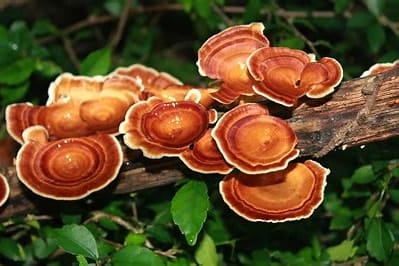
Ganoderma Ling zhi
Ling Shi has a neutral temperature, its taste is sweet.
Neutral temperature
This means that Ling Shi has no real effect of the temperature of the human body.
Sweet taste
Sweet belongs to the Five Agents of Transformation of Earth. This means it has both tonifying and nourishing effects on the body. Nourishing as is it adds something to the body. Tonifying as in it improves function of the body.
The concept of Earth can be synonymous with the whole body, or just the Chinese Organ systems. The virtue of Earth, or the effectiveness of Earth, is its ability to stabilize and make strong.
Organs
Ling Shi works on different Chinese energy systems and organs.
It tonifies and nourishes the Shao yin Heart.
It tonifies and nourishes the organs of the Tai yin Conformation, Spleen and Lungs.
It nourishes the Jue yin Conformation.
San Bao 三寶
The character on the left means three.
The character of the right means treasure. The traditional character 寶 conveys something precious kept safe:
· 宀 — a roof (something protected)
· 玉 — jade (a precious substance)
· 貝 — cowrie shell (ancient money / value)
Ling Shi affects the body by adding something material while increasing function.
In Chinese Medicine it nourishes and tonifies the True Fire and Water of the body. It stabilizes the True Fire and Water by tonifying and nourishing Earth. Earth as in the axis around which the Five Agents of Transformation revolve.
Saying the Reishi or Ling Shi, tonifies the Three Treasures is just not descriptive enough to make a choice in choosing an herb for treatment. It does not describe the herb in enough detail.
The Three Treasures represent concepts in Chinese Medicine, but are such big concepts that they are useless to describe an herb.
The Three Treasure are Jing, Qi, and Shen.
· 精 (Jīng) — Essence
· 气 / 氣 (Qì) — Qi (vital energy)
· 神 (Shén) — Spirit / Mind
When things emerge from the Mysterious void of the Dao the first thing to emerge is Qi.
The concept of Qi is sooo big, that you have to attache another word to it to make it useful. Like the word Yang Qi.
Qi is all the stuff in the word that gives rise or births form or things.
Zhang Zai says this about the Great void and Qi;
The great void consists of qi. Qi condenses to become the myriad things. Things of necessity disintegrate and return to the great void. If Qi condenses, its visibility becomes effective and physical form appears.
The Yellow Emperor’s Classic; Qi gathers together and then form comes into being.
When Qi gathers together form comes into being and it has two different qualities.
Qi contains two aspects. And the two aspects are describing one thing.
This is expressed by the saying; The one is two, and the two are one.
Qi has two aspects, namely Yin and Yang qi, which is reflected in the Chinese Character.
The Chinese character for Qi has two parts. The first part represents vapor, steam, or gas. The second part represents a grain of rice. The Chinese symbol for Qi is represented by steam and uncooked rice suggesting the release of energy and potential for energy and the material all in one.
氣 Qi 气 Damp 来 Rijst
All things come from Qi, and Qi has to aspects, namely Yin and Yang Qi.
Out of the void comes two classifications of all things. The lighter and heavier things are separated and become associated with the Heavens and the Earth.
Huai Nan Zi says this about the Dao; Dao originated from emptiness and emptiness produced the Dao, that which was clear and light drifted up to become Heaven, and that which was heavy and turbid solidified to form Earth.
This is comparable to the Chinese version of the conceptual Big Bang. All subsequent ways of classifying the universe must end up being from Yin and or from Yang.
Jing and Shen
The concept of Jing Essence belongs to Yin and the concept of Shen Spirit belongs to Yang.
In Chinese Medicine we consider Water to be our primordial source of what we are. Water represents our potential both physically and spiritually. This potential has two aspects, one is our Shen Spirit or soul, and the other one is called Ling potential. Ling potential is considered our physical potential and Shen Spirit our soul. Together they make up our constitution.
Shen is Yang and Ling is Yin.
The Shen Spirit or soul is the active transformational energy from Heaven in each person. It activates the physical structure of Earth and Ling Potential. The quality of this interaction is determined by our Zhi will.
The role of Ling in our body is taken over by the Jing Essence. Porkert describes it as a ‘structive force’ and ‘structive capacity’. Structive describing the structural frame of our body.
Porkert further states that Jing in medical contexts exactly takes over the role played by Ling.
Reishi or Ling Shi tonifies our function by strengthening the Heart and Kidneys, Fire and Water.
Reishi nourishes our Jing Essence and therefore our potential.
Reishi connects us to the eternal Dao by strengthening and nourishing the Heart Fire.
In Chinese Medicine we talk about the Shen Spirit as being associated with the Heart Mind concept.
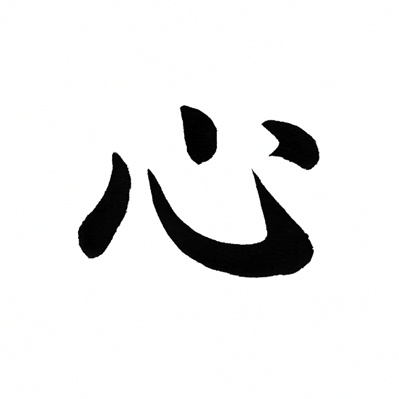
心 心神
Heart (心) & Heart-Mind (心神) in Chinese Medicine
In Chinese Medicine, 心 (xīn) represents both the physical heart and the mind. Unlike in Western thinking, heart and mind are one unified concept, the center of consciousness, emotion, thought, and spirit. It governs clarity, awareness, and emotional balance.
心神 (xīn shén), or Heart-Mind, refers to the luminous, spiritual aspect of the heart. It describes the quality of our consciousness, emotional stability, and connection to meaning and purpose. When balanced, 心神 brings calm, focus, and clarity; when disturbed, it may show as anxiety, restlessness, or emotional imbalance.
Together, 心 and 心神 highlight how body, mind, and spirit are intimately connected, reflecting the holistic nature of Chinese Medicine.
The idea of consciousness being associated with the lighter Yang things in the world stems from the immaterial nature of the mind. In Chinese Medicine they combine the Heart and the Heart mind into the Fire element.
I find it fascinating that Western scientists and philosophers cannot explain how the mind or consciousness manifests. The ancient Chinese just accepted this and concluded it belongs to the Mysterious nature of the Great Void or Dao. In Chinese Medicine the Heart mind is what connects us to the Dao.
As proof that the smart people of the world cannot explain consciousness I give you a video.
Where Does Your MIND Actually Exist?" — Feynman's Disturbing Discovery
Conclusion
The Three Treasures are among the most profound concepts in Chinese medicine, yet their very breadth makes them unsuitable as precise descriptors of herbal action. When we say that an herb “tonifies Jing, Qi, and Shen,” we may be expressing admiration, but we are no longer practicing discrimination. Chinese medicine is not built on admiration; it is built on careful classification.
Reishi, or Ling Zhi, acts through clearly defined qualities: a neutral temperature, a sweet and nourishing nature, and a stabilizing influence on Earth that harmonizes Fire and Water. Through these actions it supports the Heart and Kidneys, nourishes Essence, and steadies the Heart-Mind. These effects can be understood, taught, and applied clinically without resorting to vague generalities.
When concepts are used without precision, they lose their power. By returning the Three Treasures to their proper place as cosmological foundations rather than clinical shortcuts, we preserve the intellectual integrity of Chinese medicine. In doing so, we honor both the depth of its philosophy and the clarity of its practice.