Shang Han Lun Lines

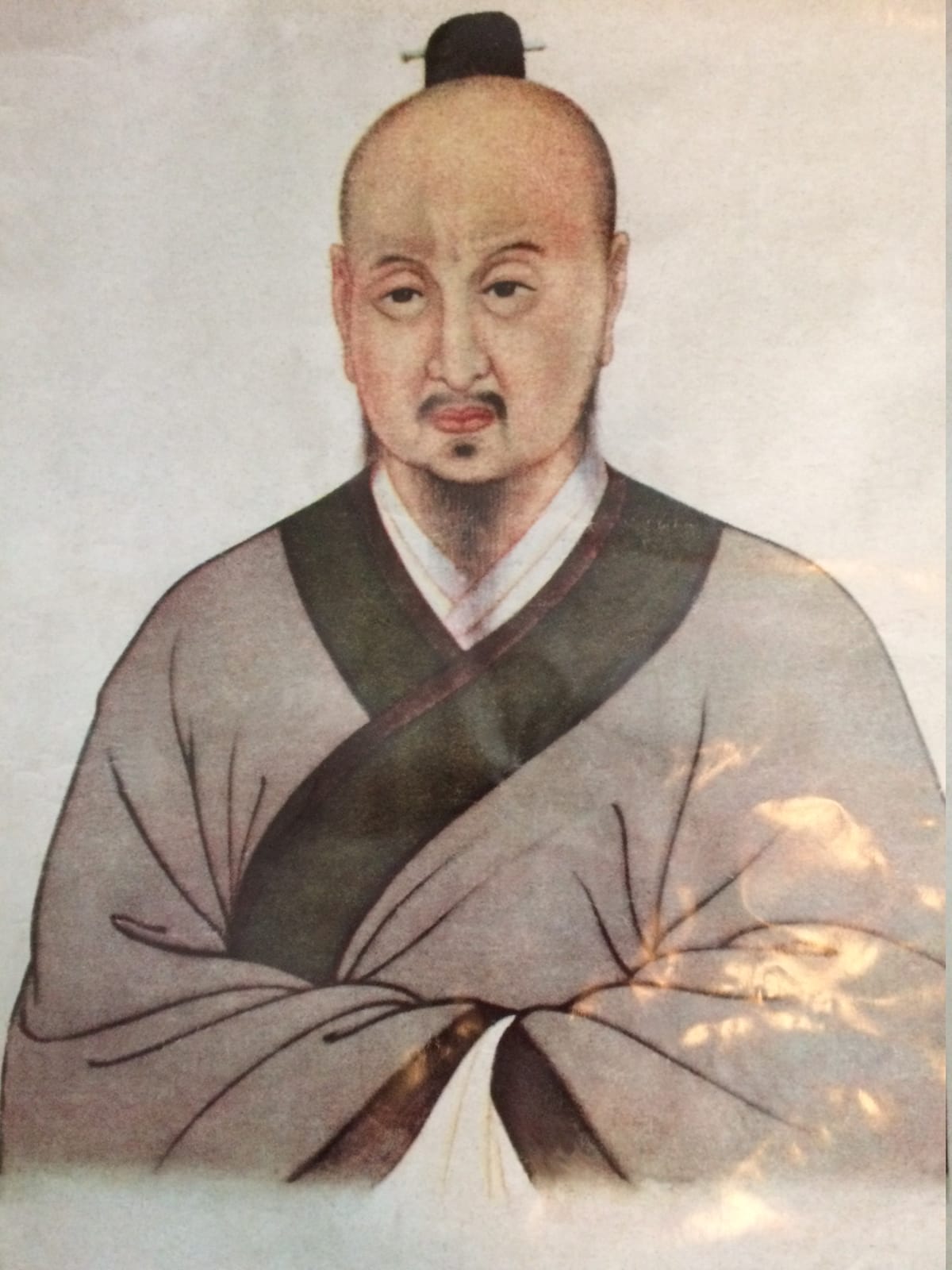
The lines of the Shāng Hán Lùn or Treatise on Cold Damage are the core structure of the text, and they have a very specific meaning in classical Chinese medical literature.
The genius of the writer Zhang Ji are reflected in the lines as well as the whole of ancient Chinese thought. Yet, it is assumed that the reader possesses the ancient knowledge needed to understand each lines and what it represents. There are many commentaries that can help you on your way. I have just listed the lines for easy reference.
The Shang Han Lun lines are not written as a continuous easy, but in numbered lines. Traditionally, there are about 398 lines in the Song dynasty edition (Song Taiping Huimin Heji Ju edition), though other versions count up to 400–500 depending on the recension. Each line is a standalone clinical statement: it might describe a symptom pattern, a treatment principle, or a formula.
Each line usually contains one or more of these:
- Pathological description: the nature of the illness
- Clinical signs & symptoms: pulse, fever, sweating, thirst, abdominal fullness
- Treatment principle: what needs to be harmonized, expelled, purged, or supported
- Prescribed formula: often a classical herbal prescription
The lines describe where the disease of Shang Han Cold Damage or Za Bing Miscellaneous Disease are located. The locations are one of the Six Conformations known as Tai yang, Yang ming, Shao yang, Tai yin, Shao yin, and Jue yin.
Each line is both self-contained and part of a larger system. In other words, you can apply it in clinic and it represents ancient Chinese thought.
Lines
1 In disease of the Tai Yang, the pulse is floating, the head and nape are stiff and painful, and there is aversion to cold.
2 When in Tai Yang disease there is heat effusion, sweating, aversion to wind, and a pulse that is moderate, it is called wind strike.
3 Tai Yang diseases, whether heat has effused or not, as long as there is aversion to cold, with generalized pain, retching counter flow, and yin and yang pulses both tight, is called cold damage.
4 On the first day of cold damage. Tai Yang contracts the disease. If the pulse is tranquil, this means no passage, a strong desire to vomit, if there is agitation and vexation, and the pulse is rapid and urgent, means passage.
5 When on the second or third day of cold damage, Yang Ming and Shao Yang are absent; it means no passage had occurred.
6 When in Tai yang disease there is heat effusion and thirst, without aversion to cold, this is warm disease.
If after sweating has been promoted, there is generalized scorching heat, this is called wind-warmth. When wind –warmth causes disease, the yin and yang pulses are both floating, there is spontaneous sweating, generalized heaviness, a tendency to sleep, the breath from the nose will make a snoring sound, and the speech is difficult. If precipitation has used, there is inhibited urination, forward staring eyes, and fecal incontinence, if fire has been used, there is slight yellowing, and in acute cases there is fright epilepsy, periodic tugging and slackening, and the skin appears as if fumed by fire, one instance of adverse treatment will lengthen the time of disease, and further adverse treatment will lead to the term of life.
7 When an illness is characterized by heat effusion and aversion to cold, it is springing from yang, when an illness is characterized by the absence of heat effusion and the presence of aversion to cold, it is springing from yin. In illness springing from yang, the patient recovers in seven days. In illness springing from yin, the patient recovers in six days. This is because yang numbers seven and yin numbers six.
8 When in Tai Yang disease, a headache lasts for more than seven days, and then the patient spontaneously recovers, this is because the evil has gone right through the channel. If it is about to pass to another channel, and one needles foot Yang Ming to prevent passage, then the patient will recover.
9 The time when Tai yang disease is about to resolv is from si to wei.
10 Wind patients in whom the exterior has resolved, but not clearly, will recover in twelve days.
11 When the patient has generalized heat, but desires to put more clothes on, the heat is in the skin and the cold is in the bone marrow. When there is great generalized cold, but the patient has no desire for clothes, the cold is in the skin and the heat is in the bone marrow.
12 In Tai Yang wind strike with floating yang and weak yin, floating yang is spontaneous heat effusion and weak yin is spontaneous issue of sweat. If there is huddled aversion to cold, wetted aversion to wind, feather warm heat effusion, noisy nose, and a dry retching, gui zhi tang governs.
13 For Tai Yang disease with headache, heat effusion, sweating, and aversion to wind, gui zhi tang governs.
14 When in Tai Yang disease there is stretched stiff nape and back, but also sweating and aversion to wind, it is treated with gui zhi jia ge gen tang.
15 When in Tai Yang disease, after precipitation, qi surges upward, one may give gui zhi tang, according to the previously mentioned method. If there is no upsurge, one cannot give this formula.
16A When Tai Tang disease has lasted for three days and sweating has already been promoted, if vomiting, or precipitation, or if warm needling has been used and still there is no resolution, this is an aggravated disease in which gui zhi tang should not be given. Observe the pulse and signs, know what error you have committed, and then treat according to the signs.
16b Gui zhi tang is basically for resolving the flesh, if the persons pulse is tight and floating, and there is heat effusion, and sweating is absent, it cannot be given. One needs always to be aware of this, so as not to cause this error.
17 If a drinker is sick, gui zhi tang cannot be given, since it will cause retching. This is because drinkers do not like sweet things.
18 For panting patients suffering from gui zhi tang pattern, it is best to add hou po and xing ren.
19 Whenever taking gui zhi tang makes the person vomit, there will be vomiting of pus and blood afterwards.
20 When in Tai Yang disease, sweating is promoted and then gives way to incessant leaking, the person is adverse to wind, has difficult urination, and the limbs are tensed so that they bend and stretch with difficulty, gui zhi jia fu zi tang governs.
21 In Tai Yang disease, when after precipitation the pulse is skipping and there is fullness in the chest, gui zhi qu shao yao tang governs.
22 When the pulse is faint and there is aversion to cold, gui zhi qu shao yao jia fuzi tang governs.
23 In Tai Yang disease lasting eight or nine days and resembling malaria, in which there is heat effusion and aversion to cold with the heat effusion more pronounced than the aversion to cold, and in which the person does not retch, the excretions are still normal, and episodes occur two or three times a day, then the following applies. If the pulse is slightly moderate this means that there is about to be recovery. If the pulse is faint and there is aversion to cold, this means that both yin and yang are vacuous and one cannot further promote sweating, further promote precipitate, or further cause vomiting. However, a facial complexion with the color of heat means that the disease is not about to resolve, and because the person cannot get up a light sweat, there will be generalized itching, therefore gui zhi ma huang ge ban tang governs.
24 When in Tai Yang disease , the patient has initially taken gui zhi tang, but is vexed and the exterior is unresolved, first needle wind pool, gb 20, and wind mansion , dm 16, then give gui zhi tang and the patient will recover.
25 When after taking gui zhi tang, there is great sweating and the pulse is surging and large, use gui zhi tang as before. If the disease resembles malaria, occurring twice a day, sweating will resolve the disease and therefore gui zhi er ma huang yi tang is appropriate.
26 When, after gui zhi tang is taken and a great sweat has issued, there is great vexation and thirst, and the disease is unresolved and the pulse is surging and large, bai hu jia ren shen tang governs.
27 When in Tai Yang disease there is heat effusion and aversion to cold with more heat and less cold a pulse that is faint and weak means that yang is absent and one cannot promote sweating, gui zhi er yue bi yi tang is appropriate.
28 When gui zhi tang is taken, or precipitation is used and there is still stiffness and pain of the head and nape, feather warm heat effusion, absence of sweating, fullness below the heart with slight pain, and inhibited urination, gui zhi qu gui jia fu ling bai zhu tang governs.
29 When in cold damage, the pulse is floating and there is spontaneous sweating, frequent urination, heart vexation, mild aversion to cold, and hypertonicity of the feet, but gui zhi tang is given in order to attack the exterior, this is an error.
If the person is given this formula, there will be reversal, dryness in the throat, vexation and agitation, and counter flow vomiting, so one should use gan cao gan jiang tang to restore yang. If a counter flow patient recovers, and the feet become warm, one can then use shao yao gan cao tang and the feet will then be able to stretch. If the stomach qi is disharmonious and there is delirious speech, give a little tiao wei cheng qi tang. If sweating has been promoted repeatedly, then red hot needling is used, si ni tang governs.
30 Question: In a pattern similar to yang dawn, if the physician treats the patient according to the appropriate method, but the disease becomes more acute, then there is reverse flow, dryness in the throat, hypertonicity of the lower legs, and delirious speech. The master says: In the middle of the night the extremities should be warm and the two legs should be able to extend. From here on proceed as the master said. How does one know this? Answer: The cun pulse is floating and large; floating means wind and large means vacuity. The wind engenders mild heat, and because of mild vacuity, there is hypertonicity of the lower legs. The form of the illness is like gui zhi tang pattern, and because fu zi is added, it increases the ability of gui zhi to cause sweat to issue, and fu zi also warms the channels, so there is yang collapse. When there is reverse flow, dryness in the throat, vexation and agitation, yang ming internal bind, delirious speech, and vexation and derangement, change to gan cao gan jiang tang. In the middle of the night, the yang returns, so the legs should become warm, but if there is still slight hypertonicity of the lower legs, give a large dose of shao yang an cao tang, so that the lower legs will be able to extend. Because cheng qi tang will cause slightly sloppy stools and then suppress the delirious speech, one knows the person can recover from the disease.
31 In Tai Yang disease with a stretched stiff nape and back, absence of sweating, and aversion to cold, ge gen tang governs.
32 In Tai Yang and Yang Ming combination disease, there will be spontaneous diarrhea, and therefore ge gen tang governs.
33 When in Tai Yang and Yang Ming combination disease, diarrhea is absent, and only retching is present, ge gen jia ban xia tang governs.
34 When in Tai Yang disease the condition is a gui zhi tang pattern, but the physician precipitates, causing incessant diarrhea and a pulse that is skipping, it means that the exterior has not yet resolved, when there is panting and sweating, ge gen huang qin huang lian tang governs.
35 When in Tai yang disease there is headache, heat effusion, generalized pain, lumbar pain, joint pain, aversion to wind, absence of sweating, and panting, ma huang tang governs.
36 When in Tai Yang and Yang Ming combination disease there is panting and fullness in the chest, one cannot use precipitation, but instead ma huang tang is appropriate.
37 When in Tai Yang disease, after ten days have passed, the pulse is floating and fine, and there is somnolence, the outer body has already been resolved. If there is fullness in the chest and rib side pain, give xiao chai hu tang, if the pulse is floating only give ma huang tang.
38 When in Tai Yang (could be cold) wind strike the pulse is floating and tight, and there is heat effusion, aversion to cold, generalized pain, absence of sweating, and vexation and agitation, da qing long tang governs. If the pulse is faint and weak and there is sweating and aversion to wind, the person cannot take this formula. If he takes it there will be reverse flow and jerking sinews and twitching flesh, indicating an adverse treatment.
39 When in cold damage, the pulse is floating and moderate, and there is no generalized pain, only generalized heaviness, with sudden periods of lightness, and there is no Shao Yin disease, da qing long tang will promote sweating and resolve the disease.
40 When in cold damage the exterior has not resolved and there is water qi below the heart, with dry retching, heat effusion and cough, and possibly thirst or diarrhea, or dysphagia, or inhibited urination and lesser abdominal fullness, or panting, xiao qing long tang governs.
41 When in cold damage, there is water qi below the heart, cough, mild panting, and heat effusion without thirst, thirst after taking the decoction means the cold is going and the disease is about to resolve xiao qing long tang governs.
42 When in Tai Yang disease the exterior pattern has not resolved and the pulse is floating and weak, this should be resolved through the promotion of sweating, therefore gui zhi tang is appropriate.
43 When in Tai Yang disease, there is mild panting following precipitation, it means that the exterior has not been resolved; therefore gui zhi jia hou po xing ren governs.
44 Tai Yang disease in which the exterior pattern has not resolved cannot be precipitated since precipitation would be an adverse treatment. When one desires to resolve the exterior gui zhi tang is appropriate.
45 When in Tai Yang disease initial promotion of sweating fails to resolve the disease and precipitation then is used, so that the pulse is floating, there will be no recovery. A pulse that is floating means location in the outer body, and if instead precipitation is used, it will prevent recovery. The pulse is now floating so we know that the disease is located in the outer body and this requires resolution of the outer body to achieve recovery, therefore, gui zhi tang is appropriate.
46 In Tai Yang disease, when a pulse that is floating and tight, absence of sweating, heat effusion, and generalized pain are un resolved after 8 or 9 days, the exterior pattern is still present and one should promote sweating. After taking medicine, the condition is slightly relieved, and the person is vexed and the eyes are heavy. If it is acute, there will be spontaneous external bleeding, which will bring about resolution. Why this is so is because the yang qi is weighted. Ma huang tang governs.
47 When in Tai Yang disease, the pulse is floating and tight, and there is heat effusion and absence of sweating, spontaneous external bleeding will bring about recovery.
48 In drag over disease of the two yang, the disease begins in Tai Yang, sweating is promoted and the sweating is incomplete, which causes the disease to shift to Yang Ming and there is continuous slight spontaneous sweating, and the absence of aversion to cold. If the Tai Yang disease pattern has not ceased, one cannot precipitate, because precipitation would be an adverse treatment and in this case, one can promote sweating mildly, If facial complexion is continuously full red, the yang qi is depressed in the exterior and one should resolve the exterior fume. If sweating is promoted incompletely, that is to say insufficiently to speak of, the yang qi is depressed and cannot pass out so there should be sweating but there is not. The person is agitated and vexed and does not know where the pain is located, now it is in the abdomen, now it is in the extremities, and when pressing one cannot find it. The person is short of breath and can only sit. This is because sweating was incomplete and further promoting of sweating will lead to recovery. How can one know that the sweating was incomplete? One knows because the pulse is rough.
49 When the pulse is floating and rapid, as a rule there should be sweating and then recovery. If precipitation is used, and there is generalized heaviness and heart palpitations, one cannot promote sweating, the person must sweat spontaneously so that the illness is resolved. Why this is so is because the pulse at the cubit is faint, which indicates interior vacuity. Exterior and interior need to be made replete, so that liquid and humor naturally become harmonious and then spontaneous sweating will bring about recovery.
50 When the pulse is floating and tight, as a rule there should be generalized pain and therefore, it is appropriate to resolve the illness by sweating. However if the chi pulse is slow, one cannot promote sweating. How does one know this? Because the construction qi is insufficient and the blood is scant.
51 When the pulse is floating, the disease is in the exterior, and if one can promote sweating, ma huang tang is appropriate.
52 When the pulse is floating and rapid, if one can promote sweating, ma huang tang is appropriate.
53 When illness is characterized by frequent spontaneous sweating, it means construction qi is in harmony and when in such cases construction qi is in harmony, it is the outer body that is not harmonious, that is to say it is because defense qi is not in harmony with construction qi. Because construction qi moves in the vessels, and defense qi outside the vessels, by further promotion of sweating, construction and defense will harmonize, bringing about recovery, therefore gui zhi tang is appropriate.
54 When patients whose viscera have no other disease have periodic heat effusion and spontaneous sweating, and are failing to recover, this means defense qi is disharmonious and the promotion of sweating ahead of time will bring about recovery, therefore gui zhi tang is appropriate.
55 When in cold damage with pulse that is floating and tight, sweating is not promoted and this gives rise to spontaneous bleeding, ma huang tang governs.
56 When cold damage is characterized by inability to defecate for six or seven days, headache, and heat effusion, give a qi coordinating decoction, cheng qi tang. If the urine is clear, we know the disease is not located in the interior, but is still in the exterior, and should be treated by the promotion of sweating, and if there is still a headache, after taking the decoction, there will be spontaneous external bleeding, gui zhi tang is appropriate.
57 When in cold damage, sweating has already brought resolution, and then after half a day there is again vexation and a pulse that is rapid and floating, one can again promote sweating, therefore gui zhi tang is appropriate.
58 In any illness, if sweating is promoted, or if vomiting of if precipitation has been used, and if as a result the blood collapses of liquid and humor collapse, when yin and yang spontaneously harmonize, the person will spontaneously recover.
59 When after great precipitation, sweating is then promoted, and as a result urination is inhibited, this is because liquid and humor have collapsed. Do not treat this. Once the urine is uninhibited, the person will spontaneously recover.
60 After precipitation, if sweating is promoted, there will be quivering with cold and a pulse that is faint and fine. Why this is so is because both the interior and exterior are vacuous.
61 When precipitation has been used, yet sweating is then promoted so that the person in the day time is vexed, agitated, and sleepless, but by night time becomes peaceful and retching, thirst, exterior signs, and great generalized heat are all absent, and the pulse is sunken and faint, the gan jiang fu zi tang governs.
62 When after the promotion of sweating, there is generalized pain, and a pulse that is sunken and slow, gui zhi jia shao yao sheng jiang ge yi liang ren shen san liang xin jia tang governs.
63 After the promotion of sweating, one cannot again use gui zhi tang if sweating issues, and there is panting and great heat is absent, one can use ma huang xing ren gan cao shi gao tang.
64 When copious sweating has been promoted and the person’s hands are crossed over the heart and there are palpitations below the heart, with a desire for pressure, gui zhi gan cao tang governs.
65 When sweating has been promoted, the person has palpitations below the umbilicus about to become running piglet, fu ling gui zhi gan cao da zao tang governs.
66 When, after the promotion of sweating, there is abdominal distension and fullness, hou po sheng jiang ban xiao gan cao ren shen tang governs.
67 When, in cold damage, after vomiting or precipitation, there is counter flow fullness below the heart, qi surges upward to the chest, the person experiences dizzy head upon standing, and the pulse is sunken and tight, if sweating is promoted, the channels will be stirred and there will be quivering and trembling then fu ling gui zhi bai zhu gan cao tang governs.
68 When sweating is promoted, if the disease does not resolve, and instead there is aversion to cold, this is because of vacuity, hence shao yao gan cao fu zi tang governs.
69 After the promotion of sweating, if precipitation is used and the disease still does not resolve, and there is vexation and agitation, fu ling si ni tang governs.
70 After sweating has been promoted, if there is aversion to cold, this is because of vacuity. If aversion to cold is absent, and only heat effusion is present, this indicates repletion. One should harmonize the stomach qi with tiao wei chengi qi tang.
71 When in tai yang disease, after sweating is promoted and great sweat issues, if there is dryness in the stomach, vexation and agitation with insomnia, and a desire to drink water, giving a small amount of water will harmonize the stomach qi so that recovery will ensue. If the pulse is floating and there is inhibited urination, slight heat, and dispersion thirst wu ling san governs.
72 When sweating has already been promoted, the pulse is floating and rapid, and there is vexation and thirst, wu ling san governs.
73 When in cold damage there is sweating and thirst wu ling san governs. If thirst is absent fu ling gan cao tang governs.
74 When in wind strike the person has heat effusion unresolved after six or seven days and vexation, so that there is an exterior and an interior pattern marked by thirst with a desire to drink water and immediate vomiting of ingested fluids, this is called water counter flow, wu ling san governs.
75 The master has not yet felt the pulse and the person has their hands crossed over their heart. The master, because of seeing this instructs the person to try to cough; and if the person does not cough, this must be because the two ears are deaf and do not hear. Why this is so is because of the repeated promotion of sweating, which caused vacuity. When following the promotion of sweating, the person drinks copious amounts of water, there will be panting; and if water is poured onto the body there will also be panting.
76 a After sweating is promoted, water medicinals have not entered the mouth and there is vomiting because of stomach qi counterflow. If sweating is again promoted, there will be incessant vomiting and diarrhea.
76 b When after the promotion of sweating, the use of vomiting, or the use of precipitation, there is vacuity vexation and inability to sleep, and if the condition is severe, with tossing and turning and anguish in the heart, zhi zi chi tang governs. If there is shortage of qi, zhi zi gan cao chi tang governs. If there is retching, zhi zi sheng jiang chi tang governs.
77 After sweating is promoted, if precipitation is used and there is heat vexation and stuffiness in the chest, zhi zi chi tang governs.
78 When in cold damage that has lasted for five or six days, if after great precipitation, the generalized heat has not gone and there is binding pain in the heart, the disease is not about to resolve and zhi zi chi tang governs.
79 When after precipitation has been used in cold damage, there is heart vexation, abdominal fullness, and fidgetiness whether lying or sitting, zhi zi hou po tang governs.
80 When in cold damage great precipitation is performed with a pill medicine, the generalized heat is not gone and there is mild vexation, therefore zhi zi gan jiang tang governs.
81 In all applications of zhi zi tang, if the person usually has slightly sloppy stool, one cannot give this formula.
82 When in Tai Yang disease, sweating has been promoted and sweat issues but the disease does not resolve, the person still has heat effusion, and there are palpitations below the heart, dizzy head, generalized twitching and the person is quivering and about to fall, zhen wu tang governs.
83 When the throat is dry, one cannot promote sweating.
84 With strangury patients, one cannot promote sweating because if sweating is promoted there will be bloody excretions.
85 With sores patients, although they have generalized pain, one cannot promote sweating, if they sweat, there will be tetany.
86 With spontaneous bleeding patients, one cannot promote sweating, if sweating issues, the pulse in the depression of the forehead will be tense and tight, the eyes will be staring straight and unable to move, and there will be inability to sleep.
87 With blood collapse patients, one cannot promote sweating, because the promotion of sweating will lead to cold shuddering and quivering.
88 When a person suffers from excessive sweating is again made to sweat, there will be abstraction and derangement and yin pain after urination. Give yu yu liang wan.
89 A patient who has cold and yet is made to sweat has cold in the stomach and will vomit roundworms.
90 When sweating should have been promoted originally, yet precipitation was used, this is an adverse treatment. If sweating is first promoted, it is not adverse treatment. When precipitation should have been used originally, but sweating is promoted, this is an adverse treatment. If precipitation is first used, it is not an adverse treatment.
91 When cold damage is treated with precipitation, and this is followed by incessant clear food diarrhea and generalized pain, one should urgently relieve the interior disease. After treating the interior, if there is generalized pain, and the excretions become regulated, one should urgently relieve the exterior disease. For relieving the interior disease, si ni tang is appropriate. For relieving the exterior disease gui zhi tang is appropriate.
92 When in illness there is heat effusion and headache, but the pulse is sunken, and if after taking ma huang xi xin fu zi tang there is no recovery, one should relieve the interior. Si ni tang is appropriate.
93 When in Tai Yang disease, initial precipitation fails to bring about recovery and sweating is then promoted, and because of this there is a dual interior exterior vacuity, the person will be encumbered by veiling dizziness. Veiling dizziness patients will recover spontaneously after sweating. This is because sweating harmonizes the exterior. The interior is not yet harmonized, so afterwards one should precipitate.
94 In Tai Yang disease that has not yet resolved, if the yin yang pulses both stop (hidden), the person will first shiver, then sweat, and then the disease will resolve. If only the yang pulse moves slightly, first sweat will issue and then the disease will resolve. If only the yin pulse moves slightly, precipitate and then the disease will resolve. If one desires to precipitate tiao wei cheng qi tang is appropriate.
95 When in Tai Yang disease there is heat effusion and sweating, this means weakness in construction and strength in defense, which consequently causes sweat to issue, to eliminate the evil wind gui zhi tang governs.
96 When in cold damage that has lasted for five or six days or wind strike, there is alternating aversion to cold and heat effusion, the person suffers from fullness in the chest and rib side, taciturnity with no desire for food and drink, heart vexation and frequent retching, or possibly there is vexation in the chest and no retching, or thirst or pain in the abdomen, or a hard glomus under the rib side, or palpitations below the heart with inhibited urination, or absence of thirst with mild generalized heat, or cough, then xiao chai hu tang governs.
97 When the blood is weak and the qi is exhausted, the interstices are open, and because evil qi enters the body and contends with right qi, there is binding under the rib side. The right and the evil struggle by turns, so there is alternating aversion to cold and heat effusion that stops and starts periodically, and taciturnity with no desire for food and drink. The viscera and bowels are interconnected, and so the pain will be low down, the evil high up and the pain is low down, hence there is retching and xiao chai hu tang governs. When after taking xiao chai hu tang there is thirst, this belongs to yang ming and one should use the appropriate method to treat it.
98 When in an illness that the person has had for six or seven days, the pulse is slow, floating, and weak, and there is aversion to wind and cold, and warm extremities, and the physician precipitates two or three times, there is inability to eat, pain and fullness under the rib-side, yellowing of the eyes, face and body, stiffness of the neck and nape, and difficult urination. After xiao chai hu tang is given, there will be rectal heaviness. When originally there was thirst with retching following water intake, xiao chai hu tang should not be given, and when food is taken there will be hiccup.
99 When in cold damage that has lasted four or five days there is generalized heat effusion and aversion to wind, stiffness of the neck and nape, fullness under the rib side, warm extremities and thirst, then xiao chai hu tang governs.
100 When in cold damage, the yang pulse is rough and the yin pulse is stirring, as a rule, there should be acute pain in the abdomen, so one should first give xiao jian zhong tang and if there is no improvement, giving xiao chai hu tang governs.
101 When in cold damage or wind strike, there are chai hu signs, only one sign means that this is the pattern, they do not all have to be present. Whenever a chai hu tang disease pattern is treated by precipitation, if the chai hu tang pattern has not ceased, one can give chai hu tang again. There will be streaming and quivering, then heat effusion and sweating again, by which the disease resolves.
102 When in cold damage that has lasted for two or three days, there are palpitations and vexation in the heart, xiao jian zhong tang governs.
103 When in tai yang disease, ten or more days after channel passage, precipitation has instead been used two or three times, after four or five days, if the chai hu tang pattern is still present, first give xiao chai hu tang. If there is incessant retching, distress below the heart, and depression and mild vexation, it means that the disease has yet resolved. Giving da chai hu tang to precipitate will lead to recovery.
104 Here in cold damage that has not resolved in thirteen days and there is fullness in the chest and rib-side, retching, late afternoon tidal heat effusion, and shortly afterward mild diarrhea. This was originally a da chai hu tang pattern in which precipitation should not cause diarrhea, yet now in the present there is diarrhea, so one knows a pill medicine was used to precipitate, and this is not the appropriate treatment. Tidal heat effusion means repletion. It is appropriate to first take xiao chai hu tang in order to resolve the external aspect. Afterward, chai hu jia mang xiao tang governs.
105 When, in cold damage that has lasted for thirteen days, there is channel passage and delirious speech, it is because of heat, and one should precipitate with a decoction. If urination is uninhibited, the stool should be hard; bit if instead there is diarrhea and the pulse is in harmony, one knows the physician precipitated with a pill medicine and this is not the correct treatment. If there is spontaneous diarrhea, the pulse should be faint and there should be reversal cold. But now there is harmony, which means internal repletion; therefore tiao wei cheng qi tang governs.
106 When a Tai Yang disease is unresolved and heat binds in the bladder, the person is as if manic, and spontaneous blood descent will bring recovery. If the exterior has not been resolved, one should not yet attack, but should first resolve the exterior. When the exterior has been resolved and there is only tense bound lesser abdomen, one can attack and therefore tao he cheng qi tang is appropriate.
107 When in cold damage that has lasted for eight or nine days, precipitation is used, and there is fullness in the chest, vexation and fright, inhibited urination, delirious speech, heaviness of the entire body, and inability to turn sides, chai hu jia long gu muli tang governs.
108 When in cold damage, there is abdominal fullness, delirious speech, and the cun pulse is floating and tight, this means the liver is exploiting the spleen and it is called restraint. One should needle qi men. Liv 14.
109 In cold damage with heat effusion, huddled aversion to cold and great thirst with desire to drink water, there will be abdominal fullness. Spontaneous sweating and uninhibited urination indicate the disease is about to resolve. This is because the liver is exploiting the lung and it is called rebellion. One should needle qi men. Liv 14.
110 When Tai Yang disease has lasted two days, but there is agitation whenever a hot pack is used on the back, and as a result there is great sweating, then great heat enters the stomach, the stomach water is exhausted, there is vexation and agitation, and there will be delirious speech.
If after more than ten days, there is shivering and spontaneous diarrhea, this means that the disease is about to resolve.
Consequently, sweating from the lumbus down cannot be obtained. The person desires but is unable to urinate, and instead retches. The person in verging on urinary incontinence and has aversion to wind in the soles of the feet and hard stool. Urination should be frequent, but instead it is infrequent and not copious. Defecation occurs and the head is suddenly painful. The patient will feel heat in the soles, because grain qi flows downward.
111 When in Tai Yang wind strike disease, fire forcing is used to promote sweating, the evil wind is exacerbated by fire heat. Then blood and qi flow and spill, losing their normalcy. The two yang fume and scorch each other and there is generalized yellowing. Yang is exuberant, so there is about to be spontaneous external bleeding. Yin is vacuous, so urination is difficult. Yin and yang are both exhausted; there is generalized desiccation and sweating only from the head that stops just at the neck, abdominal fullness, slight panting, dry mouth, putrefaction of the throat, or inability to defecate. If this endures, there will be delirious speech, and when severe, hiccupping, agitation of the extremities, and picking at bed clothes. When urination is uninhibited, the person can be treated.
The two yang fume and scorch each other and there is generalized yellowing.
Yang is exuberant, so there is about to be spontaneous external bleeding. Yin is vacuous, so urination is difficult.
Yin and yang are both exhausted. There is generalized desiccation and sweating only from the head that stops just at the neck, abdominal fullness, slight panting, dry mouth, putrefaction of the throat, or inability to defecate. If this endures, there will be delirious speech, and when severe, hiccupping, agitation of the extremities, and picking at bed clothes. When urination is uninhibited, the person can be treated.
112 When in cold damage the pulse is floating and the physician uses fire treatment to force sweating, and as a result yang collapses, then there will be fright mania and fidgetiness whether lying or sitting, gui zhi qu shao yao jia shu gi muli long gu jiu ni tang governs.
113 When the form of the illness is that of cold damage and the pulse is not string like or tight, and is weak, weakness means there will be thirst. When fire is used, there will be delirious speech. When in such cases the pulse is weak, if there is heat effusion and the pulse is floating, sweating should bring about recovery.
114 In Tai Yang disease, because fire fuming is used and sweating is not obtained, the person will be agitated. If the evil reaches the original channel and the disease does not resolve, there will be bloody stool. This is called fire evil.
115 When the pulse is floating and the heat is severe, but moxibustion is used, this is repletion and here repletion is being treated as vacuity, because the blood is stirred by the fire, there will be dry throat and blood ejection.
116 When the pulse is faint and rapid, one must be cautious and not use moxibustion. Because fire is an evil, it will cause vexation counterflow, as if seeking vacuity and pursuing repletion and it will dissipate the blood from the pulse. Although the fire qi is mild, it attacks the interior forcefully, parching the bones and damaging the sinews. And one knows the bold is difficult to restore. When the pulse is floating, it is appropriate to restore the exterior through sweating. Using fire and moxa, the evil has no place from which to effuse and because of the fire, it becomes exuberant. From the lumbus down, there will be heaviness and impediment and this is called adverse treatment from fire. When the disease is about o resolve, there will be vexation, then sweating and resolution. How does one know this? The pulse is floating; hence one knows that sweating will resolve the disease.
117 When red hot needling is used to cause sweating, the needle site contracts cold, and if a red node forms, the person will develop running piglet. When qi from the lesser abdomen surges upward to the heart, use one cone of moxa on each node and give gui zhi jia gui tang.
118 If adverse treatment by fire is followed by precipitation, and because of red hot needling there is vexation and agitation, gui zhi gan cao long gu muli tang governs.
119 When in Tai Yang cold damage, a warm needle is used, there will be fright.
120 In Tai Tang disease, when there should be aversion to cold and heat effusion, there is now spontaneous sweating, but aversion to cold and heat effusion are absent and the bar pulse is fine and rapid. It is because vomiting treatment was used incorrectly. If vomiting is used on the first or second day of Tai Yang disease, there is a feeling of hunger in the abdomen, but the person cannot eat. If vomiting is used on the third or fourth day of Tai Yang disease, the person dislikes gruel, desires to eat cold food, and vomits in the evening food eaten in the morning. This is the result of vomiting treatment which means this is a minor adverse treatment.
121 In Tai Yang disease, vomiting has been used, but since in tai yang disease there should be aversion to cold, and now there is no aversion to cold and the person has no desire to put on extra clothes, this means the use of vomiting caused internal vexation.
122 When the patients pulse is rapid, rapidity means heat, so there should be rapid hungering and a large food intake, but if there is instead vomiting, this is because the promotion of sweating caused yang qi debilitation and diaphragm qi vacuity and therefore the pulse is rapid. A pulse that is rapid means visiting heat and the person cannot digest food. Because there is vacuity cold in the stomach, there is vomiting.
123 When in Tai Yang disease, ten or more days after channel passage there is seething below the heart with a desire to vomit and chest pain, but sloppy stool, slight abdominal fullness, depression and mild vexation; and if before this time, extreme vomiting and precipitation were used, give tiao wei cheng qi tang. If it is not like this pattern, one cannot give this formula. A desire only to retch with chest pain and slightly sloppy stool is not a chai hu tang pattern. Because of the retching, one knows extreme vomiting and precipitation were used.
124 When in Tai Yang disease that has lasted six or seven days, the exterior pattern is still present and the pulse is faint and sunken, butchest bind is absent, and the person is manic, it is because the heat is spontaneously uninhibited and precipitating the blood will bring recovery. Why this is so is because the evil followed the tai yang channel, and there is stasis heat in the interior, therefore di dang tang governs.
125 When in Tai Yang disease, there is generalized yellowing, a pulse that is sunken and bound, hardness in the lesser abdomen, and inhibited urination, this means that there is no blood amassment. When urination is uninhibited and the person is as if manic, the previous signs indicate a true blood pattern for which di dang tang governs.
126 In cold damage with heat and lesser abdomen fullness, urination should be inhibited, but now urination is uninhibited, which means there is blood amassment so one should precipitate the blood. One cannot spare any medicinal required and di dang wan is appropriate.
127 When in Tai Yang disease if urination is uninhibited, the drinking of copious amounts of water will result in palpitations below the heart. If urination is scant, the person will suffer from abdominal urgency.
128 Question. There is a disease called chest bind, and there is one called storehouse bind. What form does it take? Answer. If there is pain when pressure is applied, and the cun pulse is floating, and the guan pulse is sunken, this is called chest bind.
129 What is storehouse bind? Answer. When there are signs like chest bind, eating and drinking are normal, and there is frequent diarrhea, a cun pulse that is floating, and a guan pulse that is small, fine, sunken, and tight, it is called storehouse bind. When the tongue fur is white and glossy this is difficult to treat.
130 When in storehouse bind, yang signs are absent, and there is no alternating aversion to cold and heat effusion, but the person is tranquil and the tongue fur is glossy, one cannot attack.
131 When the disease springs from yang, yet precipitation is used, the heat enters the interior and causes chest bind. When the disease springs from yin, yet precipitation is used, the veil causes a glomus. Why the disease becomes chest bind is because precipitation was used too early. In chest bind, with nape stiffness as in soft tetany, precipitate and then there will be harmony. Da xian xiong wan is appropriate.
132 When in chest bind patterns, the pulse is floating and large, one cannot precipitate, because precipitation will lead to death.
133 When all the signs of chest bind are present, and there is vexation and agitation, the patient will die.
134 In Tai Yang disease, when the pulse is floating, stirred, and rapid, floating means wind, rapid means heat, stirred means pain, and rapid means vacuity. There is headache, heat effusion, mild night sweating, and yet aversion to cold, because the exterior has not yet resolved.
But the physician uses precipitation and the movement and rapidity of the pulse changes to slowness. In the diaphragm there is pain that refuses pressure. With empty vacuity in the stomach, visiting qi stirs the diaphragm and there is shortness of breath, vexation and agitation, and anguish in the heart.
The yang qi falls inward and causes hardness below the heart, which means chest bind. Therefore da xian xiong tang governs. If there is no chest bind, only sweat issuing from the head, and without sweat elsewhere, that stops at the neck, and urination is inhibited, there will be generalized yellowing.
135 When in cold damage that has lasted for six or seven days, there is chest bind with repletion, in which the pulse is sunken and tight and there is pain below the heart, which is stone hard when pressure is applied da xiao xiong tang governs.
136 When in cold damage that had lasted for more than ten days, and heat binds in the interior, yet there is alternating aversion to cold and heat effusion, give da chai hu tang. If there is only chest bind and great heat effusion is absent, indicating water bind in the chest and rib side, slight sweat issuing only from the head, da xian xiong tang governs.
137 When in Tai Yang disease, sweating is promoted repeatedly, yet precipitation is also used and there is inability to defecate for five or six days, a dry tongue and thirst, minor tidal heat effusion in the late afternoon, and hardness, fullness, and pain, extending from below the heart to the lesser abdomen and which the person will not allow anyone to get near, da xian xiong tang governs.
138 When in minor chest bind disease, the location is directly below the heart and painful when pressure is applied, and the pulse is floating and slippery, xiao xian xiong tang governs.
139 When Tai Yang disease has lasted two or three days, and the person is unable to sleep, and desires only to get up, then there will be a bind below the heart and a pulse that is faint and weak, which means that originally there were cold elements. But if precipitation is used, and the resulting diarrhea is checked, there will be chest bind; if the diarrhea is unchecked and, after four days, precipitation is used again, this will cause complex diarrhea.
140 When in Tai Yang disease, precipitation is used and the pulse is skipping, this is not chest bind, and it means the disease is about to resolve. If the pulse is floating, there will be chest bind. If the pulse is tight, there will be sore throat. If the pulse is string like, there will be hypertonicity of both rib sides. If the pulse is fine and rapid, there will be unrelieved headache. If the pulse is sunken and tight, there will be desire to retch. If the pulse is sunken and slippery, there will be complex diarrhea. If the pulse is floating and slippery, there will be blood descent.
141 a When disease is in the yang, one should promote sweating to resolve it, but here cold water is sprayed on the patient: the heat will be plundered but it will not be eliminated and in addition there will be vexation, millet papules on the skin, a desire to drink water but absence of actual thirst so take wen ge san. If there is no recovery give wu ling san.
141 b When in cold repletion chest bind, heat signs are absent, give san wu xiao xian xiong tang. Bai san can also be taken.
142 When in Tai Yang and Shao Yang disease, there is stiffness and pain in the head and nape, or veiling dizziness, and it is sometimes like chest bind with a hard glomus below the heart, one should needle DM 14, BL 13, and BL 18. Be cautious and do not promote sweating because if sweating is promoted it will cause delirious speech and a pulse that is string like. If after five days the delirious speech does not stop, one should needle Liv 14.
143 When a woman with wind strike has heat effusion and aversion to cold, and the menstrual flow happens to arrive, then seven or eight days, after contracting the illness the heat is eliminated, the pulse is slow, and there is generalized coolness, fullness under the chest and rib-side, and signs like chest bind and delirious speech, this means that the heat has entered the blood chamber. One should needle Liv 14, choosing this point in view of the repletion.
144 When a woman with wind strike that has lasted for seven or eight days, has periodic heat effusion and aversion to cold and the menstrual flow happens to stop, this means that the heat has entered the blood chamber and the blood will bind, causing a malaria-like condition that occurs at set times, therefore xiao chai hu tang governs.
145 When a woman contracts cold damage and the menstrual flow happens to arrive and she is clear headed during the day and speaks deliriously in the evening, as if seeing ghosts, this means that the heat has entered the blood chamber, but do not assail the stomach qi and the two upper burners, because recovery will be spontaneous.
146 When in cold damage that has lasted for six or seven days, there is heat effusion, mild aversion to cold, vexing pain of the limb joint, mild retching, propping below the heart, and the exterior pattern is still present, chai hu gui zhi tang governs.
147 When cold damage has lasted five or six days, and sweating has been promoted and then precipitation has been used and there is fullness in the chest and rib-side and mild bind. Inhibited urination, thirst without retching, sweating only from head, alternating aversion to cold and heat effusion, and heart vexation, it means that the disease has not yet resolved, therefore chai hu gui zhi gan jiang tang governs.
148 When cold damage has lasted for five or six days, and there is seating from the head, mild aversion to cold, cold extremities, fullness below the heart, absence of desire to eat, hard stool, and a pulse that is fine, this means mild yang bind, and there must be exterior signs as well as interior signs. A pulse that is sunken means that the evil is in the interior. Sweating means mild yang bind. If there is pure yin bind, there can no longer be any exterior signs since everything has entered the interior, whereas the pattern of mild yang bind is half in the interior and half in the exterior. Although the pulse is sunken and tight, it does not indicate shao yang disease. Why this is so is because with yin disease there will be no sweating and now, in the present case, sweat issues from the head, therefore, one knows this is not shao yang disease. One can give xiao chai hu tang and if the pattern does not clearly resolve, once the stool passes, there will be resolution.
149 When cold damage has lasted for five or six days, and is marked by retching and heat effusion, and xiao chai hu tang signs are present, if other medicinals are used to precipitate, and the xiao chai hu tang signs are still present, one can still give xiao chai hu tang.
Although precipitation has already been used, it is not an adverse treatment and after the formula is given there will be steaming and quivering, then heat effusion and sweating by which the disease resolves.
If there is fullness, hardness, and pain below the heart, this indicates chest bind, therefore da xian xiong tang governs. If there is fullness only, without pain, this indicates a glomus, and one should not give chai hu tang but ban xia xie xin tang is appropriate.
150 When in Tai Yang and Shao Yang disease, instead precipitation is used, it will cause chest bind, hardness below the heart, incessant diarrhea, inability to get fluids down, and heart vexation.
151 When the pulse is floating and tight, and yet precipitation is used, the tightness instead enters the interior and makes a glomus, which when pressed is soft. It is only a qi glomus.
152 When, in Tai Yang wind strike with diarrhea and retching counter flow, the exterior has resolved, one can attack. When the person has drizzly sweating that occurs at set times, headache, hard glomus and fullness below the heart and pain extending under the rib side, dry retching, shortness of breath, sweating, and absence of aversion to cold, this means that the exterior has resolved and the interior has not yet harmonized. Shi zao tang governs.
153 In Tai Yang disease, the physician promotes sweating and then there is heat effusion and aversion to cold. Because precipitation is then used, there is a hard glomus below the heart, dual interior and exterior vacuity, exhaustion of yin, yang, and qi, and no yang only yin. A hot needle is then added, so there is chest vexation. If the complexion is green blue and yellow and there is twitching of the flesh, this is difficult to treat. But if the complexion is slight yellow and the extremities are warm so the patient will recover.
154 When there is a glomus below the heart that is soft when pressure is applied, and the pulse is floating at the guan, da huang huang lian xie xin tang governs.
155 When there is a glomus below the heart, yet also aversion to cold and sweating, fu zi xie xin tang governs.
156 When, because originally precipitation was used, there is therefore a glomus below the heart, give xie xin tang. If the glomus does not resolve, and the person is thirsty, has a dry mouth, vexation, and inhibited urination, wu ling san governs. According o another method, if the patient puts up with it for a day, they will recover without medication.
157 When in cold damage after sweating has issued and brought resolution of the exterior, the stomach is in disharmony, there is a hard glomus below the heart, dry belching with malodor of food, water qi under the rib side, thunderous rumbling in the abdomen, and diarrhea, sheng jiang xie xin tang governs.
158 When in cold damage or wind strike, the physician has used precipitation, the person will have diarrhea about ten times per day containing food that has not been transformed, with thunderous rumbling in the abdomen, fullness and a hard glomus below the heart, dry retching, and vexation that cannot be quieted.
When the physician sees a glomus below the heart, suggesting the illness has not yet finished, and again uses precipitation, yet as a result the glomus increases in severity, it is because heat bind is absent. Only stomach vacuity is present with counter flow ascent of visiting qi, causing hardness. Therefore gan cao xie xin tang governs.
159 In cold damage a decoction medicine has been taken and there is incessant diarrhea and a hard glomus below the heart.
Xie xin tang has already been taken, and then because other medicinals are used to precipitate, there is incessant diarrhea.
The physician gives a formula to rectify the center and the diarrhea worsens in severity.
Rectifying the center rectifies the central burner, but this diarrhea is in the lower burner, so chi shi zhi yu yu liang tang governs. If the diarrhea persists, one should disinhibit the urine.
160 When in cold damage, vomiting and precipitation are used and then sweating is promoted, there is vacuity vexation, and the pulse is severely faint. After eight or nine days, there is a hard glomus below the heart, pain under rib side, qi surging upward to the throat, veiling dizziness, and jerking of the channel vessels. If this endures, it will become wilting.
161 When in cold damage, sweating is promoted or vomiting or precipitation is used and after resolution of the exterior disease, there is a hard glomus below the heart and belching that cannot be eliminated, xuan fu dai zhe tang governs.
162 After precipitation, one cannot again use gui zhi tang if sweat issues, and there is panting, and great heat is absent, one can use ma huang xing ren gan cao shi gao tang.
163 When in Tai Yang disease, the exterior pattern has not yet been eliminated, and precipitation has been used repeatedly, and consequently, there is incessant complex diarrhea, a hard glomus below the heart, and both the exterior and interior are not resolved, gui zhi ren shen tang governs.
164 When in cold damage, after great precipitation has been used, sweating is then promoted, and as a result there is a glomus below the heart and aversion to cold, this means that the exterior has not yet been resolved.
One cannot attack the glomus, but should first resolve the exterior and after the exterior is resolved, and then one can attack the glomus.
Gui zhi tang is appropriate for resolving the exterior and da huang huang lian xie xin tang is appropriate for attacking the glomus.
165 When in cold damage there is heat effusion and sweating that brings no resolution, hard glomus below the heart, retching, vomiting, and diarrhea, then da chai hu tang governs.
166 When in an illness that resembles a gui zhi pattern, headache and stiff nape are absent, the cun pulse is slightly floating, there is hard glomus in the chest, and qi surges upward to the throat so the person cannot breath, this indicates that there is cold in the chest and that vomiting should be used. Therefore gua di san is appropriate.
167 An illness in which usually glomus under the rib side extends to the side of the umbilicus, but now the pain stretches into the lesser abdomen and enters the yin sinew (penis) is called storehouse bind and bodes death.
168 When in cold damage, if vomiting is used, or if precipitation is used and after seven or eight days there is no resolution, the heat is bound in the interior, with heat in the exterior and interior, frequent aversion to wind, great thirst, dry tongue, vexation, and a desire to drink several sheng of water, then bai hu jia ren shen tang governs.
169 When in cold damage great heat effusion is absent and there is a dry mouth, thirst, heart vexation, and a slight aversion to cold in the back, bai hu jia ren shen tang governs.
170 When in cold damage, the pulse is floating, and there is heat effusion and sweating is absent, the exterior has not yet resolved: one cannot give bai hu tang; if there is thirst with a desire for fluids and no exterior signs, bai hu jia ren shen tang govern.
171 When in Tai Yang and Shao Yang disease, there is hardness below the heart, stiffness of the neck and nape, and dizziness, one should needle DM 14, Bl 13, Bl 18, and should be careful not to use precipitation.
172 When in Tai Yang and Shao Yang combination disease there is spontaneous diarrhea, give huang qin tang. If there is retching, huang qin jia ban xia sheng jiang tang governs.
173 When in cold damage, there is heat in the chest, evil qi in the stomach, pain in the abdomen, and a desire to vomit, huang lian tang governs.
174 When cold damage has lasted for eight or nine days, and wind dampness contend with each other, there is generalized vexing pain, inability to turn sides, absence of retching, absence of thirst, a pulse that is floating, vacuous and rough. Gui zhi fu zi tang governs. If the person has hard stool and the urine is spontaneously uninhibited, qu gui jia bai zhu tang governs.
175 When wind and damp contend with each other, and there is vexing pain in the joints, pulling pain, and an inability to bend and stretch, pain that is exacerbated when anyone comes near, sweating, shortness of breath, inhibited urination, aversion to wind with no desire to remove clothes, or mild generalized swelling, gan cao fu zi tang governs.
176 When in cold damage the pulse is floating and slippery, this means there is heat in the exterior and cold in the interior, bai hu tang governs.
177 For cold damage with a pulse that is bound and intermittent and stirring heart palpitations, zhi gan cao tang governs.
178 When one presses the pulse and finds that it arrives moderately, stops, and then arrives again, this is called bound. Also, when the pulse arrives, stirring and then stops, again arriving small and rapid, returning to normal but stirring again, this too is called bound, which is a yin pulse.
When the pulse arrives stirring and stops, but is unable to return to normal, because it is again stirring, this is called intermittent, which is a yin pulse. When one gets these pulses, the disease is difficult to treat.
179 Question: Yang ming disease includes Tai Yang Yang Ming, right Yang Yang Ming, and Shao Yang Yang Ming. What does this mean? Answer: In Tai Yang Yang Ming, the spleen is straightened. In right Yang Yang Ming, the stomach domain is replete. In Shao Yang Yang Ming, when sweating is promoted and urine is disinhibited, there is dry vexing repletion in the stomach and difficult defecation.
180 In disease of Yang Ming the stomach domain is replete.
181 Question: Why does one get yang ming disease? Answer: In tai yang disease, if sweating is promoted, if precipitation is used, or if urination is disinhibited, this causes liquid and humor collapse and dryness in the stomach; hence there is a shift to the yang ming. No changes of clothes, internal repletion, and difficult defecation; these are signs of yang ming.
182 Question: What are the outward signs of yang ming disease? Answer: there is generalized heat effusion, spontaneous sweating and no aversion to cold, but aversion to heat.
183 Question: What of disease that has lasted for a day, when heat effusion is absent and there is aversion to cold? Answer: Although there has been disease for only a day, the aversion to cold will spontaneously cease and then will be spontaneous sweating and aversion to heat.
184 Question: Why does aversion to cold cease spontaneously? Answer: Yang ming resides in the center and governs earth. All things converge here and nothing passes further. Although at the beginning there is aversion to cold in two days it will spontaneously cease, indicating yang ming disease.
185 Originally, at the beginning of tai yang disease, sweating is promoted, but it is incomplete, which causes a shift to Yang Ming. When in cold damage, there is heat effusion, sweating is absent, and there is retching and inability to eat, and sweating occurs but it is a streaming sweat, this means a shift to Yang Ming.
186 In cold damage that has lasted three days, the Yang Ming pulse is large.
187 When in cold damage, the pulse is floating and moderate, and the limbs are spontaneously warm, this is bound to tai yin. In tai yin disease, there should be generalized yellowing, but if the urine is spontaneously uninhibited, there will be inability to yellow. At seven or eight days, hard stool means Yang Ming disease.
188 When the evil in cold damage shifts to Yang Ming, the person will have slight streaming sweat.
189 In Yang Ming wind strike with bitter taste in the mouth, dry throat, abdominal fullness, slight panting, heat effusion, aversion to cold, and a pulse that is floating and tight, if precipitation is used there will be abdominal fullness and difficult urination.
190 In Yang Ming disease, if the person is able to eat, it is called wind strike, if unable to eat, it is called cold strike.
191 In Yang ming disease, if it is cold strike and there is inability to eat, uninhibited urination, and sweat streaming from the extremities, this means that there is about to be a firm conglomeration and there will be stool first hard and then sloppy. Why this is so is because there is cold in the stomach and no separation of water and grain.
192 When in Yang ming disease there is initially desire to eat, but urination is inhibited and defecation is regulated, the person will have will have joint pain, feather warmth as if there were heat, sudden mania, streaming sweat, and then the disease will resolve. The water evil cannot overcome grain qi, and combines with sweat and issues outward. When the pulse is tight, there will be recovery.
194 When in Yang ming disease, there is inability to eat, attacking the heat will result in hiccup. Why this is so is because there is vacuity cold in the stomach. Because the person was originally vacuous, there will be hiccup when the heat is attacked.
195 When in Yang ming disease the pulse is slow, there is difficulty eating to satiation, and after satiation, there is mild vexation and dizzy head, there will be difficult urination, this means grain jaundice is about to occur. Although precipitation has been used, there is abdominal fullness as before, and it is this way because the pulse is slow.
196 In Yang ming disease, there should be copious sweating, but sweating is absent and the person has a feeling of worms moving in the skin, because of enduring vacuity.
197 When there is Yang ming disease, but sweating is absent and the urine is uninhibited, and there have been two or three days of retching and coughing and reversal of the extremities, the person will suffer from a head ache. If cough, retching, and reversal of the limbs are absent, head ache will also be absent.
198 When in Yang ming disease, there is dizzy head only without aversion to cold, and consequently, the person is able to eat, and coughs, there will be sore throat. If cough is absent, the throat will not be sore.
199 When in Yang ming disease, sweating is absent, and there is inhibited urination and anguish in the heart, there will be generalized yellowing.
200 When a Yang ming disease is treated with fire and there is slight sweating from the forehead and inhibited urination, there will be yellowing.
201 When in Yang ming disease the pulse is floating and tight, there will be tidal heat effusion that occurs periodically. If the pulse is only floating, there will be night sweating.
202 When in Yang ming disease there is dry mouth and only a desire to rinse the mouth with water, but no desire to swallow, there will be spontaneous external bleeding.
203 When in Yang ming disease, there was originally spontaneous sweating and the physician again promoted sweating, and the exterior disease is already cured, yet there is still mild vexation that had not yet been clearly resolved, this is because the stool is hard. Due to liquid and humor collapse, the stomach is dry and this makes the stool hard. One should ask how many times a day the patient urinates. If originally there was urination three or four times a day and now there is urination twice a day one knows the stool will issue soon. Now the urine is frequent and scant because fluids are entering the stomach, therefore one knows defecation will occur soon.
204 In cold damage with frequent retching, although there are Yang ming signs, one cannot attack.
205 When in Yang ming disease, there is hard fullness below the heart, one cannot attack, for attacking will cause incessant diarrhea, and the person will die, but if the diarrhea stops the person will recover.
206 When in Yang ming disease, there is redness of the whole face, one cannot attack, otherwise there will be heat effusion and yellowing. In such cases the urine is inhibited.
207 When in Yang ming disease, neither vomiting nor precipitation was used and there is heart vexation, one can give tiao wei cheng qi tang.
208 When in Yang ming the pulse is slow, even though there is sweating, and aversion to cold is absent, there will be generalized heaviness, shortness of breath, abdominal fullness, panting, and tidal heat effusion, which means the exterior is about to resolve and one can attack the interior. Sweat streaming from the extremities indicates the stool is already hard and therefore da cheng qi tang governs. If there is copious sweating, mild heat effusion and aversion to cold, the exterior has not yet resolved, and given that this heat is not tidal, one cannot give cheng qi tang. If there is great abdominal fullness and the stool is blocked, one can give xiao cheng qi tang to harmonize the stomach qi mildly, but must not cause great discharge and precipitation.
209 When in Yang ming disease, there is tidal heat effusion and slightly hard stool, one can give da cheng qi tang, but if there is no hardness, one cannot give this formula. If the patient has not been able to defecate for six or seven days and one fears there is dry stool, the way to find out is to give a small amount of xiao cheng qi tang. When the decoction enters the abdomen, passing of fecal qi indicates dry stool and one can attack. But if there is no passing of fecal qi, only hard first, then sloppy stool, one cannot attack, for if one attacks, there will be abdominal fullness and inability to eat. There is a desire to drink water and when water is given, there is immediate hiccupping. After this, there is heat effusion and the stool will again be hard and scant, so use xiao cheng qi tang to harmonize. If there is no passing of fecal qi, one should be cautious and cannot attack.
210 Now, as we know, in repletion, there is delirious speech and in vacuity, there is muttering. Muttering means repetitious speech. Forward staring eyes, delirious speech, panting, and fullness bodes death. If there is diarrhea, this also bodes death.
211 When copious sweating is promoted, if sweating is again promoted, there will be Yang collapse and delirious speech. If the pulse is short, the person will die, and if the pulse spontaneously harmonizes, the person will live.
212 In cold damage, if after vomiting or precipitation there is no resolution, inability to defecate for five or six days-even up to ten days or more- late afternoon tidal heat effusion, no aversion to cold, and soliloquy as if the person is seeing ghosts, then the following applies. If serious, when the disease emerges, the person will not recognize people, will pick at bed clothes, feel fear and disquiet, pant slightly, and stare forward. If the pulse is string like the person will live and if the pulse is rough the person will die. When in mild cases, there is only heat effusion and delirious speech, da cheng qi tang governs. If one dose disinhibits the stool then stop taking it afterwards.
213 When in Yang ming disease the person is sweating copiously, because liquid and humor are issuing outwards, the stomach becomes dry and the stool will be hard. With hard stool, delirious speech will follow, and xiao cheng qi tang governs. If after one dose the delirious speech stops, no more should be taken.
214 When in Yang ming disease there is delirious speech, tidal heat effusion, and a pulse that is slippery and racing, xiao cheng qi tang governs. When, as a result of using one sheng of xiao cheng qi tang there is a shifting of qi in the abdomen, again take one sheng; if there is no shifting of qi, do not give it again. The next day, if there is again inability to defecate, but the pulse is faint and rough, this indicates internal vacuity. This is difficult to treat and one cannot give xiao cheng qi tang again.
215 When in Yang ming disease, there is delirious speech and tidal heat effusion, but inability to eat, this means that there must be five or six pieces of dry stool in the stomach. Da cheng qi tang is appropriate for precipitation.
216 When in Yang ming disease there is blood descent and delirious speech, this means that heat has entered the blood chamber. If sweat issues only from the head, needle qi men liv 14, to address the repletion by draining. Streaming sweat will bring recovery.
217 When there is sweating and delirious speech because of dry stool in the stomach, this indicates wind. One must precipitate, and since there has been channel passage, one can precipitate. Precipitation if used to early, will result in deranged speech, this being because of exterior vacuity and interior repletion. Precipitation will bring about recovery and therefore da cheng qi tang is appropriate.
218 When in cold damage for four or five days the pulse is sunken and there is panting and fullness, sunken means the disease is in the interior, but sweating is promoted so liquid and humor stray outward and defecation is difficult, creating exterior vacuity and interior repletion, which when persisting, give rise to delirious speech.
219 In combination disease of the three Yang, there is abdominal fullness, generalized heaviness, difficulty turning sides, insensitivity of the mouth, grimy face, delirious speech and enuresis. If sweat spontaneously issues, bai hu tang governs. If sweating is promoted, there will be delirious speech and if precipitation is used, sweat will arise on the forehead and there will be reversal cold of the extremities.
220 When in drag over disease of the two Yang, the Tai yang disease has ceased and there is only tidal heat effusion, sweat streaming from the extremities, difficult defecation and delirious speech, precipitation will bring about recovery and therefore da cheng qi tang is appropriate.
221 When in Yang ming disease, the pulse is floating and tight, the throat is dry and there is a bitter taste in the mouth, abdominal fullness, panting, heat effusion, sweating, absence of aversion to cold, and instead, aversion to heat is present and there is generalized heaviness, if sweating is promoted, there will be agitation, restiveness of the heart but delirious speech. If one adds a warm needle, there will be apprehensiveness and vexation and agitation with inability to sleep. If one precipitates, there will be empty vacuity in the stomach, visiting qi stirring the diaphragm, anguish in the heart, and if fur arises on the tongue zhi zi chi tang governs.
222 If there is thirst with desire to drink water, dry mouth, and a dry tongue, then bai hu jia ren shen tang governs.
223 If the pulse is floating and there is heat effusion, thirst with a desire to drink water, and inhibited urination, then zhu ling tang governs.
224 When in Yang ming disease, there is copius sweating and thirst, one cannot give zhu ling tang because with copious sweat the stomach is dry and zhu ling tang disinhibits the urine.
225 When the pulse is floating and slow, and there is exterior heat and interior cold with clear food diarrhea, si ni tang governs.
226 If there is vacuity cold in the stomach and inability to eat, drinking water will result in hiccup.
227 When the pulse is floating and there is heat effusion, dry mouth and nose, and the person can eat; there will be spontaneous external bleeding.
228 When in Yang ming disease, precipitation is used and there is heat in the exterior, warm extremities, no chest bind, anguish in the heart, hunger with inability to eat, and sweating only from the head, zhi zi chi tang governs.
229 When in Yang ming disease, there is tidal heat effusion, sloppy stool, normal urination, and fullness in the chest and rib-side that will not go, give xiao chai hu tang.
230 when in Yang ming disease, there is hardness and fullness under the rib-side, inability to defecate, retching, and white fur on the tongue, one can give xiao chai hu tang. The upper burner will unblok, and liquid and humor will be able to descend, stomach qi will become harmonious, and there will be generalized streaming sweat, bringing about resolution.
231 In Yang ming wind strike, the pulse is string like, floating, and large, and there is shortness of breath, fullness of the entire abdomen, and pain under the rib-side and in the heart, which gives rise to qi blockage when pressed for a long time, dry nose, inability to sweat, somnolence, yellowing of the entire body including the eyes, difficult urination, tidal heat effusion, frequent hiccup, and swelling in front of and behind the ear. When needling brings slight recovery, but the exterior has not yet resolved, and the disease has lasted more than three days and the pulse is still floating, one should give xiao chai hu tang.
232 When only the pulse is floating and no other signs are present, one can give ma huang tang. If there is no urination and there is abdominal fullness and hiccup, no treatment is possible.
233 In Yang ming disease with spontaneous sweating, if sweating is promoted and urination is spontaneously uninhibited, this means liquid and humor are exhausted. Although there is hard stool, one cannot attack, but should wait until the person spontaneously desires to defecate and then it is appropriate abduct stool to free the intestine with a thickened honey enema. If tu gua gen (cucumber gourd root) and gall from a large pig are available, both can be used as an enema.
234 When in Yang ming disease the pulse is slow, and there is copious sweating and mild aversion to cold, the exterior has not yet resolved, sweating can be promoted and therefore gui zhi tang is appropriate.
235 When in Yang ming disease, the pulse is floating, sweating is absent, and there is panting, the promotion of sweating will bring about recovery, therefore ma huang tang is appropriate.
236 When in Yang ming disease, there is heat effusion and sweating, this means that the heat is straying, and unable to cause yellowing. Sweating only from the head, not from the body, and stopping at the neck, as well as inhibited urination and thirst with intake of fluids, indicates stasis heat in the interior. Hence there will be generalized yellowing and therefore yin chen hao tang governs.
237 When in Yang ming disease the person is forgetful, there will be blood amassment. Why this is so is because originally there was enduring blood amassment, thus causing forgetfulness and stool, that although hard, is nevertheless easy to pass, and that will be black in color. It is appropriate to precipitate with di dang tang.
238 When in Yang ming disease, precipitation is used and there is anguish and vexation in the heart and dry stool in the stomach, one can attack. If there is mild abdominal fullness, and stool that is hard at the beginning and then sloppy, one cannot attack. If there is dry stool, da cheng qi tang is appropriate.
239 When the patient has not defecated for five or six days, and had pain around the navel and vexation and agitation that occur periodically, this means that there is dry stool causing the person not to defecate.
240 When the patient has heat vexation that resolves after sweating and then has signs of malaria, such as late afternoon heat effusion, this pattern belongs to Yang ming. If the pulse is replete, it is appropriate to precipitate, and if the pulse is floating and vacuous, it is appropriate to promote sweating. For precipitation, give da cheng qi tang. To promote sweating gui zhi tang is appropriate.
241 When after great precipitation there is inability to defecate for six or seven days, unresolved vexation, and abdominal fullness and pain, this means there is dry stool. Why this is so is because the root is abiding food for which da cheng qi tang is appropriate.
242 When the person has inhibited urination, intermittently difficult and easy stool, periodic mild heat, panting and veiling, and is unable to sleep, this means that there is dry stool, and therefore da cheng qi tang is appropriate.
243 A desire to retch after eating belongs to Yang ming, wu zhu yu tang governs. But when taking the decoction makes the retching more severe, this pattern belongs to the upper burner.
244 When in Tai yang disease the cun pulse is moderate, the guan pulse is floating, the chi pulse is weak, and the patient has heat effusion and sweating, followed by aversion to cold and absence of retching, but there is glomus below the heart, this is because the physician used precipitation. If he has not used precipitation, the person feels no aversion to cold and is thirsty, this being because the disease has shifted to the yang ming. When urination is frequent, the stool will be hard and the person will not change clothes for ten days, but will have no discomfort. When there is thirst with a desire to drink water, give a small amount of water. Only by this method will the disease be eliminated. When there is thirst wu ling san is appropriate
245 When the Yang pulse is faint and scanty sweat issues, the exterior spontaneously harmonizes, when copious sweat issues, this is excess. When the Yang pulse is replete, it is because sweating was promoted and issued copiously and that is excess. Excess means cut off Yang in the interior and liquid and humor collapse, and accordingly, the stool is hard.
246 When the pulse is floating and scallion stalk, floating is Yang and scallion stalk is Yin. The floating and scallion stalk qualities are indicative of heat and vacuity in mutual contention, the stomach qi engenders heat and Yang will be cut off.
247 When the instep pulse is floating and rough, floating means strong qi in the stomach, and rough means urination is frequent. The floating and rough qualities of the pulse indicate contention and the stool is hard, which means the spleen is strained; therefore ma zi ren wan governs.
248 When Tai yang disease has lasted for three days, and sweating is promoted but there is no resolution of the disease and there is steaming heat effusion, this belongs to the stomach, and tiao wei cheng qi tang governs.
249 When in cold damage, if after vomiting is used, there is abdominal distension and fullness, give tiao wei cheng qi tang.
250 When in Tai yang disease, if after vomiting, precipitation, or the promotion of sweating, there is mild vexation, frequent urination, and as a result, hard stool, give xiao cheng qi tang to harmonize and bring about recovery.
251 When in an illness that the person has had for two or three days, the pulse is weak, there is neither a Tai yang nor a chai hu tang pattern, and there is vexation and agitation, and hardness below the heart, then at four or five days, although the person is able to eat, one can give a very small amount of xiao cheng qi tang to harmonize and quiet. At six days, give one sheng of xiao cheng qi tang. If there is inability to defecate for six or seven days and scant urination, although the person will not accept food and there is only stool that is hard at the beginning and then sloppy, it is not yet formed and hard, and if one attacks, there will be sloppy stool. There must be uninhibited urination and hard formed stool, then one can attack and therefore da cheng qi tang is appropriate.
252 When in cold damage that has lasted for six or seven days, there is unclear vision, disharmony of the eyes, neither an exterior or interior pattern, difficult defecation, and mild generalized heat, this indicates repletion, so precipitation is urgent and therefore da cheng qi tang is appropriate.
253 When in Yang ming disease there is heat effusion and copious sweating, precipitation is urgently required and therefore, da cheng qi tang is appropriate.
254 When sweating is promoted, but brings no resolution, and there is abdominal fullness and pain, precipitation is urgent, and therefore da cheng qi tang is appropriate.
255 When abdominal fullness does not decrease, or decreases insufficiently to speak of, one should precipitate, and in such cases da cheng qi tang is appropriate.
256 In Yang ming and Shao yang combination disease, there will be diarrhea and when the pulse is not contrary, it means that the disease is in favorable sequence. When the pulse is contrary, it means deviation from the normal sequence and mutual restraining and robbing, so it is called contrary. When the pulse is slippery and fast it means there is abiding food. One should precipitate and therefore da cheng qi tang is appropriate.
257 When the person has neither an exterior nor an interior pattern and has heat effusion for seven days, although the pulse is floating and rapid, one can precipitate. If precipitation has already been used and the pulse is still rapid, having not resolved, the heat has combined with the blood, so there is swift digestion and rapid hungering, and inability to defecate for six or seven days, which means that there is static blood, therefore di dang tang is appropriate.
258 If the pulse is rapid, the disease has not yet resolved, there is incessant diarrhea, and there will be complex diarrhea with pus and blood.
259 In cold damage, sweating has been promoted and there is generalized yellowing, including the eyes. Why this is so is because there is unresolved cold damp in the interior. It is assumed that in this situation one cannot precipitate, but should seek to treat the disease by addressing cold and dampness.
260 When in cold damage that has lasted for seven or eight days, there is generalized yellowing the color of tangerine, inhibited urination, and mild abdominal fullness, yin chen hao tang governs.
261 In cold damage with generalized yellowing and heat effusion, zhi zi bai pi tang governs.
262 In cold damage with stasis heat in the interior, there will be generalized yellowing, ma huang lian qiao chi xiao dou tang governs.
263 In disease of Shao yang, there is bitter taste in the mouth, dry throat, and dizzy vision.
264 When in Shao yang wind strike, there is no hearing in either ear, the eyes are red, and there is fullness in the chest and vexation, one cannot use vomiting or precipitation, as vomiting and precipitation will lead to palpitations and fright.
265 When in cold damage the pulse is string like and fine and there is headache and heat effusion, this belongs to Shao yang. In Shao yang one cannot promote sweating, as sweating will lead to delirious speech, which belongs to the Stomach. If the Stomach is harmonized there will be recovery and if the Stomach is not harmonized, there will be vexation and palpitations.
266 When originally there was Tai yang disease that was unresolved and thereby shifted into the Shao yang, there is hardness and fullness under the rib side, dry retching and inability to eat, and alternating aversion to cold and heat effusion. When neither vomiting treatment nor precipitation has yet been used and the pulse is sunken and tight, one should give xiao chai hu tang.
267 If after vomiting, precipitation, promotion of sweating, or warm needling, there is delirious speech, and the chai hu tang pattern ceases, this means this is an aggravated disease, therefore one should be aware of what error one has committed, be aware of what adverse treatment has been given, and use the appropriate method to treat it.
268 In combination disease of the three Yang, the pulse is floating, large, and rises above the upper bar. There is desire to sleep and sweating after the eyes close.
269 When in cold damage that has lasted for six or seven days, great heat is absent and the person is agitated and vexed, this is because the evil in the Yang is abating and entering Yin.
270 When cold damage has lasted three days, the three Yang channels have all been run through, and the three Yin channels should contract the evil, but instead, the person is able to eat and retching is absent, which means that the three Yin will not contract the evil.
271 When cold damage has lasted for three days, the disease is in the Shao yang, and the pulse is small, the disease is about to cease.
273 In Tai yin disease, there is abdominal fullness and vomiting, inability to get food down, severe spontaneous diarrhea, and periodic spontaneous abdominal pain, and if precipitation is used, there will be a hard bind below the chest.
274 When in Tai yin wind strike, there is vexing pain in the limbs, and the pulse in its Yang aspect is faint and in its Yin aspect is rough and is long, this means there is about to be recovery.
275 The time when Tai yin disease is about to resolve is from hai to chou.
276 When in Tai yin disease the pulse is floating, one can promote sweating, and therefore gui zhi tang is appropriate.
277 When there is spontaneous diarrhea and thirst is absent, this belongs to Tai yin disease, because there is cold in the store house, one should use a warming treatment. A counter flow cold decoction is appropriate.
278 When in cold damage, the pulse is floating and moderate and the extremities are spontaneously warm, this is related to Tai yin. In Tai yin disease, there should be generalized yellowing, but if the urine is spontaneously uninhibited, there will be inability to yellow. At seven or eight days, although there is sudden vexation and diarrhea, which occurs ten or more times a day, it will spontaneously cease, because the Spleen domain is replete and putrid foulness should be eliminated.
279 When originally there was Tai yang disease, but the physician used precipitation, and consequently there is abdominal fullness with periodic pain, this belongs to Tai yin disease. Gui zhi jia shao yao tang governs. If there is great repletion pain gui zhi jia da huang tang governs.
280 When in Tai yin disease, the pulse is weak and the person is about to have spontaneous diarrhea, if one must use da huang and bai shao, it is appropriate to reduce the dosage, because the person’s Stomach qi is weak, and therefore easily stirred by these medicinals.
281 In disease of Shao yin, the pulse is faint and fine and there is a desire to only sleep.
282 When in Shao yin disease, there is desire but inability to vomit, heart vexation, and desire for sleep, and after five or six days, spontaneous diarrhea and thirst, this belongs to Shao yin. There is vacuity hence water intake should relieve the thirst, this belongs to Shao yin. If the urine color is clear, then Shao yin signs are all present. The urine is clear because of vacuity cold in the lower burner and inability to control water; consequently that makes the color clear.
283 When the person’s Yin and Yang pulses are both tight, but there is sweating, it means Yang collapse, and belongs to the Shao yin. There should be sore throat and then vomiting and diarrhea.
284 When in Shao yin disease there is cough, diarrhea, and delirious speech, it is because the person was plundered by fire qi. Urination will be difficult because sweating was mistakenly forced in a Shao yin disease.
285 When in Shao yin disease, the pulse is fine, sunken, and rapid, the disease is in the interior and one cannot promote sweating.
286 When in Shao yin disease, the pulse is faint one cannot promote sweating, because Yang will collapse. If Yang is already vacuous and the chi pulse is weak and rough, then one cannot precipitate.
287 When in Shao yin disease the pulse is tight, and at seven or eight days there is spontaneous diarrhea and the pulse suddenly becomes faint, but the extremities are warm and the tightness in the pulses ceases, it means that the disease is about to resolve and although there is vexation and diarrhea, the person will spontaneously recover.
288 In Shao yin disease with diarrhea, if the diarrhea spontaneously ceases, and there is aversion to cold, a curled up lying posture, and the extremities are warm, this can be treated.
289 When in Shao yin disease there is aversion to cold, curled up lying posture, periodic spontaneous vexation, and the person desires to remove clothes and the bed clothes, this can be treated.
290 When in Shao yin disease the Yang aspect of the pulse is faint and the Yin aspect of the pulse is floating, it means that the person is about to recover.
291 The time when Shao yin disease is about to resolve is from zi to yin.
292 When in Shao yin disease there is vomiting and diarrhea, and counter flow cold of the extremities is absent, but heat effusion is present, the person will not die. The pulse fails to arrive normally, so use seven cones of moxa on the Shao yin.
293 When in Shao yin disease that has lasted eight or nine days, the body and extremities are completely hot, it is because the heat is in the bladder, and there will be bloody excretions.
294 When in Shao yin disease there is only reversal and no sweating, and promotion of sweating is forced, this will stir the blood and no one does not know from where the blood will issue, it may come from the nose and mouth or from the eyes. This is called lower reversal and upper exhaustion and it is difficult to treat.
295 When in Shao yin disease there is aversion to cold, a curled up body posture, diarrhea, and counter flow cold of the extremities, this cannot be treated.
296 When in Shao yin disease there is vomiting and diarrhea, agitation and vexation, and counter flow of the limbs, this abodes death.
297 When in Shao yin disease diarrhea ceases, and the head is dizzy, and there is frequent spontaneous veiling (cloudiness), this abodes death.
298 When in Shao yin disease there is counter flow cold of the limbs, aversion to cold, curled up body posture, the pulse fails to arrive normally and there is agitation without vexation, this bodes death.
299 When in Shao yin disease that has lasted six or seven days, there is high breathing, this bodes death.
300 When in Shao yin disease the pulse is faint, fine, and sunken, there is desire only to sleep, sweating, and vexation is absent, and there is a spontaneous desire to vomit, and then at five or six days, there is spontaneous diarrhea, a relapse of vexation and agitation, and inability to sleep, this bodes death.
301 When Tai yin disease has just started, but there is heat effusion and the pulse is sunken, ma huang xi xin fu zi tang governs.
302 In Shao yin disease that has lasted two or three days, promote sweating mildly with ma huang fu zi gan cao tang. In two or three days, if there are no interior signs then one should promote sweating mildly.
303 When in Shao yin isease that has lasted more than two or three days, there is vexation in the heart and inability to sleep, huang lian e jiao tang governs.
304 When in Shao yin disease that has lasted one or two days, there is harmony in the mouth and aversion to cold in the back, this means that one should use moxa. Fu zi tang governs.
305 When in Shao yin disease there is generalized pain, cold extremities, joint pain, and a pulse that is sunken, fu zi tang governs.
306 When in Shao yin disease, there is diarrhea with pus and blood, tao hua tang governs.
307 When in Shao yin disease that has lasted two or three days, for up to four or five days, there is abdominal pain, inhibited urination, and incessant diarrhea with pus and blood in the stool, tao hua tang governs.
308 When in Shao yin disease there is diarrhea with pus and blood, one can needle.
309 When in Shao yin disease there is vomiting and diarrhea, counter flow cold of the extremities, and vexation and agitation, as if the person is about to die, wu zhu yu tang governs.
310 When in Shao yin disease there is diarrhea, sore throat, fullness in the chest, and heart vexation, zhu fu tang governs.
311 When in Shao yin disease that has lasted for two or three days, there is sore throat, one can give gan cao tang, if the person does not recover, give jie geng tang.
312 When in Shao yin disease, there is damage in the throat, sores are engendered, there is inability to speak, and no sound issues, ku jiu tang governs.
313 When in Shao yin disease, there is soreness in the throat, ban xia san ji tang governs.
314 When in Shao yin disease, there is diarrhea, bai tong tang governs.
315 When in Shao yin disease there is diarrhea and the pulse is faint, give bai tong tang. When there is incessant diarrhea, reverse flow, an absent pulse, dry retching and vexation, bai tong jia zhu dan tang governs. If after taking the decoction, the pulse suddenly moves outward, this means death, but if the pulse continues to be faint this means life.
316 When Shao yin disease has not ceased after two or three days, and at four and five days there is abdominal pain, inhibited urination, heaviness and pain in the limbs, and spontaneous diarrhea, it means there is water qi and the person may cough, or have uninhibited urination, or diarrhea, or retching, therefore zhen wu tang governs.
317 In Shao yin disease, clear food diarrhea indicates cold and exterior heat. There is reverse flow of the extremities, the pulse is faint and verging on expiry, but generalized aversion to cold is absent. When the person has a red facial complexion, or possibly abdominal pain, or dry retching, or sore throat, or the diarrhea ceases and the pulse does not move outward, tong mai si ni tang governs.
318 When in Shao yin disease there is counter flow cold of the limbs, the person may cough, or have palpitations, or inhibited urination, or pain in the abdomen, or diarrhea with rectal heaviness, si ni san governs.
319 When in Shao yin disease there is diarrhea for six or seven days, cough, retching, thirst, heart vexation, and inability to sleep, zhu ling tang governs.
320 When in Shao yin disease that has lasted two or three days there is a dry mouth and throat, precipitate urgently, da cheng qi tang is appropriate.
321 When in Shao yin disease there is spontaneous clear water diarrhea that is a pure green color, pain below the heart, and a dry mouth, one can precipitate, therefore da cheng qi tang is appropriate.
322 When in Shao yin disease that has lasted six or seven days, there is abdominal fullness and inability to defecate, precipitate urgently, da cheng qi tang is appropriate.
323 When in Shao yin disease the pulse is sunken, it is necessary to warm urgently and therefore si ni tang is appropriate.
324 When in Shao yin disease there is immediate vomiting of ingested food and drink, seething in the heart with desire to vomit, yet inability to vomit, but at the beginning the extremities are cold, and the pulse is string like and slow, this indicates repletion in the chest. One cannot precipitate, but should use vomiting. If there is cold rheum above the diaphragm and dry retching, one cannot use vomiting, but should use warming. Si ni tang is appropriate.
325 When in Shao yin disease, there is diarrhea, a pulse that is faint and rough, retching and sweating, there will be frequent defecation but scant stool, so one should warm the upper burner with moxa.
326 In disease of Jue yin, there is dispersion thirst, qi surging upward to the heart, pain and heat in the heart, hunger with no desire to eat, vomiting of roundworms after eating, and if precipitation is used, there will be incessant diarrhea.
327 In reverting yin wind strike, a pulse that is slightly floating indicates the person is about to recover. If the pulse is not floating, it means the person will not yet recover.
328 The time when Jue yin disease is about to resolve is from chou to mao.
329 When in reverting yin disease, there is thirst with desire to drink water, give a small amount of water and there will be recovery.
330 In all counter flow reversal patterns, one cannot use precipitation; in vacuity patients this is also the case.
331 When in cold damage, first there is reversal and heat effusion and diarrhea, it will cease spontaneously, if one again sees reversal, there will be diarrhea again.
332 In this case at the onset of cold damage, there is heat effusion for six days, but then reversal and diarrhea for nine days. In all cases of reversal and diarrhea, there should be inability to eat, but today the patient is able to eat and one fears this is an indication of eliminated center. If one feeds the person string noodles and heat effusion is absent, one knows the stomach qi is still present and there will be recovery. There is fear that sudden heat will come and then go again. The next day if one investigates and heat is still present, expect recovery at midnight of the next day. Why this is so is because original there was heat effusion for six days, then, instead, reversal for nine days, then again heat effusion for three days. Together with the previous six days this is nine days of heat effusion, which corresponds to the nine days of reversal. Thus, expect recovery at midnight of the next day. After three days, if one investigates and the pulse is rapid, the heat has not ceased and this means heat qi is superabundant and a suppurating welling abscess will erupt.
333 When in cold damage the pulse is slow for six or seven days, but one gives huang qin tang to eradicate heat, a pulse that is slow indicates cold. Now when huang qin tang is given to eliminate heat, the abdomen should be cold and the patient should be unable to eat, today, instead the patient is able to eat. This is called eliminated center and the person will die.
334 When in cold damage, if there is reversal first and then heat effusion, diarrhea will spontaneously cease. But if there is sweating and soreness in the throat, this is throat impediment. When there is heat effusion and sweating is absent, diarrhea will spontaneously cease. If it does not cease, there will be pus and blood in the stool. If there is pus and blood in the stool, throat impediment is absent.
335 When in cold damage that has lasted one or two days, up to four or five days, there is reversal, there will be heat effusion. First there will be hat, then later, reversal. If the reversal is severe, the heat is severe. If the reversal is mild, the heat is mild. In reversal, one should precipitate, but if sweating is promoted instead, there will be mouth damage with putrefaction and redness.
336 When in cold damage disease, there is reversal for five days and heat for five days, if there is a sixth day of disease, there should again be reversal, and if there is no reversal the person will spontaneously recover. The duration of the reversal from beginning to end will not surpass five days. Because there were five days of heat, one knows there will be spontaneous recovery.
337 In all reversal patterns, Yin and Yang are not connecting smoothly, which means reversal. Reversal means counter flow cold of the extremities.
338 When in cold damage, there is a faint pulse and reversal, and at seven or eight days, the skin is cold, and the person does not even have periods of peace, this indicates visceral reversal, not roundworm reversal. In roundworm reversal, the person should vomit roundworms. Now the person is still, and then has periodic vexation, which indicates reversal cold. Roundworms ascend and enter one’s diaphragm, so there is vexation, but wait a moment and it will stop. After receiving food, there is retching and again vexation, because the roundworms smell malodor of food, and the person often spontaneously vomits roundworms. For roundworms reversal, wu mei wan governs. It also governs longstanding diarrhea.
339 In cold damage there is scant heat and mild reversal, cold fingers, taciturnity with no desire for food, and vexation and agitation. When after several days the urine is uninhibited and clear, it means that the heat has been eliminated, and a desire for food means that a patient with this disease will recover. If there is reversal, and retching, as well as vexation and fullness in the chest and rib side, after this, there will be bloody excretions.
340 The patient has reversal cold of the extremities and says “I have no chest bind”. If there is smaller abdominal fullness that is painful when pressed, this is cold bind in the bladder and RM 4.
341 When in cold damage, there is heat effusion for four days, but then reversal for three days, then again heat for four days, this is less reversal and more heat, and a person with this disease should recover. In four to seven days, if the heat is not eliminated, pus and blood will appear in the stool.
342 When in cold damage, there is reversal for four days, but then heat for three days, then again reversal for five days; it means the disease is advancing. There is more cold and less heat and Yang qi is abating, hence the disease is advancing.
343 When in cold damage that has lasted six or seven days, the pulse is faint, there is reversal cold of the extremities, and vexation and agitation, use moxa on reverting yin, and if the reversal is not restored to normal, the person will die.
344 When in cold damage there is heat effusion, diarrhea, reverse flow, agitation, and inability to sleep, the person will die.
345 When in cold damage there is heat effusion, severe diarrhea, and incessant reversal, the person will die.
346 When in cold damage that has lasted for six or seven days, diarrhea is absent, and then there is heat effusion, diarrhea, and the person is sweating incessantly, there will be death because there is Yin without Yang.
347 When in cold damage that has lasted for five or six days, chest bind is absent, the abdomen is soggy, the pulse is vacuous, and then there is reversal, one cannot precipitate because this is blood collapse, and precipitation will cause death.
348 When there is heat effusion and reversal for seven days with diarrhea, this is difficult to treat.
349 When in cold damage the pulse is skipping and there is reverse flow of the extremities, one can apply moxa.
350 When in cold damage, the pulse is slippery and there is reversal, there is heat in the interior, and bai hu tang governs.
351 When there is reversal cold of the limbs and the pulse is fine and verging on expiry, dang gui si ni tang governs.
352 If the person has enduring internal cold, dang gui si ni jia wu zhu yu sheng jiang tang governs.
353 When great heat issues, the heat has not gone, and there is internal hypertonicity, pain in the limbs, diarrhea, reverse flow, and aversion to cold, si ni tang governs.
354 After great sweating, if there is severe diarrhea and counter flow cold, si ni tang governs.
355 When the patient has reversal cold of the extremities and the pulse is suddenly tight, the evil is bound in the chest. Fullness below the heart, vexation, and hunger with inability to eat means that the disease is in the chest and one should use vomiting; therefore gua di san is appropriate.
356 When in cold damage there is reversal and palpitations below the heart, it is appropriate to first treat water. One should take fu ling gan cao tang which will then treat the reversal. If not treated in that way, the water will soak into the stomach and there will be diarrhea.
357 When in cold damage that has lasted for six or seven days, after great precipitation, the cun pulse is sunken and slow, there is reversal flow of the extremities, the chi pulse fails to arrive normally, the throat is inhibited, there is spitting of pus and blood, and incessant diarrhea, this is difficult to treat. Ma huang sheng ma tang governs.
358 In cold damage that has lasted four or five days, if there is pain in the abdomen and shifting qi descending hastily to the lesser abdomen, this means there is about to be spontaneous diarrhea.
359 In cold damage originally there was spontaneous cold diarrhea, yet the physician used vomiting and precipitation so there is repelling cold. After further adverse treatment through vomiting and precipitation, if there is immediate vomiting after food enters the mouth, gan jiang huang qin huang lian ren shen tang governs.
360 When there is diarrhea with mild heat, thirst, and a pulse that is weak, the person will soon recover spontaneously.
361 When there is diarrhea, a pulse that is rapid, mild heat and sweating, the person will soon recover spontaneously. If the pulse is again tight, it means that the disease has not yet resolved.
362 When there is diarrhea, reversal cold of the extremities, and absent pulse, use moxa. In cases where the limbs where the limbs are not warm, if the pulse is not returning, but there is mild panting, the person will die. If the lesser yin pulse is less than the instep pulse it means a favorable outcome.
363 When there is diarrhea but the cun pulse is floating and rapid and the chi pulse is spontaneously rough, there will be pus and blood in the stool.
364 When there is clear food diarrhea, one cannot attack the exterior because if sweat issues, there will be abdominal distension and fullness.
365 When there is diarrhea and a pulse that is sunken and string like, it indicates rectal heaviness. A pulse that is large indicates that it has ceased, but a pulse that is faint, weak, and rapid indicates that it is about to cease and although there is heat effusion, the person will not die.
366 When there is diarrhea and the pulse is sunken and slow, the person’s face is slightly red and there is mild generalized heat and clear food diarrhea, there will be depression veiling, sweating, and resolution, and the person will have mild reversal. Why this is so is because this facial color means up cast yang and there is lower body vacuity.
367 When there is diarrhea with a pulse that is rapid, and thirst, the person is about to recover spontaneously. If the person is not cured, pus and blood will appear in the stool because of heat.
368 After diarrhea, the pulse expires and there is reversal cold of the extremities. In one day, if the pulse returns and the extremities are warm, the person will live, but if the pulse does not return, the person will die.
369 When in cold damage, there is diarrhea, more than ten times a day, but the pulse is replete, the person will die.
370 When there is clear food diarrhea, interior cold and external heat, sweating, and reversal, tong mai si ni tang govern.
371 When there is heat diarrhea with rectal heaviness, bai tou weng tang governs.
372 When there is diarrhea with abdominal distension and pain, and generalized pain, first warm the interior, and then attack the exterior. To warm the interior, si ni tang is appropriate. To attack the exterior gui zhi tang is appropriate.
373 When there is diarrhea with a desire to drink water, this means that there is heat; therefore bai tou weng tang governs.
374 When there is diarrhea with delirious speech, there is dry stool; therefore xiao cheng qi tang is appropriate.
375 When after diarrhea, the person is vexed and there is sogginess below the heart when pressed, this indicates vacuity vexation; therefore zhi zi chi tang is appropriate.
376 When treating retching patients with suppurating welling abscesses, one cannot treat the retching, and when the suppuration ceases, recovery will be spontaneous.
377 When there is retching and a pulse that is weak, then uninhibited urination and mild generalized heat, if one sees reversal, this pattern is difficult to treat. Si ni tang governs.
378 When there is dry retching, ejection of drool and foam, and headache, wu zhu yu tang governs.
379 When there is retching and heat effusion, xiao chai hu tang governs.
380 When in cold damage, after great vomiting and great precipitation, there is extreme vacuity, and then extreme sweating is promoted, the person has external qi depression. Water is given to promote sweating, and this will cause hiccup. Why this is so is because of cold in the stomach.
381 For cold damage with hiccup and abdominal fullness, observe the anterior and posterior and know which region is inhibited. Disinhibiting that region will bring recovery.
382 What of the disease of sudden turmoil? Retching and vomiting and diarrhea is called sudden turmoil.
383 When there is illness with heat effusion, headache, generalized pain, aversion to cold, and vomiting and diarrhea, what disease is this? This disease is called sudden turmoil, there is spontaneous vomiting and diarrhea, and the diarrhea ceases, there will be more heat effusion.
384 When in cold damage, the pulse is faint and rough, originally there was sudden turmoil and now there is cold damage. However at four or five days, the evil is proceeding to the yin channels and when it shifts into the yin channels there will be diarrhea. The original pattern with retching and diarrhea cannot be treated. When it seems there is about to be defecation but instead there is fecal qi and still no diarrhea, this belongs to yang ming. The stool will be hard and there will be recovery in thirteen days. Why this is so is because the evil has gone through the channel. After diarrhea, there should be hard stool. When the patient has hard stool, and is able to eat, he will recover. But in the present case, the person is unable to eat. After reaching the next channel, the person is to some extent able to eat. Passing through one more channel, the person is able to eat. The day of passage there should be recovery. If there is no recovery, the pattern did not belong to yang ming.
385 When there is aversion to cold and a pulse that is faint, then diarrhea, and the diarrhea stops and there is blood collapse, si ni jia ren shen tang governs.
386 When in sudden turmoil, there is headache, heat effusion, and generalized pain, if there is more heat and the patient desires to drink water, wu ling san governs; but if there is more cold and the patient does not drink water, li zhong wan governs.
387 When vomiting and diarrhea cease and there is persistent generalized pain, after considering the patient’s condition, resolves the exterior accordingly. Gui zhi tang is appropriate for mildly resolving.
388 When there is vomiting and diarrhea, sweating, heat effusion and aversion to cold, hypertonicity of the limbs, and reversal cold of the extremities, si ni tang governs.
389 When there is vomiting as well as diarrhea, then uninhibited urination, and great sweating, clear food diarrhea, internal cold and external heat, and the pulse is faint and verging on expiry, si ni tang governs.
390 When the vomiting has ceased and the diarrhea has stopped, but there is sweating and reversal, unresolved hypertonicity of the limbs, and a pulse that is faint and verging on expiry, tong mai si ni jia zhu tang governs.
391 When there is vomiting and diarrhea and sweating is promoted, the pulse is calm, and there is mild vexation because of the new vacuity, the body cannot overcome grain qi.
392 When in the disease pattern of cold damage with yin yang exchange (sex), the person has generalized heaviness, shortage of qi, lesser abdominal urgency, or it causes hypertonicity on the yin, heat ascending and insulting the chest, heaviness of the head with no desire to lift it, flowery vision, and hypertonicity of the knee and lower leg, shao kun san governs.
393 When after a major illness is cured, there is taxation relapse, zhi shi zhi zi chi tang governs.
394 When after cold damage is cured, there is heat effusion again, xiao chai hu tang governs. If the pulse is floating, the promotion of sweating will resolve the disease and if the pulse is sunken and replete, precipitation will resolve the disease.
395 When after a major illness is cured, there is water qi from the lumbus down, muli ze xie san governs.
396 After a major illness is cured, frequent spitting that endures without resolving indicates cold above the chest, so one should warm with a pill medicine; therefore li zhong wan is appropriate.
397 After resolution of cold damage, when there is vacuity and marked emaciation, shortage of qi, and qi counter flow with a desire to vomit, zhu ye shi gao tang governs.
398 The person’s pulse has already resolved and in the evening there is mild vexation. Because the disease is newly cured, the person is forced to eat food, but the spleen and stomach qi is still weak, so food cannot be swiftly digested; hence there is mild vexation. Decrease food intake and then there will be recovery.