Shao Yang Disease Triggers

In chapter 74 of The Yellow Emperor’s Classic, it states twice;
Carefully attend to the appropriate qi, and do not miss the disease trigger.
Carefully investigate the disease trigger, and do not miss the appropriate qi.
So, it must be important.
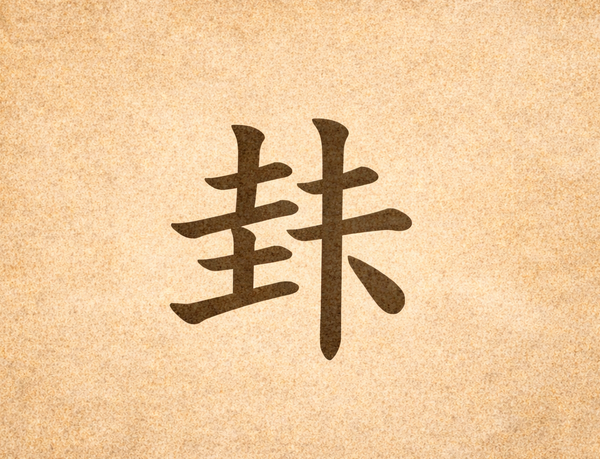
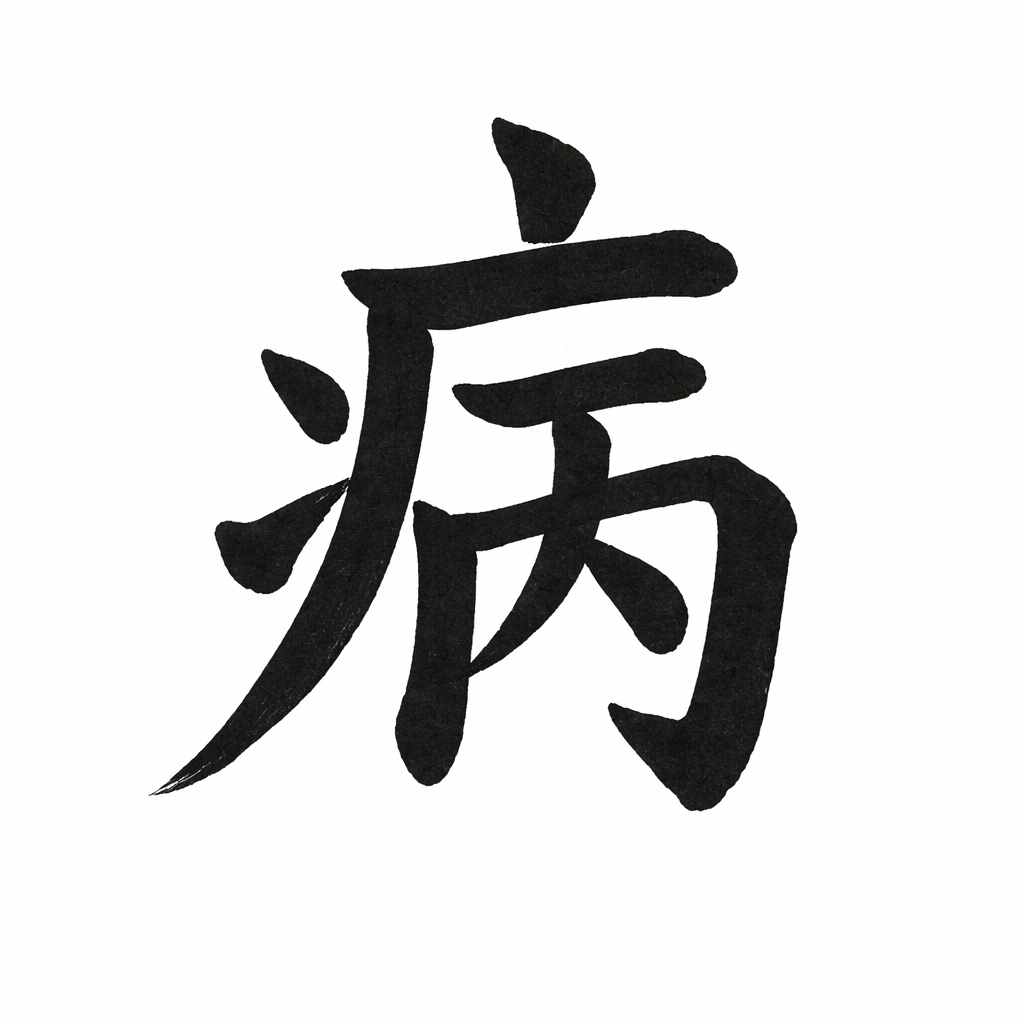
The phrase translated as “disease trigger” is most commonly the Chinese term:
病機 bìng jī
- 病 (bìng) = disease, illness
- 機 (jī) = pivot, mechanism, trigger, developing movement
So 病機 literally means: the mechanism of disease, the dynamic pivot of illness
the developing trigger of pathological change.
The character 機 (jī) is especially rich. It does not simply mean “cause.” It refers to:
- the subtle turning point
- the underlying dynamic
- the hidden mechanism that makes the illness unfold
It is the pivot where imbalance begins to move.
So when the text says:
Carefully attend to the appropriate qi, and do not miss the disease trigger.
Carefully investigate the disease trigger, and do not miss the appropriate qi.
It is describing a reciprocal relationship between:
- 正氣 (zhèng qì) — the correct/upright qi
- 病機 (bìng jī) — the mechanism/pivot of disease
In other words:
If you understand the dynamic mechanism, you will not lose sight of the righteous qi.
If you understand the righteous qi, you will not misjudge the disease mechanism.
The genius of Zhang Ji lies not merely in the formulas he transmitted, but in the clarity with which he revealed the disease triggers 病機 (bìng jī) of each conformation. In the lineage of the Shang Han Lun, illness is never a vague collection of symptoms. Each presentation is anchored to a precise pivot, a mechanism that explains why the symptoms arise, how they relate, and where the dynamic is turning.
Where others might catalogue manifestations, Zhang Ji exposes the hinge. He shows us the moment where exterior becomes interior, where cold transforms into heat, where deficiency begins to bind. This is not description, it is structural insight. By identifying the bìng jī of Tai Yang, Shao Yang, Yang Ming, and the deeper Conformations, he gives the physician a compass rather than a checklist.
To understand Zhang Ji, then, is not simply to memorize formulas and symptoms, but to perceive the movement beneath the surface. The disease trigger is the key. Once the pivot is grasped, treatment becomes inevitable.
Now that we know what the disease triggers or Bingji are, let’s look at the disease triggers for Shao yang disease.
Line 263 of the Shang Han Lun is considered the Outline text for Shao yang, and it states, In Shao yang disease there is a bitter taste in the mouth, dry throat, and dizzy vision. Yet, line 96 gives us the signs and symptoms of Shao yang disease, as well as the modifications for xiao chai hu tang.
A Shao yang pattern is one of the most common patterns of disease. It can manifest as an acute pattern that progressed from a Tai yang wind strike. It can also manifest as a chronic condition.
It can manifest in different ways according to how the pivoting of Shao yang is functioning. The many different ways that Shao yang can manifest is reflected in the text of line 96.
In line 97 we are offered a description on how a Shao yang pattern arises.
When the blood is weak and the qi is exhausted, the interstices are open, and because evil qi enters the body and contends with right qi, there is binding under the rib side.
The Blood is weak, due to excessive fluids loss during sweating. Sweat is a fluid of the Heart. So any loss of fluids causes Tai yang and Shao yin to become weak. Which is why it states that Qi is exhausted. Qi is in this case a combination of Yin fluids and Yang function and warmth.
The binding under the ribs is caused partly from a failure of fluids to move and transform, and partly due to a separation of Yang and Yin in the abdomen mentioned in the following text, the evil high up and the pain is low down.
The right and the evil struggle by turns, so there is alternating aversion to cold and heat effusion that stops and starts periodically, and taciturnity with no desire for food and drink.
Line 96 gives us the disease triggers for Shao yang disease.
96 When in cold damage that has lasted for five or six days or wind strike, there is alternating aversion to cold and heat effusion, the person suffers from fullness in the chest and rib side, taciturnity with no desire for food and drink, heart vexation and frequent retching, or possibly there is vexation in the chest and no retching, or thirst or pain in the abdomen, or a hard glomus under the rib side, or palpitations below the heart with inhibited urination, or absence of thirst with mild generalized heat, or cough, then xiao chai hu tang governs.
Xiao chai hu tang governs, alternating aversion to cold and heat effusion, fullness in the chest and rib side, taciturnity with no desire for food and drink, heart vexation and frequent retching, or possibly there is vexation in the chest and no retching, or thirst or pain in the abdomen, or a hard glomus under the rib side, or palpitations below the heart with inhibited urination, or absence of thirst with mild generalized heat, or cough.
101 If there are chai hu signs, only one sign means that this is the pattern, they do not all have to be present.
The statement that only one sign needs to be present is a blanket statement for all the Conformations.
These are the bing ji of a chai hu disease.
· there is alternating aversion to cold and heat effusion
· the person suffers from fullness in the chest and rib side
· taciturnity with no desire for food and drink
· heart vexation and frequent retching
· or possibly there is vexation in the chest and no retching
· or thirst or pain in the abdomen
· or a hard glomus under the rib side
· or palpitations below the heart with inhibited urination
· or absence of thirst with mild generalized heat
· or cough
Conclusion
Thus the Shao Yang is not a list of symptoms, nor merely a formula to be dispensed. It is a living pivot, a hinge between interior and exterior, ascent and descent, heat and cold. Its signs shift because the pivot shifts. Its manifestations vary because the mechanism is dynamic.
What Zhang Ji gives us in the Shang Han Lun is not complexity for its own sake, but clarity of movement. The alternating chills and fever, the fullness beneath the ribs, the silence, the retching, these are not scattered complaints. They are the visible tremors of a pivot struggling to harmonize.
To recognize even one Chai Hu sign is to glimpse the mechanism turning. As Line 101 reminds us, one sign is enough. Because when the pivot is understood, the pattern is revealed.
Shao Yang teaches us that disease lives in transitions. It lives in the space between. And if we carefully attend to the appropriate qi and do not miss the disease trigger, the hinge will reveal itself.
When the hinge is seen, treatment is no longer guesswork, it is alignment.