The Death of Huntun

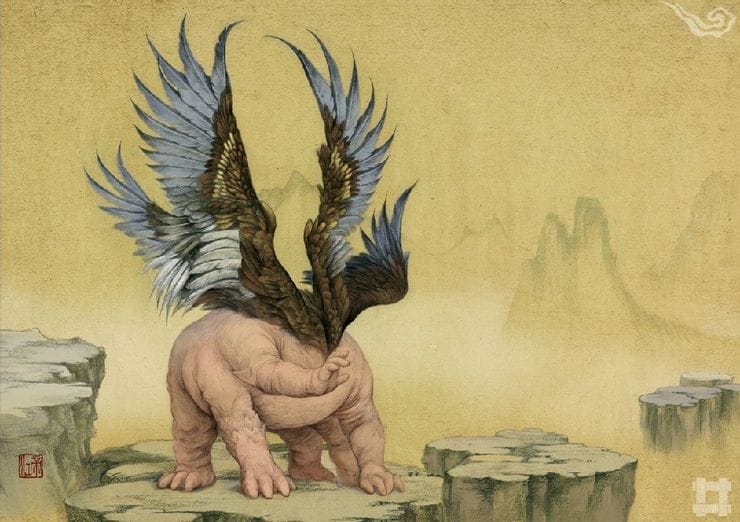
Through the mythology contained in early Daoist texts the spirit of ancient Chinese medicine comes alive. It also makes it easier to remember certain concepts. The Death of Emperor Huntun reflects the cosmological origins of the universe and the human experience.
The myth of the death of Emperor Huntun (混沌, “Chaos”) is one of the most profound and symbolic tales in early Chinese cosmology and Daoist philosophy. It appears most notably in the Zhuangzi (Chapter 7, “Ying Di Wang” 應帝王) and carries deep philosophical meaning about the nature of existence, spontaneity, and the dangers of imposing order on the natural world.
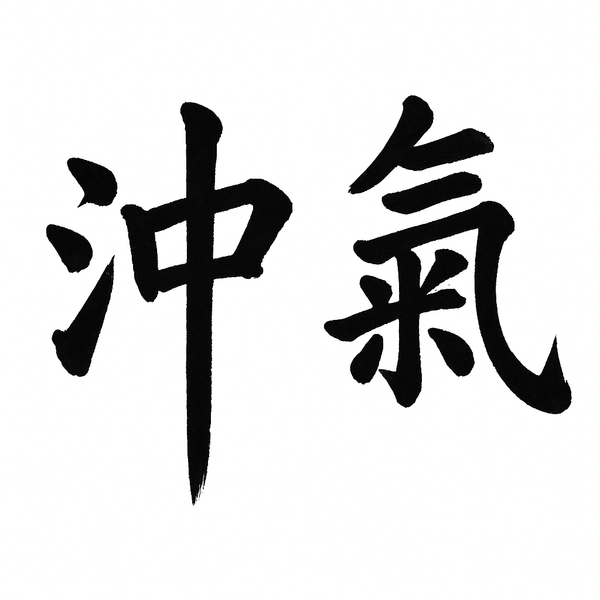
Chong qi is the original dynamism of the universe. It is the chong qi that blends the Heavens and Earth into one. The Heaven, Earth and Chong qi form the fundamental primordial Dao. It is called the Early-Heaven. This is reality before material existence. It is before the naming of the ten thousand things.
Huntun takes the role of the Chong qi is this myth. The Southern ruler, Shu sudden, of the Heavens represents Yang qi and the Northern ruler, Hu abrupt, of the Earth represents Yin qi, offer Huntun gifts. These gifts symbolize our naming of the universe. Naming the universe imposes order and causes the death of the spontaneous nature of the Dao.
The Early-Heaven and Later-heaven are defined in the following text from chapter 42 of the Dao De Jing.
Dao gives birth to one,
One gives birth to two,
Two gives birth to three,
Three gives birth to the ten thousand things.
Dao gives birth to one, One gives birth to two, Two gives birth to three, are describing the Early-Heaven.
Three gives birth to the ten thousand things, is describing the Later-Heaven.
As stages of human development the first three stages corresponds to Early-Heaven and the time before the first breath. The Later heaven corresponds to the time after the first breath till death.
The Death of Huntun
There were once two emperors - Shu (倏, “Sudden”) who ruled over the South Sea, and Hu (忽, “Abrupt”) who ruled over the North Sea. They often met in the territory of Huntun (混沌), the Emperor of the Center.
Huntun was a kind and generous ruler who treated both of them well. Shu and Hu wanted to repay his kindness, but noticed that unlike ordinary beings, Huntun had no eyes, ears, mouth, or nose, he had no openings.
To help him, they decided to bore seven holes in his head, one each day, so that he could see, hear, eat, and breathe.
On the seventh day, Hundun died.
Dying on the seventh day symbolizes the repeating number of the universe. On the seventh day the Yang qi should be returning, it does not, and death occurs.
Chinese Medicine is concerned with the progression and association of time. This is reflected in the gathering of things.
For example the South gathers the periods related to the sixth, seventh, and eighth Earthly Branches, si, wu, and wei, and the three months of summer, and the time of 09:00 to 15:00.
The return of Yang is associated with the progression and changes of Yin and Yang. There are six yang months and six yin months.

The Zi earthly branch corresponds with the tidal hexagram fu turning back. It consists of Yin lines and one Yang line.
Hexagram Fu, returning , pushing through, coming and going without haste. When a friend comes, there is no fault. The Dao is falling away and turning back, in seven days comes a return. It is beneficial to have somewhere to go.
The hexagram fu indicates the return of the Yang qi, its recuperation and renewal.
Meaning of “Huntun” (混沌)
- The word huntun literally means “chaos,” “primordial confusion,” or “undifferentiated wholeness.”
- It represents the state before creation, before Yin and Yang divided, before Heaven and Earth were formed - a cosmic unity that has not yet been split by distinctions or categories.
In Daoist philosophy, Huntun embodies the Dao itself - spontaneous, uncarved, and free from imposed structure.
The moral of the story is clear:
When Shu and Hu “helped” Huntun by giving him human features, by making him like them, they destroyed his natural state of harmony. Their attempt to impose order, reason, and function on pure being killed the original spontaneity.
The Death of Emperor Huntun is a poetic parable teaching that:
True harmony lies in accepting the natural, undifferentiated state of being. When humans (or gods) try to improve or structure what is already whole, they destroy its essence.
It’s a myth about the death of innocence through the imposition of form, and a timeless warning about the human desire to “fix” the world rather than flow with it.