The Foundations of Classical Chinese Medicine

The Foundations of Classical Chinese Medicine
Introduction

The document, The Foundations of Classical Chinese Medicine, explores the foundational principles of Chinese medicine and Daoist philosophy, linking these concepts to cosmology, natural cycles, and metaphysical theories. It covers the role of key elements like Yin, Yang, Qi, and Jing in understanding the universe, health, and the human body. Ancient Chinese thought sees human beings and the cosmos as interconnected, with health depending on harmonizing with nature's cycles and energies. Symbolism from texts like the I Ching illustrates these dynamics, with hexagrams and trigrams representing natural phenomena, seasonal cycles, and cosmic energies. The document also emphasizes the Dao, or "the Way," as the ultimate, undefinable source from which all things emerge, underscoring a holistic perspective on health, existence, and the interplay between Heaven and Earth. 

The document The Foundations of Classical Chinese Medicine can be seen as the base from which modern Traditional Chinese Medicine (T.C.M.)stems from. It will deepen your understanding of T.C.M. and its underlying principles.
Understanding the Ancient Chinese

Why is it so hard for a westerner to understand Chinese Medicine? Most of you reading this have already discovered that it can be a bit confusing learning Chinese Medicine. This stems from the basic differences between Eastern philosophy and Western philosophy. An example of this is the differences in language use. In the East we use words to convey meaning, and in the West they also use word, but they also often use symbols.

I discovered Alan Watts from YouTube. Yes, there is something positive about YouTube. I also discovered that Alan wrote books, lots of books. I ordered one about Zen hoping to find a connection with Chinese Medicine. In this book about Zen Alan described why it is hard for us to understand Chinese thinking beautifully. Thank you Alan Watts for clarifying this dialectical problem. 

For a Westerner a word has mostly one meaning, but this is not so for the ancient Chinese. A Daoist would call this conventional thinking. Conventional thinking reduces things to a description. It is called conventional because it is a matter of social agreement.

夫 Man

Alan Watts; For example the word man suggests a type of person. In describing a man I would say that he has two leg and walks upright. He has two arms and hands which enable him to grasp things. This description can become very long because of the amount of detail involved. This is like trying to drink the ocean. It is impossible to do at one time, so we must drink a cup at a time.

Therefore we need a concept of man that creates a shortcut.  A Chinese thinker has a conventional language that describes man, but there is also the concept of man. In ancient China a man is considered to be connected to nature and therefore connected to the eternal Dao. Because a man is connected to nature we can describe him with the same words that we use for nature. A man contains all Six Climatic influences, like Cold, Dryness, Fire, Dampness, Heat, and Wind. A man contains Yin and Yang qi. He is connected to the Heavens and Earth. He can be described using directions, and each Yin Organ is associated with a direction. All these thing are correct because of the fact that man is connected to nature and the Dao. This way of thinking was normal for the ancient Chinese.

This is why it is confusing at first when trying to understand Chinese Medicine. All things and beings are connected with the eternal Dao and therefore all things are associated with each other. Applying the Five agents of transformation and Yin and Yang to all things and beings is a way of organizing the universe.

For example the sun can be called Tai Yang, but also the Heart of man. The Tai Yang Heart belongs to the Fire element and to the South. In the Six Conformations the Heart belongs to Shao Yin, which is connected to Water. The Heart is Fire in Water in the Shao Yin conformation. The Heart is our connection to the Dao, it is the Ruler, the Yang brilliance, the Destiny fire, the Ming men, and Dragon fire. All these things can be correct at the same time.

The Dragon

At the time of this writing it is the year 2024. According to the Chinese calendar this year is associated with the Dragon. The ancient Chinese believed they are descendants of the Dragon. How can this be?

The Dragon in ancient Chinese thought and Daoism mean the same thing. What does the year 2024, Ming men, Taiji, Yin and Yang Qi, Yuan qi, and Qian Heaven have in common? The symbolism of the Dragon represents them all.

The symbol of the Dragon is related to the symbol of Taiji. It is the Taiji, or Supreme ultimate that allows for the resurgence of life and renewal of the cycle of becoming, being, decay, and oblivion. 

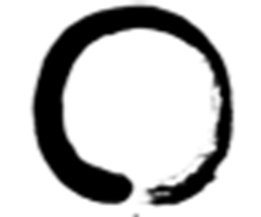
The symbol of Taiji is a circle.

The symbol of Taiji was originally a snake devouring itself.

This symbol tuned into the Yin and Yang Qi symbol we know in the west.

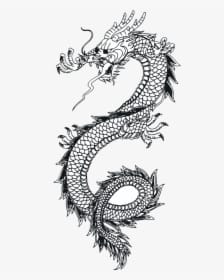
The curved line in the ancient Chinese character for Dragon is taken from the character of the Snake. The character for Snake becomes the character for Dragon by adding arms and legs. 

The ancient Chinese Character for Dragon

Dragon in script

In this radical the bottom left is the dragon mouth, the upper left is the head, the right is the body, lower right is the tail.

What does the Dragon represent? It is the Taiji or Supreme ultimate that allows for the resurgence of life and renewal of the cycle of becoming, being, decay, and oblivion. The Taiji is what starts each cycle. The Dragon is what starts the transformation cycle.

Miyoko Nakano suggests how the earliest form of the Dragon derived from the image of a Snake devouring itself. This is related to the Taiji symbol where each half represents a Snake/Dragon devouring the other.

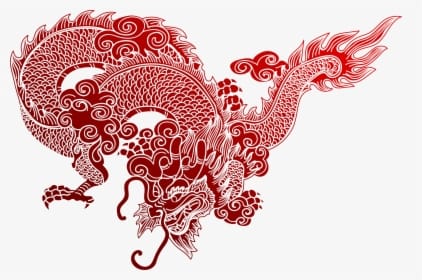
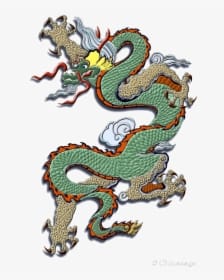
Fujido Etymological Dictionary states; The Dragon is a mythical animal that looks like a giant Snake. It has four legs, horns, and long whiskers. The Dragon creates the clouds and causes rain to fall to the ground.

The transformative energy of Yang causes the clouds to form, which then turn into rain. The Yang nature of the Dragon is what brings Water to life.

The Dragon clearly represents that of deep, generative, cosmic forces. The Dragon makes the Fire come out. The generative energies are activated and the Nutritive yin Fire comes into play. The association of the Water symbol furthers the description of the Kidney energy as primary and creative.

It is Ming men and the Dragon that connect us to the Dao. In the Tong Su Shang Han Lun commentary from 1916 it is written; The existence of the root is described as Dantian in Daoism, and as Ming men in the Nan Jing.

The existence of the root is referring to the Source. Ming men is another word for the Yuan qi or Heavenly qi, or Pre-natal qi, or Dragon fire.

The Dragon represents the Qian Heaven, the Original qi, and the transformative power of Yang qi. Therefore it is part of the eternal Dao. Therefore we are descendants of the Dragon fire. This Dragon fire is distributed in our body by the San jiao.

Sugiyama states; The San jiao and the moving Qi between the kidneys are basically the same thing, but later they divide. The San jiao is the primary verbal knowledge of the medical Dao.

The Moving qi between the Kidneys is felt around the navel, which is the center of our body.

What do we seek in Chinese Medicine?

All Chinese Medicine must be based on certain governing principles to be considered Chinese Medicine. These principles are reflected in the following text from the Classic text Huang Di Nei Jing Su Wen. The title of this text can be translated as the Yellow Emperor’s Classic.

Yellow Emperor’s Classic;

Huang Di, As for Yin and Yang, they are, the Dao of Heaven and Earth, the fundamental principals governing the myriad beings, father and mother to all changes and transformation.

The basis and beginning of generating life and killing, the palace of Spirit brilliance.

To treat diseases, one must search for the Basic.

Yin and Yang qi are the way in which nature changes and transforms. They govern all living beings and are the source of the Spirit brilliance. The palace of Spirit brilliance is referring to the Source. This Source is where Yin and Yang qi come from. The word brilliance denotes a form of Yang qi and is synonymous with the Dragon. It is the Taiji which is the Source of Yin and Yang qi.

To treat disease we are told to look for it in the Basic. The Basic is seen as synonymous with the Taiji. The Taiji is the Source of all the Yin and Yang qi in the universe before it divides. As evidenced by the following texts.

Zhou Yi; The Great ultimate Taiji, is where the Basic qi is still blending or swirling before Heaven and Earth are divided.

Shou Wen; The Basic qi divides. The light , clear, Yang part becomes Heaven. The heavy, unclear, Yin part becomes Earth.

Basic qi is related to the cycles of birth, death, and rebirth.

Hou Han Shu; All living things have Qi, they are born and then they die. This is the common cycle of Heaven and Earth. This is nature. Death is when the Basic qi leaves the body and the Hun disperses, returning to the Root, returning to the beginning, returning to the cycle.

The Center or Source

As the heavens revolve around us there is one point that remains unchanged. This is the North star in the Northern hemisphere.

As the heavens turn around the Pole star, the creation of Yin and Yang was seen to occur. The Pole star is the very centre of all movement and processes in the universe, and its position is always the same.

As the earth rotates the stars are seen to make a circular pattern in the sky. This axis corresponds to a line that corresponds with the axis of the earth. The centre of the axis is the North star and lies exactly on the axis of the earth’s rotation.

Today this star is Polaris, which can be found in the little dipper Ursa Minor. Because the earth is not a perfect sphere the North star changes. The earth wobbles and make an ellipse every 26, 500 years. This is known as the progression of the equinoxes which results in a series of different North stars.

The Pole star in the Han dynasty was called Tian shu. The first star of the Big dipper was also called Tian shu. The name Tian Shu denotes something important as evidenced by the following texts.

Shi Ming writes that; Tian shu is the master of Heaven, the North star.

Guan Xiang Wan Zhan writes that; The first is Tian shu, the first is the North constellation. This is the most respectable star of Heaven. This star is the pivot of Heaven.

Another Pole star or synonym for the Pole star was Zhong ji. Yun Ji Qi Qian writes; Zhong ji is the centre of Heaven, the highest star. This star is the best place in the Heavens. This is the highest and most respectable, it is the master of many stars.

The North star is called the Master of heaven, it is the pivot around which the universe turns. It is seen as the Source of all life. This is where the Yuan or Original qi comes from. 

Another common name for the North star was Taiyi 太乙. Taiyi was also a Pole star and this name corresponds with Taiyi 太一 Great ultimate. The Taiyi, the Great one, and Taiji, the Great ultimate, are basically the same thing.

The Great One                 The Great Ultimate       

太乙     太一

How to find the North star.

The Pole start which is the centre is also the Source of all life. It is the Supreme ultimate which ensures that the cycles end and start over again.

The revolving heavens.

The Number One

In the Chinese character for Taiyi the second radical is the number one. 太一

Yi 一 is the number one.

The number One is synonymous with the Taiyi. The Huan Nan Zi writes of the One.

The Dao begins at One. The One itself does not create. The One divides and then becomes Yin and Yang. Yin and Yang unite harmoniously, subsequently everything is created.

The numbering of the universe starts with Water which is also One. Water is synonymous with potential.

The Center of the Hara

The Hara is referring to the abdomen which is more than the physical centre or the cavity in which the organs reside. It is seen as the residence of the Source of the body’s energies. It is the Centre from which life springs. On the front of the abdomen there are acupoints that are named after the Heavenly stars.

Tian shu is the name for acupoint Stomach 25. It is on either side of the navel and called the Heavenly pivot.

Yellow Emperor’s Classic; The area above the Heavenly pivot is ruled by Heavenly qi. The area below the Heavenly pivot is ruled by the Earthly qi. The place where these Qi intersect is the origin of man’s Qi and the Ten thousand things.

Lonny Jarret; The name Heavenly pivot recalls the Earth element as the central axis around which the seasons and Dao revolve. Located on both sides of the navel Stomach 25 address the nature of our Centre as a fixed reference point that creates stability during transitions.

The other name for Stomach 25 is Xun yuan, or Follow the primordial. Primordial is another name for Original, which reminds us to follow the Source of our Centre.

Taiji is the name for acupoint Stomach 23.

The acupoint has two different spelling of the same word as explained in the first part on this text.

太乙 and 太一

Lonny Jarret; The character Yi denotes the number One and is identified with the influence of Heaven in our lives as the single unifying principal motivating our evolution. The alternate name of Stomach 23 refers to the unity of Dao as the great seed from which all things arise.

Zhong ji is the name of acupoint Ren Mai 3.

Zhongji translates as Middle pole. The Middle pole or palace is what turns around the Centre of Heaven.

The Shi Ji writes; The Middle palace, Heavens ultimate star, the One which is bright, is the Great one. The position of it is always the same.

The Middle palace is the area around the Pole star that was seen as the Centre of the Heavens. 

Dan Tian is focussed around Guan Yuan Ren Mai 4. Which is translated as Gate of Origin. It also has another name, the Gate of Basic. Ren Mai 4 is an important acupoint referring to the relationship with Yuan or Original qi, and Basic qi. It is one of the most fundamental energies of the body and universe. 

On the back of the abdomen there are acupoints that reflect our connection with the universe. The following acupoints have a relationship with the Centre of the body as the Centre of the universe and Source of life. 

Shen shu is the name for Bladder 23. It also has another name, Jing Shu.

The Transporting point of the Kidney serves as a reserve for the Ming men or Yuan qi of the body.

Lonny Jarret; Located on either side of Ming men, Shen shu provides a strong reserve of Qi for the Kidney official.

The term Kidney official is referring to the Heavenly mandate of the Water element, which is the True qi, or Yuan qi, or Original qi. The Shen Shu therefore stands as a reserve for the Dan Tian.

Qi Hai Shu is the name for Bladder 24.

It is located directly behind Ren Mai 6. Ren Mai 6 is the Sea of qi acupoint. It also has another name, Dan Tian.

Lonny Jarret; The function of the Sea of qi is congruent with the function of Ming men and the Golden gate of alchemy.

In other words Qi Hai Shu is also a reserve for the Ming men and Yuan or Original qi. 

Guan Yuan Shu is the name for Bladder 26.

Guan Yuan Shu is translated as the Primordial gate Shu point. This point is located directly behind Ren Mai 4. Guan Yuan Shu is a reserve for the Yuan or Original qi. 

Ming Men is the name of acupoint Du Mai 4.

The translation of the name is Gate of destiny.

Lonny Jarret; Ming Men may be considered synonymous with Dan Tian, or Lower cinnabar field found in Spiritual alchemy. Here resides the Original or Authentic yin and yang, as endowed by Heaven.

Yuan and Basic Qi

The Chinese character for Yuan refers to the Source. The Chun Qiu defines Yuan qi as the Source and Ben as the Root or Basic qi. Yuan qi comes from Basic qi. Basic qi is the Moving qi between the Kidneys and is the bron or the Source qi that is spread over out body by the San jiao.

Basic qi  Yuan qi

Basic qi is almost the same as Source qi except that Source qi is more active in the interaction of Pre-Heaven and Post-Heaven qi. The Basic qi is more primordial related to the creation of life itself.

Sugiyama explains: The Basic qi before Heaven is said to be the moving Qi between the Kidneys.

The Basic qi is where the Source or Original qi comes from.

Yuan refers to a spring, as a spring of water that flows from behind a rock.

The Shuo Wen Jie Zi states; Yuan is the root origin of Water.

The Basic qi is present at the energetic Centers in the body along with the Source qi. It is the Source qi that is spread over the body by the San jiao. Source qi or Original qi is present in the Source points in the channel system of the Jing lou. The presence of Basic qi and Source qi is what connects us to the universe, nature and the eternal Dao.

Flow of Yuan Qi

The Yuan qi flows differently than the Yin and Yang qi in the channels.

Matsumoto and Birch state; The flow of Qi is always from fingers and toes towards the body. This contradicts the circulation of the primary channels. Therefore the Source qi that moves through Five phase points or Shu points is not only channel qi. Treatment of these points greatly affects the flow of Source qi. It is the San jiao that spreads this Source qi. 

The Five Shu points are also called the Transporting points.

They are the

Jing Well, Ying Spring, Shu Stream, Jing River, He Sea

They are located on the 12 primary channels.

All are located at or distal from the elbow or knee joint.

They play an important role in treatment strategies because the points differ in energetic quality.

According to the Ling Shu each of the transporting points have a different energetic quality. 

There are different translations concerning the Source points.

Ling Shu;

Where the Qi exits, these are the Jing Well.

Where they move is swift currents, these are the Ying Spring. Or Creaks.

Where they flow, these are the Shu Stream.

Where they permit passage, these are the Jing River.

Where they enter, these are the He sea.


The point where the Qi emanates is known as the Jing Well.

The point where the Qi glides is known as the Ying Spring.

The point where the Qi pours through is known as the Shu Stream.

The point where the Qi flows is known as the Jing River and the point at which the Qi enters is known as the He Sea.


Matsumoto and Birch have a slightly different interpretation of the Ling Shu text.

The Five Shu points are known as the Jing, Yong, Shu, Jing, He points.

The Jing points are where the Qi wells out.

The Yong points are where the Qi streams.

The Shu points are where the Qi gushes.

The Jing points are where the Qi moves.

The He points are where the Qi enters or unites.


We can summarize the different translations to get a clear picture of these energetic qualities.

Jing Well exits, emanates, wells out.

Ying Spring moves, glides, streams out. Like a creak.

She Stream flow, pours, gushes.

Jing River permit passage, flows, moves.

He Sea enters, or unites. 

The circulation of flow can be visualized by imagining a person with his hands raised upwards to the Heavens. Then the Heavenly yang qi flows from the fingers to the head and from the head towards the feet. The Earthly yin energy flows from the feet towards the chest and then from the chest towards the fingers.

This image is reinforced by the roundness of the Yang head and the squareness of the Yin chest, which corresponds with the Dao.

Huan Nan Zi, The Dao of Heaven is round, The Dao of Earth is square.

The Yuan qi source points

Lung

Lu 9

Bladder

Bl 64

Large Intestine

Li 4

Kidney

Kid 3

Stomach

St 44

Pericardium

Pc 7

Spleen

Sp 3

San Jiao

Sj 4

Heart

He 7

Gall bladder

Gb 40

Small Intestine

Si 4

Liver

Liv 3

Taiji

The universe proceeds in a flow of cycles. Ji or Ultimate is referring to an Astronomical period.

In China, the ancients clearly defined the cycle of coming into being, remaining, decaying, and fading back into nothingness as one that lasted 31,920 years and was called the Ultimate. At the end of each cycle massive changes take place, life and all phenomena cease, and everything is destroyed.

In order for there to be  a transition from one Ji or Ultimate, from one cycle to the next, there must be something higher than this cycle itself, something external to the Ultimate. After complete annihilation at the end of the cosmological cycle, it is the Tai or Supreme that allows for the resurgence of life and renewal of the cycle of becoming, being, decay, and oblivion. 

Ji or Ultimate is a long cycle.

Tai or Supreme is what allows the cycles to start over after ending. 

There are different ways of writing Taiji. The first is just referring to Tai which means the Ultimate one. The second way is referring to the Upper ultimate or Utmost ultimate.

太一  Ultimate One

太 極  Utmost Ultimate 

太 highest / greatest / too (much) / very / extremely

极 extremely / pole (geography, physics) / utmost / top

The Chinese character for Tai means supreme, extremely, or excessive. But also seniority, respect, and grandness.

The Chinese character for Ji is described as a ridgepole of a house, the highest point of the roof.

Together they suggest something that exceeds or is higher than this uppermost point.

It can be thought of as, higher than the highest point.

The Supreme ultimate is like a ring that has no end. It is the Taiji, or Supreme ultimate that allows for the resurgence of life and renewal of the cycle of becoming, being, decay, and oblivion.

This is not the accepted version of the Yin and Yang symbol in the West.

The Supreme ultimate is a ring.

It may contain the Yin and Yang qi, but then it is the Supreme ultimate containing the Yin and Yang qi.

All change contains the Supreme ultimate or Taiji. Change and the Supreme ultimate produce Yang and Yin qi.

Great Commentary of the Classic of Changes; Change contains the Supreme ultimate Taiji, which is what produces the two polarities.

It may be found interesting that the image of the Taiji must be painted with a brush for then it is spontaneous which represents the eternal Dao.

Dao

Dao in Chinese means many things. First it is the fundamental concept of Chinese philosophy. The base of Chinese philosophy is humanism. Dao exerted considerable influence over subsequent intellectual developments in China. It came about in the Spring and Autumn and Warring States periods of the Zhou dynasty. 1046-256bce.

It is often defined as the way or path. The path is referring to the way nature manifests.

The basic assumption behind Daoism is in seeking how to live in harmony with nature.

The Dao De Jing was meant as a handbook for the ruler. He should be a sage whose actions pass so unnoticed that his very existence remains unknown. He imposes no restrictions or prohibitions on his subjects; “so long as I love quietude, the people will of themselves go straight. So long as I act only by inactivity, the people will of themselves become prosperous.” His simplicity makes the Ten Thousand things passionless and still, and peace follows naturally.

Dao Comes From the Great Void

Huai Nan Zi says this about the Dao; Dao originated from emptiness and emptiness produced the Dao, that which was clear and light drifted up to become Heaven, and that which was heavy and turbid solidified to form Earth.

Dao originated from emptiness in the Great void and contains a Yang and Yin aspect. The lighter forms of Qi drift upwards to become Heaven, and the heavier forms of Qi gather to from Earth.

Zhang Zai says this about the Great void; The great void consists of qi. Qi condenses to become the myriad things. Things of necessity disintegrate and return to the great void. If Qi condenses, its visibility becomes effective and physical form appears.   

The Great void corresponds with the Yuan or Original qi Source theory. The Great void also refers to the idea that we can never fully understand nature and the Dao. Dao describes how nature changes and transforms.  It comes from the Great void and starts out as Basic qi which is the starting point of Yuan, Source, or Original qi. The Original qi divides into the lighter and heavier forms of Qi which we know as Yin and Yang qi.

The Great Void aligns with the concept of Yuan or the Original Qi Source theory. It also embodies the notion that the true nature of the Dao and the universe is beyond full comprehension. The Dao, which dictates the transformation and flux of nature, emerges from the Great Void as Basic Qi, the precursor to Yuan, Source, or Original Qi. This Original Qi then differentiates into the lighter and denser forms known as Yin and Yang Qi. 

Understanding the Dao and the Great Void is a challenge for humanity. Since humans arise from the Dao, when they attempt to elucidate the Dao, it is essentially the Dao trying to explain itself. This act of humans discussing the essence of existence leads to the Dao being judged, stripping it of its inherent chaos and spontaneity. Assigning personal names to things imposes destiny and life upon them, detracting from their true nature. Naming the myriad entities brings them into light, pulling them from the chaotic void. 

Naming transforms the state from Pre-Heaven to Post-Heaven, altering the Dao from an eternal force to a transient one. Our judgments prevent us from grasping the Dao's everlasting essence, which is why texts like Huai Nan Zi suggest the Dao sprang from nothingness, and Zhang Zai proposes that Qi originates from the Great Void. These concepts of emptiness and the Great Void signify our limited understanding of the eternal Dao. 

This implies that our understanding of the Dao will always be incomplete, yet we acknowledge its necessary existence. When you observe me, your perception may vary between seeing the entire cosmos or just an individual. If you perceive me as an individual, you assign me a fate. I then become a man, bound to act as one. 

Since all Dao exhibits motion, Qi must also be dynamic. The Dao's movement begins with the great Water, progressing away from Water towards Fire, Wood, and Metal, before eventually returning. This cycle represents the transition from non-existence to existence and vice versa.

The Daoist sage Laozi is often depicted riding an ox or in an ox cart as he prepares to depart China through a Western pass. The West represents a return to the Source, which refers to the Yuan or Original qi.

The eternal Dao is immutable, yet it exhibits a comprehensible motion. This concept is echoed in the Dao De Jing; 

I do not know its proper name but will call it Dao. If forced to give it a name I shall call it Great. Great means moving away, moving away means far away, and far away means ultimately to return.

Laozi characterizes the Dao's movement as Ziran, or self-becoming. The Dao is in a constant state of self-realization, perpetually departing from and returning to its inherent nature. In its primordial voyage, the Dao invariably circles back to itself. 

Not knowing the name of something means that you do not fully understand it. And this makes sense because we can never fully understand the Dao. The moment we try, we end up further away from understanding it. Trying is a form of grasping, and grasping kills spontaneity. It must be spontaneously felt.

Naming something assigns it a fate. Thus, by labelling the Dao as great, we confine it. The Dao is then compelled to embody greatness, losing its intrinsic, chaotic essence. This is the consequence of naming the Dao. 

When we disregard the Dao, it reverts to its fundamental state. Our efforts to decipher the Dao are futile. Only when we observe its nature, devoid of judgment, can we witness its true manifestation.

Numbering the Universe

The basic numbering of the universe is described in chapter 42 of the Dao De Jing in four stages. The Dao is moving from the unity of non-being to being the myriad things. 

The fifth stage is the axis around which the Dao’s movement occurs. The movements of the Dao are the cosmological basis for the Five Agents of Transformation. 

1 is Water which is great

2 is Fire which is moving away

3 is Wood which is far away

4 is Metal which is the return

5 is Earth which is the axis 

The first stage of Dao corresponds to Water which represents the potential basis for all manifestations in life.

The generation of Fire from Water corresponds to moving away from its original nature.

These two poles generate a third stage which corresponds to Wood. The function of Wood is to blend Water and Fire back into one by harmonizing.

The fourth stage signifies a return from the duality of Fire and Water back into the original nature of Dao as unity.

The duality of Fire and Water corresponds with the Heavenly yang and Earthly yin qi.

The Numbering of the World

一   ( yī ) = 1    二   ( èr ) = 2   三   ( sān ) = 3  四   ( sì ) = 4    五   ( wǔ ) = 5

六   ( liù ) = 6   七   ( qī ) = 7   八   ( bā ) = 8    九   ( jiǔ ) = 9   十   ( shí ) = 10


Water is one and six

Fire is two and seven

Wood is three and eight

Metal is four and nine

Earth is five and ten


The Supreme ultimate is blending Yin and Yang but things do not exist at this level.

The Supreme ultimate does not create. The One or Supreme ultimate divides which gives birth to Yin and Yang qi. Yin and Yang qi are what create the myriad beings.  

The Supreme ultimate contains change but it is produced by Yin and Yang qi.

The Supreme ultimate contains change because it allows for the resurgence of life and renewal of the cycle of becoming, being, decay, and oblivion.

Dao De Jing states;

The Taiji is the Basic qi still blending before Heaven and Earth.

The Dao or Taiji begins at one. The One itself does not create. The One divides and then becomes Yin and Yang. Yin and Yang unite harmoniously, subsequently everything is created.

That which gives birth to creation is called change. Change contains the Supreme ultimate, which is what produces the two polarities. These two polarities produce the four images. And the four images produce the eight trigrams.

Dao gives birth to One, One gives birth to Two, Two gives birth to Three, which gives birth to the myriad things.

Qi, Jing, and Dan Tian

The concept of Qi is utilized in two primary ways. Firstly, it serves as a general attribute or descriptor, such as when one might say someone possesses 'nice' or 'strong' Qi. Secondly, it functions as a noun with both form and substance. In this context, Qi is treated as a noun and concept that elucidates the emergence of form and function.

Dan Tian

The energetic centre of the Hara or abdomen has a location centring around the navel. It is called the Dan tian. This is also the location of the acupoint Ren Mai 4. It contains the Basic qi and the Source qi.

The origin of the character Dan refers to the mine in which one finds cinnabar. That is the first character with the short line in the middle. The Shou Wen Jie Zie tells us that it; refers to a kiln where the cinnabar is melted.

It has two different meanings then. One is a mine and the other a kiln. Both suggest a source of the cinnabar. The small line in the middle of the first character is the cinnabar.

Tian refers to a field where things are grown. This is the second character with the cross in the middle. This is how the common translation of the term “red fields” or “cinnabar fields” field comes to be.

It is the colour of red that symbolizes the South and Fire. The red colour, the South, and the Dragon symbolize Yang qi naturally. It is the Yang qi that transforms Yin qi to produce life.

Dan tian is referring to the Basic qi and the Source qi that we also call Ming men, the Yuan qi or Original qi.

Dan tian is also referring to the Yang qi, the Pre-Heaven fire, the Qian Heaven, with its red colour. 

The Chinese character for Jing and Qi

 Jing                               

Qi

Naturally the question arises, then what is qi? The Chinese characters for Jing and Qi use the Chinese character for rice. The rice represents a source of energy.

The modern character for Jing refers to vital energies in living things, possibly those derived from food. The modern character for Jing use the symbol for moon or flesh on the right. In ancient China the moon radical was replaced by the cinnabar character.

Qi

When Qi gathers together form comes into being and it has two different qualities. 

The Yellow Emperor’s Classic; Qi gathers together and then form comes into being.

Qi contains two aspects. And the two aspects are describing one thing.

This is expressed by the saying; The one is two, and the two are one.

Qi has two aspects, namely Yin and Yang qi, which is reflected in the Chinese Character.

The Chinese character for Qi has two parts. The first part represents vapor, steam, or gas. The second part represents a grain of rice. The Chinese symbol for Qi is represented by steam and uncooked rice suggesting the release of energy and potential for energy and the material all in one.

起 Qi    气 Damp   来 Rijst

Since Qi is a part of nature and the Dao, then it too must have a basic movement. Qi contains the generating and birthing quality and the collecting and storing quality. Qi contains the Yang and Yin of all phenomena.

There is a text from the Yellow Emperor’s Classic basically describing the way Yin and Yang qi manifest in nature. Since the one is two and the two is one, we can replace the words Yin and Yang qi with Qi to describe its movement.

Yang births, yin grows, yang declines, yin stores.

Qi births, and grows, it declines and stores.

Qi is connected to the Dao, it forms the Heaven and Earth. It is the Dao of Heaven and Earth, the father and mother of change and transformation, the fundamental principal governing the myriad things, the basis and beginning of generating and declining, it is the palace of Spirit brilliance. 

Jing qi

Jing is translated as Essence which is a form of Qi. It is something to be arrived at by a process of refinement or distillation. There are three types; Pre-Heaven, Post-Heaven and the Kidney Essence.

Heiner Fruehauf describes Jing this way;

Jing is the Chinese designation for the essential fluid of our physical body. The archaic Chinese character for Jing denoted the most refined essence obtained from rice. The Basic Yin from which all Yang springs is Jing. In classical Chinese medical texts, Jing is sometimes referred to as the body's "original water" with Water representing the Ultimate yin and Fire being the ultimate Yang.

Other dense fluid essences such as saliva, vaginal fluids, breast milk, or blood are all regarded to be different transformations of one and the same Jing; these are refined essences. 

Jing as the Basic Yin from which Yang spring gives the impression that Jing is certainly Earthly. Therefore it stores and controls, grows and nourishes Yang. Jing is also called the Original Water of the body expressing the connection between Earth and Water. 

Pre-Heaven Essence

Pre-Heaven Essence is what you get from your biological parents. It can be considered the DNA and the epigenetics of our bodies. It is also the energy systems and function of our cells. This is comparable to the bodies blue print and the ability to change the blue print.

Post-Heaven Essence

This is the Essence that is extracted from food and fluids during digestion that together with air supports us in life.

The Pre-Heaven Essence originates from the parents and the Post-Heaven essence originates from food and air.

Kidney Essence

It is a combination of the Pre and Post Heaven energies.

The I Ching

The classic book I Ching is considered a Daoist text because it describes how nature manifests. The I Ching uses images to describe different aspects of the concept Qi.

In the classic book I Ching the concept of Yin and Yang are represented by lines. The first image of Yang is one solid line. The first image of Yin is one broken line.

In order to create more images of Yin and Yang another line is added. So the two images become four, and by adding another line this makes eight images. The four images created by using two lines represents different qualities of Yin and Yang qi. The eight images or eight trigrams represent all the natural phenomena in the world.

The Yuan qi in the Great Void Divides and Becomes Yin and Yang qi

The Great void is where the Taiji and the Basic qi reside. The Basic qi is the source of the Yuan original qi that divides and becomes Yin and Yang qi. Yin and Yang qi interact to create all possible phenomena in the universe. The lighter elements drifted upwards becoming Yang qi, and the heavier elements sink downwards becoming Yin qi. Yin and Yang qi create the Heavens and Earth and all the myriad beings.

Lie Zi writes; The purer and lighter elements tending upwards made the Heavens, and grosser and heavier, tending downwards made the Earth.

Huai Nan Zi says this about the Dao; Dao originated from emptiness and emptiness produced the Dao, that which was clear and light drifted up to become Heaven, and that which was heavy and turbid solidified to form Earth.

The Huan Nan Zi writes of the one; The Dao begins at One. The One itself does not create. The One divides and then becomes Yin and Yang. Yin and Yang unite harmoniously, subsequently everything is created.

Zhou Yi; The Great ultimate Taiji, is where the Basic qi is still blending or swirling before Heaven and Earth are divided.

Shou Wen; The Basic qi divides. The light , clear, yang part becomes Heaven. The heavy, unclear, yin part becomes Earth. 

This text from the I Ching sums it up nicely.

Classic of Changes; That which gives birth to creation is called change. Change contains the Supreme ultimate, which is what produces the two polarities. These two polarities produce the four images. And the four images produce the eight trigrams.

Dao gives birth to One, One gives birth to Two, Two gives birth to Three, which gives birth to the myriad things.

The Eight Trigrams

We use the symbols of yin and yang qi to describe different phenomena in our universe.

The Eight possible natural phenomena are then used to describe all possible phenomena with 64 different sorts.

There are different terms used in the I Ching that need defining. The combination of various lines have names. The first line simply represent the first division and quality of Yin or Yang qi. When the single lines are combined the four images are created. The four images describe the four basic qualities in the universe and are used to describe the four cardinal directions. The four images are also the starting point for the Five agents of transformation. When the lighter and heavier elements of Qi created the Heavens and Earth they also created the South, North, East, and West directions. The directions revolve around an axis. This axis is the Earth, creating the Five agents of transformation.

When three Yin and Yang lines are combined they are called trigrams. When six Yin and Yang lines are combined they are called hexagrams.

After the first division the Heavens and Earth are created and these are represented in different ways.

Qian Heaven can be represented by either one,  two, three, or six solid Yang lines.               

Kun Earth can be represented in the same way but naturally using yin broken lines.

The eight trigrams and the concept of Heaven and Earth are very important in Chinese Medicine and Daoism because of what they represent.

Qian Heaven   

Kun Earth   

Qian Heaven consists of three solid Yang lines. Yang is the principle of light and the Heavenly, so it has to be represented in abundance in the trigram of Heaven. This trigram represents the transformational quality.

It's the ultimate Yang.

Kun Earth consists of three broken Yin lines. Yin stands for Earth, dark, and cold. The trigram represents the receptive and birthing quality.

It’s the ultimate yin.          

The Interplay of Yin and Yang

Heaven and Earth are represented as absolute in the Pre-Heaven, but in the Post-heaven they are no longer absolute.

Yellow Emperor’s Classic, chapter 6 The Interplay of Yin And Yang;

Huang Di said, I understand that Heaven and the sun are considered Yang, and Earth and the moon are considered Yin. The energy flow within the human body through the channels corresponds to this. Can you elaborate.

Yin and Yang are not absolute, but their principal never changes. The law that governs does not falter, although everything around it changes according to the point of reference. For example, before the birth of all things and creatures above ground, the living potential resided in the place of Yin. This is called Yin within Yin. Once it was born and appeared above ground, this phenomenon was called Yang within Yin. It was after birth or Post-Heaven that the Yang qi enabled everything to grow. 

Heaven and the sun are Yang, Earth and the moon are Yin in the Pre-Heaven.

Yin within Yin. In the Pre-Heaven all things resided underground, in Earth. The living potential resided in Yin earth.

Yang within Yin. In the Post-Heaven all things appeared above ground. The Yang qi enabled everything to grow.

Once the Yang qi enabled everything to grow there was a merging of Yang and Yin energies and a transforming of things called change.

The Myriad Beings

Qian Heaven and Kun Earth interact and all things come into being. The two create six different forms of images of Yang and Yin.

The Classic of Changes, Qian heaven trigram and the Kun earth trigram gave birth to six offspring. 

The three male offspring, Zhen Thunder, Kan Water, Gen Mountain.

The three female offspring, Sun Wind, Li Fire, Dui Lake.

The three male offspring

Zhen Thunder

Kan Water

Gen Mountain

The three female offspring

Sun Wind

Li Fire

Dui Lake

True Transmission of Medical Principals; Of Qian and Kun’s six children, the youngest and the oldest are all imbued with biases of Qian and Kun. Only the middle male and female have received their natural disposition from Qian and Kun. People receive the cardinal Qi of their original nature from Heaven and Earth and thereby come to life. Kan and Li therefore act as the root of establishing life.

Kan and Li are able to act as the root of establishing life.

The original nature of Kan water is Yang, which is why Yin water is placed in the male group.

Yang brings life to water.

The original nature of Li flame is Yin, which is why it is placed in the female group.

Yin allows Yang to burn.

Qian heaven

Summer creative

Father

South

Kun earth

Winter receptive

Mother

North

Xun wind

Summer gentle

Eldest daughter

Southwest

Kan water

Autumn abysmal

Middle son

West

Gen mountain

Autumn still

Youngest son

Northwest

Zhen thunder

Winter arousing

Eldest son

Northeast

Li fire

Spring clinging

Middle daughter

East

Dui lake

Spring joyous

Youngest daughter

Southeast

The Trigrams of Qian Heaven and Kun Earth

Trigram 1 is Heaven (qián or ch'ien), consisting of three solid Yang lines. Yang stands for Heaven, light, and warmth. The trigram represents creativity, since Heaven is in ancient Chinese thought regarded as the origin of the world and the mightiest force in it. It also denotes the dry warming of the sun, and it suggests the male principle.

The Chinese character for this trigram, shown below, represents the drying light and warmth of the sun.

Trigram 8 is Earth (kun or k'un), consisting of three broken Yin lines. It's the symbol of the female principle in ancient Chinese tradition. The trigram for Earth, then, is all about Yin. The trigram represents the receptive, since that is traditionally seen as the role of Earth in relation to Heaven. It also represents the field on which is grown what we need to survive. 

The Chinese character for this trigram, shown below, represents Earth and female.

Of the eight trigrams Fire and Water are the most important for Chinese Medicine.

Trigram 3 is Fire ( or li), the consuming energy, which is also one of the Five Chinese elements. The trigram represents the clinging and radiance. It also stands for breaking free and departing.

The difference between Qian Heaven and Li Fire is the consuming nature of Fire is not seen in the Heavenly Heat.

The lines show the Earthly yin surrounded by the Heavenly yang. That brings a boost of potency to the earthly, enough to make it burst into flames. Earth is consumed by the Heavenly forces surrounding it, therefore the trigram stands for breaking free, leaving to another state of being.

The Chinese character of this trigram below uses the symbol of birds flying away, for its meaning of departure and separation.

Trigram 6 is Water (kan or k'an), which is one of the Five Chinese elements. The trigram represents the abysmal, the gorge, since that's where the Water naturally travels. The nature of Water is to flow to the lowest place.

The lines in the trigram imply this characteristic of Water. A Yang (heavenly) line surrounded by Yin (earthly) lines. Water is earthbound, but moves of its own will, in spite of this captivity. It strives to go underground, but still it is stopped by Yang which bring life to Water.

The Chinese character for the trigram below means pit, hole or trap, expressions of the downward movement of Water. It also means crisis, probably from the threat of something in nature behaving in its own mysterious way, moving towards regions out of our control.

The difference between Water and Lake is subtle. Shouldn't the lake, with its depth, be more abysmal than water? But the lake is usually experienced by its surface, not its depth, whereas water always insists on flowing downwards, seemingly forever. Water is heading for the abyss.

In Kan Water the Yang is stored.

In Dui Lake the Yang is potential.

Water and the West

Just like Laozi when he leaves China by way of a pass to the West. The West representing the return to the Source. Dui Lake represents the Source. Which is why Dui Lake is placed in the West in the Post-Heaven arrangement of the eight trigrams.

The source is the eternal Dao. The unity with non-being.

Kan Water and Dui Lake share the West. Kan Water is placed in the West in the Pre-Heaven arrangement of the eight trigrams. Dui Lake is placed in the West in the Post-Heaven arrangement of the eight trigrams.

The hexagram Chien 60 is Water on top of Lake. It represents limitations.


A lake occupies a limited space. When more water comes into it, it overflows. Therefore limits must be set for the water. The image shows water below and water above, with the firmament between them as a limit.

Because to know ones limitation brings contentment. Lake is potential and the Yin Earth line is the limitation.

The Pairs According to Energetic Qualities

Richard Wilhelm; The I Ching on Early-Heaven Xiantian

Heaven and Earth determine the directions. The forces of Mountain and Lake are united. Thunder and Wind arouse each other. Water and Fire do not combat each other. Thus are the eight trigrams intermingled.

Qian Heaven determine the directions

Kun Earth determine the directions

Gen Mountain united with lake

Dui Lake united with mountain

Zhen Thunder arouses wind

Sun Wind arouses thunder

Li Fire does not combat water

Kan Water does not combat fire

Three Character Classic

This is another way to organize and remember the different energetic qualities of the eight trigrams. Notice the pairing is one of opposites. The pairs are Qian and Kun, Zhen and Gen, Li and Kan, Dui and Sun.

Qian Heaven’s continuous three

Kun Earth’s broken six

Zhen Thunder’s wide-mouthed jar

Gen Mountain’s bowl overturned

Li Fire’s center is empty

Kan Water’s center is full

Dui Lake’s top is lacking

Sun Wind’s bottom is broken

Organizing the Universe

The big dipper rotates in the Heavens according to the seasons and so the relationship with the cardinal directions is chosen. The direction of the summer corresponds with the South. The spring corresponding with the East, the autumn corresponds with the West, and the winter with the North.

The Basic qi in the Heavens gives birth to the Yuan original qi that then divides and creates the Yin and Yang energies of the universe. In the first division the directions are born and correspond with the seasons.

There are many cycles in our world, with the seasonal cycle and daily cycles influencing us greatly. Using the fixed North pole star in the Heavens the ancient Chinese organized their world. Out of the first division of the Yuan original qi the Heaven and Earth was born.

This first division defines the rest of the universe.

The Heavens represented the maximal Yang and Earth the maximal Yin.

The Heavens correspond with the summer and the South.

The Earth corresponds with the winter and North.

The East corresponds with the spring, and the West corresponds with autumn.

And so the rest of the world was organized each according to its energetic quality. 

Out of the first division the seasons are born along with the directions, the associated color, and element of transformation. 

The ancient Chinese used the Yin and Yang symbols from the I Ching to describe the cycles of the moon and sun. The waxing and waning of the moon, also called the firing times of the lesser circuit of the sky, and the circulation of the sun, also called the firing times of the greater circuit of the sky,  each phase of the cycle is represented by different trigrams and hexagrams. 

The eight trigrams are used to describe the circuit of the moon.

Hexagrams are used for the circuit of the sun.

The Ten Heavenly Stems and the Twelve Earthly Branches

The Ten Heavenly Stems or Celestial Stems originally were the names of the ten days of the week. The Heavenly Stems were used in combination with the Earthly Branches, a similar cycle of twelve days, to produce a compound cycle of sixty days. Subsequently, the Heavenly Stems lost their original function as names for days of the week.  

The ancient Chinese divided the Heavens into four regions according to the directions. Each region contains seven mansions. These mansions are used to track the moon around the Earth. Each region in the Heavens was represented by the four symbols. The Ten Heavenly Stems were used to track the moon's progression along its monthly circuit, in conjunction with the Earthly Branches referring to its phase. 

The Four symbols representing the directions.

Eastern region is represented by the blue green dragon.

Southern region is represented by the vermillion bird.

Western region is represented by the white tiger.

Northern region is represented by the black tortoise.

Ten Stems

The Ten Stems are based on the Five Elements of Wood, Fire, Earth, Metal and Water.

Each Element has a Yin and a Yang version,  making ten total.

They are organized according to a direction and element, and is associated with the Twelve Earthly branches.

Direction

Element

Stem

Branch


East

Wood

Jia Yang

Yin, Mao


Wood

Yin Yin


South

Fire

Bing Yang

Si, Wu


Fire

Ding Yin


Center

Earth

Wu Yang

Chen, Xu, Chou, Wei

Last month of season.


Earth

Ji Yin


West

Metal

Geng Yang

Shen, Yao


Metal

Xin Yin


North

Water

Ren Yang

Hai, Zi


Water

Gui Yin


The Twelve Branches and the Seasons

Hai and zi belong to Water, winter.

Yin and mao belong to Wood, spring

Si and wu belong to Fire, summer.

Shen and you belong to Metal, autumn.

Chen, xu, chou, and wei belong to Earth. The earth element occupies the last month of each of the four seasons. 

To find the Stem and Branch for any day use the link below.

https://www.prokerala.com/general/calendar/chinesecalendar.php

The system of the 12 Branches is based on the orbit of Jupiter, which takes almost 12 years to revolve around the earth. The 12 years of the Jupiter cycle is also used for the months of the year, seasons, directions, and the two hour time periods of the day.

The 12 Earthly branches are also use to keep track of the sun’s movement. These are called Solar terms and are almost 15 or exactly 15 days long. Each month contains two Solar terms. In Chinese these are called jieqi. 

How the telling starts

Yellow Emperor’s Classic chapter 68

Qi Bo, The Qi of Heaven starts with jia.

The Qi of Earth governs under zi.

The combination of zi and jia is called annual set up. 

Zhang Jiebin; The Qi of Heaven has Ten stems and begins with Jia, the Qi of the Earth has Twelve branches and begins with Zi. 

The annual set up is a combination of the elements Wood and Water. They are represented by the hexagram Fu. Fu is when the Yang returns. The one solid line in Fu is representing the return of Yang.

Fu

Each of the twelve Earthly Branches is represented by a hexagram. Looking at the hexagram for Fu it is clear that the return of yang is present. Each of the twelve Earthly Branches corresponds with a hexagram, a time period, a month, and one of the Six Conformations. The Six Conformations is referring to three Yang and three Yin energetic types.

Although the Fu hexagram is associated with the eleventh month of the lunar calendar, strictly speaking the jieqi Solar term, of the hexagram does not find expression until the winter solstice. Solstice’s are the longest and shortest days of the year, while equinoxes occur when the day and night are equally as long. 

The one Yang line in the Fu hexagram is the return of the Yang in the winter solstice.

The Fu hexagram consists of the trigram Kun Earth above and the Zhen Thunder below. The Earth’s Thunder returns.

Thunder within Earth is Fu. 

During the fifth month, when the summer solstice takes place, it is the time of the hexagram Gou.

Book of the Later Han;  According to the Classic of Changes, in the fifth month when the forces exemplified by the tidal hexagram Gou are in power, the kings of old ordered that movement in every corner of the kingdom should cease.

Gou encountering

Wind within Heaven is Gou

The kings of old closed their borders when the solstice arrived, and traveling merchants could not move about. This was the return of the end of the utmost Yang qi. Not only should we close our borders during the winter solstice but also the summer solstice.

The Chinese custom of taking a nap at midday stretches all the way back to the Zhou dynasty.

The Earthly Branches Zi and Wu are the eleventh and fifth months respectively. These branches correspond to the two hour time period between eleven and one during the day and night. 

The Earthly Branch Zi resides in the North. It is the place of Water and form. The Yang function returns to the root in order to return to the interior of form, the body. This allows the body to recuperate.

The Zi period makes the return, when the Yang qi begins to slowly increase. When the time period of Zi, Chou, and Yin is entered, is precisely the time when the Yang qi has returned to the root and begins to recuperate.

Time Periods and Respective Qi

It is important to know when the time periods start because this gives us valuable information we can use for treating disease. It is also important because it reflects our connection to the eternal movement of the Dao and nature.

The Yellow Emperor’s Classic; When a time period begins, the respective Qi spreads.

The Yellow Emperor’s Classic: Understanding the Dao requires knowledge of the pattern of Heavens above, and Earth below, and the affairs of humanity in between. This way it will last forever.

The appropriate Qi, in Chinese qiyi, is mentioned twice in the Yellow Emperor’s Classic.   

Carefully attend to the appropriate Qi, and do not miss the disease trigger. 

Carefully investigate the disease trigger, and do not miss the appropriate Qi, that is it!

 These two lines are essentially interchangeable. The disease trigger is the appropriate Qi, and the appropriate Qi is the disease trigger. 

This tells us that we are to think about the disease trigger in light of the appropriate Qi, and that we should consider the appropriate Qi while fully grasping the particular trigger of the disease.

Seven is the Repeating Number

The hexagrams that correspond to the periods of Hai and Zi illustrate the changes of Yin and Yang.

The Hai Earthly branch corresponds with the tidal hexagram Kun Earth. It consists of only six Yin lines. This is the hexagram before the hexagram of Fu.

Hai

The Zi Earthly branch corresponds with the tidal hexagram Fu. It consists of Yin lines and one Yang line. The one solid Yang line represents the return of yang qi.

Fu

The hexagram Fu indicates the return of the Yang qi, its recuperation and renewal.

Classic of Changes; Fu, returning , pushing through, coming and going without haste. When a friend comes, there is no fault. The Dao is falling away and turning back, in seven days comes a return. It is beneficial to have somewhere to go. 

The Dao of falling away and turning back, in seven days comes the return.

The twelve tidal hexagrams can be divided into Yin and Yang categories.

The hexagrams Fu, Lin, Tai, Dazhung, Guai, and Qian belong to Yang. Yang is in the process of increasing. 

The hexagrams Gou, Dun, Pi, Guan, Bo, and Kun belong to Yin. Yin is steadily increasing.

If we regard each hexagram in this succession as a single day, the entire course of Yin’s increase takes exactly six days. From the last of the Yin hexagrams to the first of the Yang hexagrams takes seven days or months.

When this Yin progression concludes, the cycle returns to the beginning of Yang’s increase at the hexagram Fu.

Gou, Dun, Pi, Guan, Bo, Kun and Fu total seven. Seven is the number of the repeating process.

In the same way it takes Yin seven days to recover.

This cycle of seven is important because there are Six conformations or three yin and three yang types. The Six conformations are connected to the Dao and cycles of nature. 

This progression of Yang qi is reflected in disease.

Yellow Emperor’s Classic; Now, as for heat diseases, they all are of the type ‘harm caused by cold’. Some are healed, some end in death. When they end in death, this always happens within six or seven days.

If Yang qi fails to return then the patient will die.

In the Classic of Cold Damage we see this constantly.

Line 8 When in Tai yang disease, a headache lasts for more than seven days, and then the patient spontaneously recovers, this is because the evil has gone right through the channel. If it is about to pass to another channel, and one needles foot Yang ming to prevent passage, then the patient will recover.

The patient recovers spontaneously after seven days. The following text describes this as, the evil, cold, has gone right through the channel, and the patient spontaneously recovers.

This passage of the Cold outwards indicates that Yang qi has returned. It is the ability to sweat that indicates that Yang has returned.

The Classic on Cold Damage is not the only text that describes the three yin and three yang and the progression of disease.

Yellow Emperor’s Classic chapter 31;

Qi Bo: In the case of harmed by Cold, on the first day the Tai yang vessels receive it. Hence the head and nape have pain; the lower back and the spine are stiff.

On the second day, the Yang ming vessels receive it. The Yang ming rules the flesh; its vessels line the nose on both sides and enclose the eyes. Hence, the body is hot, the eyes have pain, the nose is dry, one cannot lie down.

On the third day, the Shao yang vessels receive it. The Shao yang rules the gall bladder; its vessels follow the flanks and enclose the ears. Hence, the chest and the flanks have pain, and the ears are deaf.

When all three Yang vessels and network vessels have received this disease and before it has entered the Depots, one can make the patient sweat and the disease ends.

On the fourth day, the Tai yin vessels receive it. The Tai yin vessel spread into the stomach and enclose the throat. Hence, the abdomen is full and the throat is dry. 

On the fifth day, the Shao yin vessels receive it. The Shao yin vessels penetrate the Kidneys and enclose the Lung. They are attached to the base of the tongue. Hence, the mouth is desiccated, the tongue is dry, and one has thirst.

On the sixth day the Jue yin vessels receive it. The Jue yin vessels move along the Yin organs and enclose the Liver. Hence, there is vexation and fullness, and the scrotum shrinks.

True Consciousness

The Eight trigrams represent the natural phenomena and the changes and interaction of Qian Heaven and Kun Earth which gives birth to true consciousness.

The Eight trigrams are symbols designed to explain the creation of the Gold Elixer 金丹. This is also known as the golden elixir, gold pill, or pill of immortality. The Eight Trigram Furnace is where the pills are made. The furnace is another way of describing the interaction of the Eight trigrams which then produce the consciousness.

Journey to the West Chapter 39; Supreme Lord Lao Zo was sitting in his elixir laboratory where immortal boys were using a plantain-leaf to fan the Eight trigrams furnace where the pills of immortality were refined.

Liu Yiming, The Inner Teachings of Taoism; Ancient immortals used the term Gold Elixir as a metaphor of the essence of true consciousness.

The golden pill or true consciousness is synonymous with how we think about the universe. In other words we create the universe in our head by naming phenomena and objects.

The Eight trigrams can be arranged in two ways: Pre-Heaven 前天 or Post-Heaven 后天.

The Pre-Heaven is the unconditioned, celestial state, distinguished by oneness and the true consciousness, this is when the Original spirit is present.

The Post-Heaven is the conditioned, human state, distinguished by discriminating consciousness, this is when the original spirit is hidden behind human activity.

The original consciousness is hidden behind, acquired conditioning, compulsive habits, wandering thoughts, and the seven emotions.

When the Heavenly yang is overcome by the Earthly Yin, reality is obscured.

Earth becomes Water

This is like Heaven mixing with Earth; the Yang in the middle of Heaven ☰ enters the palace of Earth ☷, so that the trigram of Earth is filled in and becomes Water ☵.

When the celestial is replaced with the earth mundane,  intellectual knowledge and emotions gradually develop.

Heaven becomes Fire

This is like Earth mixing with Heaven: the Yin in the middle of Earth ☷ goes into the palace of Heaven ☰, so the trigram of Heaven is emptied and becomes Fire ☲.

Yin and Yang started out pure but due to their interaction have changed. The pure form of Yang is called Qian Heaven and the pure form of Yin is called Kun Earth. Qian Heaven and Kun Earth interact and change and become Li Fire and Kan Water.

The Basic qi and Yuan Original qi divide into Yin and Yang. Yin and Yang create the two and four Yin Yang symbols. The four symbols became the Bagua (ba- eight, gua- area). Bagua describes all things of creation.

The Pre-Heaven arrangement is also called the primordial Bagua, The river chart Hetu is an arrangement of opposites. The Pre-heaven arrangement refers to the archetypal order of things before creation, and before changes.  

Hetu river chart

The Post-heaven sequence is also called the manifested Bagua, The river chart Lou Shu refers to the order of change in the manifest world, embodying the cycle of birth and death, the day, and as well as the 24 Jieqi or Solar terms, which follow the solar year, time, anatomy, geography, geomancy, astrology, and astronomy.

Lou Shu river chart

Notice that in the Pre-Heaven or Early-Heaven arrangement of the Eight trigrams Heaven is in the South and Earth is in the North. In the Post-heaven or Later -heaven arrangement notice that Fire is in the South and Water is in the North.

This illustrates how important Heaven and Earth, and Fire and Water are, especially for Chinese Medicine.

The South is placed above in ancient China because this is where the Yang qi is.

South

North

The Pre-Heaven trigrams with Qian Heaven in the South and Kun Earth in the North.

Remember the South is the most important direction and therefore is placed at the top. Li Fire is placed in the East, and Kan Water is placed in the West.

Of the Eight trigrams and Eight directions there are four orthodox directions and four angles. Although the compass is divided by the eight trigrams, the two trigrams that are the most prominent in the Classic of Changes are Kan Water and Li Fire. In the Pre-Heaven pattern, Kan and Li occupy the latitudinal poles, and in the Post-Heaven pattern, Kan and Li occupy the longitudinal poles.

A Sage Faces South

In the Yellow Emperor’s Classic Chapter 6 it is written;

When the sages stand facing South, the front side of the body is called broad brilliance, the back is called great thoroughfare.

A sage is someone that has attained wisdom. This is naturally referring to the wisdom of the Dao. The teachings of the Dao is based on living in harmony with nature.

Is there something special about nature in the south? Chinese Medicine and the I Ching share the same beginnings. With the rise of the two images and polarities the Yang image is placed in the South. The Yin image is placed in the North. The two solid lines representing Yang are placed in the South because in nature that is where the heat is.

The sage stands facing the south because that is where the Yang is. Without the transformational power of the Yang qi there would be no life.

In the Yellow Emperor’s Classic Chapter 3 it is written;

As for the Yang qi in man, this is like Heaven and the sun. If the sun were to lose its location, then this would reduce longevity of man.

Wang Bing comments; The South is the combination of the stem bing and ding and it is controlled by the position of Fire. The Yang qi is rich and brilliant. Hence, it is called grand (or broad) brilliance.  One regulates one’s affairs when facing the light. Hence the sages stood facing the South.

Tong Ren and Shi Hexagrams

In the Pre-Heaven Qian Heaven is placed in the South and in the Post-heaven Li Fire is placed in the South. Qian Heaven and Li Fire both reside in the South. This is represented by the hexagram Tong ren.

In the Pre-Heaven Kun Earth is placed in the North and in the Post-Heaven Kan Water is placed in the North. Kun Earth and Kan Water both reside in the North. This is represented by the hexagram Shi. 

Qian Heaven and Li Fire both occupy the Southern direction.

Kun Earth and Kan Water both occupy the Northern direction.

Tong ren is, Qian Heaven and Li Fire residing together, they act like the sun, they are called Tong ren.

Heaven above and Fire below

Shi is, Kun Earth and Kan Water residing together, they abide with the moon, they are called Shi.

Earth above Water below

Tong Ren

Hexagram 13, The image of the upper trigram Qian is Heaven, and that of the lower trigram Li is Fire. It is the nature of Fire to flame up to the Heaven. This gives the idea of fellowship. It is the second line that, by virtue of its Yin nature, unites the five strong Yang lines around it. Remember Yin stores Yang.

This hexagram is the complement or opposite of the hexagram Shi. In Shi, danger lies within and obedience is external, symbolizing a warlike army that requires a strong leader among the weak to maintain unity. In contrast, in Tong ren the hexagram embodies clarity within and strength without, representing a peaceful assembly of individuals who need one flexible person among many resolute ones to remain cohesive.

Shi

Hexagram 7, The image is made up of the trigrams Kan Water and Kun Earth, and thus it symbolizes the ground Water stored up in the Earth. In the same way military strength is stored up in the mass of the people; invisible in times of peace but always ready for use as a source of power. The attributes of the two trigrams are danger inside and obedience must prevail outside.

This should make it clear about the importance and presence of Qian Heaven and Kun Earth in further subdivisions of Yin and Yang like the Five Agents.


Kun Earth and Kan Water dwell together, as Water and Earth are united. The virtue of Kun Earth is its storing ability, and this is also the virtue of Kan Water. What does it store?

The Yang is being stored. The Yang in Kan comes from Heaven, it is the True yang. It is also called, the Prenatal yang, Life gate fire, and Dragon fire, the Original fire, the Minister fire, the Life or Destiny fire.

Both Kun and Kan can store the Yang fire. Yang fire must be controlled by Earth and Water, when Yang is weak this controlling fails and pathology occurs.

As long as the True yang exists, there is life. If the True yang is not stored away, or if the True yang is used to perform some other function, then the life-giving Yin is not warmed and nourished. If it is not contained, and True yang floats upward and outward, then disease begins.

The Yellow Emperor’s Classic chapter 3; When the Yin fails to contain the Yang, the flow in the channels will become rapid, causing the Yang qi to become excessive and reckless. If the Yang qi is deficient and unable to counterbalance the Yin, communication between the internal organs will be disrupted, and the nine orifices will cease to function. When the Yin and Yang are balanced the True Zhen qi becomes unshakable, and pathogens cannot invade.

Essential Nature of Fire and Water

Qian Heaven and Kun Earth give birth to three Yang children and three Yin children. It is Fire and Water that retained their true Original nature.

The three male offspring, Zhen Thunder, Kan Water, Gen Mountain

The Three female offspring, Sun Wind, Li Fire, Dui Lake

Fire and Water are born from the interaction of Qian Heaven and Kun Earth.

Kan is Water, it is Yin, yet it is labeled male. Li is Fire, it is Yang, but it is labeled female.

The true nature of Fire is Yin and female because without Yin there would be no Fire. The true nature of Water is Yang and male because without Yang there would be no living Water.

The movement of Dao is illustrated by the image of the Fire and Water moving and interacting.

Classic of Changes; The relations of that which is rooted in Heaven has relations with above and that which is rooted in Earth has relations below.

Yellow Emperor’s Classic; The Earth qi rises and becomes the clouds.

Yellow Emperor’s Classic; The Celestial qi descending as rain.

This allows that which is above to descend and that which is below to rise.

In the body, it is this exchange of Qi that allows, entering, exiting, rising, and falling.

Entering, exiting, rising, and falling, describes all the normal physiological processes in the body.

The Birth of the Five Elements and the Six qi

In Chinese Medicine we use the Five elements and the Six qi to organize and define physiology and pathology. Where do they come from?

Both the Five elements and the Six qi are born out of the first interaction of Yin and Yang qi.

P. Unschuld uses the phrase “the Five agents of transformation” because it represents the dynamic aspect of the Five elements better than plain “Five elements”. The Five agents are constantly changing, controlling, and nourishing each other.   

The Six qi are also called the Six Climatic influences; and include, Cold, Dryness, Fire, Damp, Heat, and Wind. The Six Climatic qi corresponds with the Six Conformations. Tai yang is coupled with Cold, Yang ming with Dryness, Shao yang with Fire, Tai yin with Dampness, Shao yin with Heat, and Jue yin with Wind. In other words the Climatic influences in nature are also in our body.

The Six Climatic qi are also the source of all disease.

The Yellow Emperor’s Classic; Now, as for the emergence of the one hundred illnesses, they all emerge from Cold, Dryness, Fire, Dampness, Heat, and Wind. Because of the transformation and changes of these Six qi. 

Yin and Yang interact and give birth to the Five agents of transformation and Six climatic qi. Because of the changes and transformation of the three Yin and three Yang, which are also represent the Six Climatic qi in the universe and body, are the starting point of all disease. In other words when the Six Climatic qi fail to change and transform properly disease starts.

The Yellow Emperor’s Classic; It generates five and its Qi are three.

This has been interpreted by Fu Weikang this way; Yin and Yang generate the Five agents and subdivide into the three Yin and three Yang qi. 

The moment that Yin and Yang divide, the Five elements and the Six Climatic qi are born, along with the Heavens, Earth, and directions. You can compare it to the Big bang theory of how the universe started.

Shen Zumian further explains; Spring-Wood-Liver, summer-Fire-Heart, autumn-Metal-Lung, and winter-Water-Kidneys, they are all generated by the fifth agent in the center. They come to life through the fifth agent center-Spleen-Soil (Earth).

The four images represent the spring, summer, autumn, and winter. The four seasons plus Earth make the Five elements. Yin and Yng create the Five elements and it is Earth that gives them life. Obviously Earth is necessary for the birth of the other agents.  

In Daoism, Water is the source of all potential life. Out of Water comes Fire, Wood and Metal. They rotate around the center called Earth.

The Two Constants in Chinese Medicine

Our connection with the Heavenly and Earthly qi make life possible. We must never forget this connection. The connection with the Heavens manifests from the Yuan Original qi and is the transformative energy called Yang qi. The connection with Earth is what makes life possible. 

The Yellow Emperor’s Classic states;

Hence, the accumulation of Yang, that is Heaven.

The accumulation of Yin, that is Earth.

Yin is tranquillity. Yang, that is agitation.

Yang gives life, Yin stimulates growth.

Yang kills, Yin stores.

Yang transforms Qi, Yin completes physical appearance.

This describes the essential interactions of Yin and Yang that we see in nature. It also describes the cycles that are governed by the Supreme ultimate.

It is primarily discussing the transformation of Yin and Yang through the course of a year as it affects all living things. It also describes the transformation of Yin and Yang in our body.

Yang gives life, Yin stimulates growth.

This refers to the first half of the year and the changes of spring and summer.

Within this process, Yang gives birth and creates, while Yin makes things grow.

Yang transforms the Qi, and Yin gives it form.

Yang kills, Yin stores.

This refers to the second half of the year and the changes of fall and winter.

Yang killing means to terminate, weaken, reduce, or abate.

Yang gives life and Yang kills are complementary concepts. They describe the process of Yang qi increasing and declining.

This entire process forms a circle that repeats over and over like a ring without end. Yang represents emerging and releasing, while yin represents receiving and storing.

This is reflected in the statement about the transformation of Yin and Yang qi.

Yellow Emperor’s Classic; Utmost Yang must become Yin, utmost Yin must become Yang.

The Yellow Emperor’s Classic states;

The fact is, the Clear yang, that is Heaven, the Turbid yin is Earth.

The Qi of the Earth rises and turns into clouds; the Qi of Heaven descends and becomes rain.

Rain originates from the Qi of the Earth; clouds originate from the Qi of Heaven.

 Wang Bing explains it this way; Yin qi rises and congeals to clouds above. Yang qi dissipates and flows down as rain.

In summation, the Yang qi activates the growth of Yin. The decline of Yang qi ensures the storage of Yang qi in the Yin qi during the night and winter. This rise and decline of the Yang qi cause the movement of the Heavenly qi and Earthly qi to move and grow. This is comparable to the sun shining on the water of a lake which rise as dampness to the atmosphere to eventually become rain which then spreads over the Earth.

The Energetic Nature of the Seasons

The following text outlines how Yang qi intensifies and Yin grows, and it describes the process by which diminishing Yang leads to death, as well as how Yin preserves Yang qi until the onset of the next seasonal cycle.

The Yellow Emperor’s Classic;

The three months of spring, they denote effusion and spreading. Heaven and Earth together generate life, the myriad things flourish.

The three months of summer, they denote opulence and blossoming. The Qi of Heaven and Earth interact and the myriad beings bloom and bear fruit.

The three months of autumn, they denote taking in and balance. The Qi of Heaven becomes tense. The Qi of Earth becomes bright.

The three months of winter, they denote securing and storing. The Water is frozen and the Earth breaks open.

Constantly Present

There are two aspects of Chinese Medicine that do not belong to the normal classification of things in the Five elements or Six Climatic qi. One is the concept of the Ruler Fire, and the second is the concept of Earth.

The Ruler fire and Earth have no direction of their own. The expression that they have no direction of their own indicates their constant presence in Chinese Medicine.

The Ruler Fire is referring to our Spirit brilliance. Our Spirit is our cognitive, emotional, and spiritual aspects that we in the West consider our soul. Our Ruler Fire is a form of Yang qi that connects us to the eternal Dao.

Earth is referring to our physical body, the Water in it, the nourishing and storing function. It also is the energy that allows smooth transformation of the Yang energies. It is the harmonizing of extremes that allows for growth and transformation.

Heaven represents the transformation of things. Earth represents the giving birth to things.

This is the function of Heaven and Earth. This takes form in the universe and our body as Fire and Water, which creates all things.

Heaven and earth, south and north, fire and water, represent the different forms of Yang qi and Yin qi.

Fire

The following describes the connection between the Five elements and the Six Climatic qi. Wang Bing describes it even better and states that they are actually the same. There arises a problem when comparing five things to six things.

Five elements; Wood Wind, Fire Heat, Metal Dryness, Water Cold, Earth Dampness.

Six Climatic qi; Tai yang Cold, Yang ming Dryness, Shao yang Fire, Tai yin Dampness, Shao yin Heat, and Jue yin Wind.

Notice there are two forms of warmth, Fire and Heat. This is suggesting that the Ruler fire is constantly present and to differentiate between Shao yang Fire and Shao yin Heat.

The difference between Heat and Fire is that Fire consumes things and Heat does not. Heat can naturally become Fire, but normally Heat only warms and transforms. 

The Yellow Emperor’s Classic;

Huang Di asked, Heaven has the Five agents, they control the Five positions. Thereby the Five agents generate Cold, Dryness, Dampness, Summer heat, and Wind.

Man has the Five depots, they transform the Five qi, thereby generating joy, anger, pensiveness, anxiety, and fear.

How is this linked to the three Yin and three Yang?

Cold, Dryness, Fire, Dampness, Summer heat, and Wind. These are the Yin and Yang of Heaven. The three Yin and three Yang act on their behalf.

Wang Bing explains; Tai yang is Cold, Yang ming is Dryness, Shao yang is Fire, Tai yin is Dampness, Shao yin is Summer heat, and Jue yin is Wind. They all have their origin in Heaven. 

Chapter 74 Wang Bing; The Ruler fire does not rule a period.

Lin Yi; The Ruler fire exists by name, the Minister fire exists by position. That is to say the Ruler fire does not rule a period.

Earth

The Ruler fire is referring to the Spirit brilliance and our connection to the Dao and Heavens. Earth and the Spleen are also called the Ruler.

The Yellow Emperor’s Classic; The Spleen, does not have a season that it governs.

The Yellow Emperor’s Classic; The Spleen is Earth, it rules the central region, it holds fast to the four seasons, and extends to the four viscera. Eighteen days from each season are entrusted to it, but it does not have a season all its own.

Dong Zhongshu called the spleen; The Lord of the Five elements. It is the Ruler because all the other elements cannot come into being without earth. 

Having no position of their own and being called the Ruler gives the impression of how important these concepts are in Chinese Medicine.  Yet, this is just another way of expressing our connection to the Dao and Earth.

Combining Five and Six

It always struck me as strange that there are twelve Organs and when placed in the system of the Five agents of transformation the Fire element ends up with two sets of organs.

In other words there are Five elements and six Yin and Yang pairs of Organs.

I have studied this for years now and come to the conclusion that it was never the intention of the ancient Chinese to combine these two systems of thought. How have we come to accept this model of understanding? I surmise that it was born in the universities of China when they created the basic curriculum for Chinese Medicine. This made its way West and has been promoted as gospel ever since.

Are we supposed to combine the Five elements and Six Climatic influences? I do not think so.

In the Yellow Emperor’s Classic there is no mention of the Yang organs belonging to one of the Five agents of transformation. I went through all eighty one chapters and could find no mention of the Yang organs being associated with the Five elements. They may have the same energetic quality but this seems minder important than the function.

It is however mentioned in the Huang Di Nei Jing Ling Shu in chapter 2.

In the Ling Shu chapter 2 it is written that the yin organs are united with a yang organ. Yet, this does not mean that they share the same quality and therefore should be placed into one of the Five elements.

In other words just because the Liver belongs to Wood and the Liver is united with the Gall bladder does not mean that the Gall bladder also belongs to Wood.

The word united can mean different things. It could mean that the two organs are connected. Which is the case in the acupuncture theory of the channels. United could mean that the two organs are united in an element, but then they are still different because of their yin and yang function and qualities. 

The Yin and Yang organs are very different in function. The Yin organs are Yin because they store. They store Jing, which is Yang qi in stored form. The Yin organs store just like Earth. The Yang organs are Yang because they transport and their nature is circulatory, just like the Heavens.

Hans Fruehof explains the difference between five and six.

Numerology is an important aspect of ancient symbol science. As such, numbers were always used to symbolically represent a specific quality and/or dimension. While the number five is generally related to the Earth element and the realm of the manifest, the number six most often signals a relationship to Heavenly source energy. 

The Five agents of transformation are related to Earthly things and the manifest. The Five agents describe how earthly things transform and change.

The Six Conformations describe the function of Yang and Yin. 

Five is related to Earth and to manifest things.

Six is related to the Heavens and the source of our Yang energies. There are many names for this Heavenly yang energy. It is our connection to nature and the Dao.

The Chinese character for Yuan means source.

Yuan refers to a spring, as a spring of water that flows from behind a rock.

The Shuo Wen Jie Zi states; Yuan is the root origin of Water.

The Yuan qi, has many names in Chinese Medicine. It is the Basic qi, the Original qi, the Fundamental qi, Pre-Natal qi, Pre-Heaven qi, the Ming men, the Dragon fire, or the Source qi.

This source connects us to the Dao, the pre-energetic state that precedes the development of form.

In Daoism it is considered the Great, it is the source of all possibilities, Water comes from the source.

The Nan Jing source theory is one of the most important theories in Oriental Medicine. It describes the root or core of the body, the root of all the Organs and Vessels as being located in the abdomen below the navel. This is considered the gravitational center of the body.

This theory states that there is an energetic center of the body. It is an energetic layer called the Source. Around this layer revolves all the other layers of energetic manifestations and functions. This includes the Vessels, the five Yin and six Yang organs, Stems, Branches, and Phases. They are like concentric ripples of an energetic vortex. It is the source of all movement in the body and is described as a moving qi. It is most commonly known as the “moving qi between the kidneys”.

I believe that it was never the intention to combine the Five elements and Six Climatic qi. Five is the number of the physical manifestation and transformation of changes. The number six corresponds with the Heavenly yang that circulates in our universe and our body. In our body it brings life and causes transformation to occur.

Yin and Yang Organs

There are six sets of Organs in Chinese Medicine. The six Yin organs are Yin because they store just like the Earth stores. What do the Yin Organs store? They store Yang qi, just like Earth and Water store Yang qi. The Yang qi is stored and nourished by the Yin organs. The six Yang Organs are Yang because they have a circular movement just like the Heavens. The Heavens have a continuous cycle of movement, and the Yang Organs also have a cyclical movement. The cycles of movement in the universe are the movement of the planets and stars, the seasons, and atmospheric influences like Damp and Cold, and obviously night and day. 

In the Yellow Emperor’s Classic it is written;

Five Yin Organs

Thus, the five Yin Organs store the Essence or Jing qi. They do not transport. The six Yang Organs receive the food and digest, absorb, and transport it. They are often full but still do not store.

Extraordinary Organs

The Brain, the Marrow, the Bones, the Vessels, the Gall bladder, and the female Uterus, these six are generated by the Qi of the Earth. Their storing is associated with Yin, their image is that of Earth.

Hence, they store and do not drain. They are called Extraordinary Palaces. 

Yang organs

Now, the Stomach, the Large intestine, the Small intestine, the San jiao, and the Urinary bladder, these five are generated by the Qi of Heaven. Their Qi resembles Heaven.

Hence, they drain and do not store. They receive the turbid Yin of the Five Depots. They are called Palaces of transmission and transformation. These are locations where nothing can stay for long, but where things are transported and drained. 

As for the so-called Five depots, they store the essence qi and do not drain it.

Hence, even if they are full they cannot be replete.

As for the Six palaces, they transmit and transform things, but do not store them.

Hence, they may be replete, but they cannot be full.

The reason is as follows.

When water and grain enter the mouth, then the stomach is replete and the intestines are empty. When the food moves down, then the intestines are full and the stomach is empty.

Hence, the text states, replete but not full, full but not replete. 

In this text the Gall bladder is not named as one of the six Yang Fu Organs. In chapter 4 of the Yellow Emperor’s Classic it is specifically named.

The Yellow Emperor’s Classic chapter 4 states;

The Liver, Heart, Spleen, Lungs, and Kidneys, all five of these are Yin.

The Gall bladder, Stomach, Large Intestine, Small Intestine, Urinary bladder, and the San jiao, all six of these palaces are Yang.

Zang Fu

In summation the Fu Organs are Yang. The Zang Organs are Yin. The Extraordinary Organs are Yin. There is one exception, the Gall bladder.

Fu Organs

Fu are Yang Organs and include the Stomach, Large and Small intestine, San jiao, Bladder, and Gall bladder.

Fu Organs are formed from the Heavenly qi, it transports and transforms.

Zang and Extraordinary Organs

Zang are Yin Organs and include the Heart, Spleen, Lungs, Kidneys, Liver, and Pericardium.

Zang Extraordinary Organs include the Brain, Marrow, Bones, Blood vessels, Gall bladder, and Uterus

Zang and Extraordinary Organs are formed from the Earthly qi, they store Essence Jing. 

The Gall bladder is both a Fu and a Zang Organ. It is Yang because it transports along the way, and it is Yin because it stores Essence Jing. Because the Gall bladder stores Essence Jing we should never use purging treatment techniques. Purging would lead to a loss of Essence Jing. This is why we use harmonizing techniques for treating the Shao yang conformation. We should only use mild cleaning techniques that restore normal function without harshly draining.

What is Jing Essence?

Yin acts as a foundation and structure and its most important function is its ability to store Essence Jing.

The Yellow Emperor’s Classic; Yin stores Essence and is compounded into being, Yang defends the exterior and acts to consolidate.

What is Essence Jing? It is neither Yin nor Yang. Essence is Yang qi in stored form. Or in other words, the stored form of energy is Essence.

But, Essence also means many other things in Chinese Medicine. 

Hans Fruehof describes Jing in this way.

Jing is the Chinese designation for the essential fluid of our physical body. The archaic Chinese character for Jing denoted the most refined essence obtained from rice. The basic Yin from which all Yang springs is Jing. In classical Chinese medical texts, Jing is sometimes referred to as the body's "Original Water" with Water representing the Ultimate yin and Original fire being the Ultimate yang.

Other dense fluid essences such as saliva, vaginal fluids, breast milk, or blood are all regarded to be different transformations of one and the same Jing; these are refined essences.

The True Water of the Body

The True water of the body is a combination of the Water and Earth agents of transformation. Just like the hexagram Shi which is a combination of Water and Earth. The concept of Jing is synonymous with the Shi hexagram.

Organs and Conformations

There are three Yin and three Yang energetic types. Each of the Organs belongs to one of the six types. In Chinese Medicine an energetic type is called a Conformation. It is called a Conformation because it confirms the presence of something. The Conformations are sometimes called Divisions. I use the term Conformation because it describes the presence of an energy sort. The word Divisions gives me the impression that the Conformations are separate from each other, and that is not the case. There are three types of Yang qi, but they are still Yang qi.

Each of the Conformations has its corresponding Organs and Climatic qi. There are Six Climatic influences. This is an important concept to understand. When we talk about the Five agents of transformation then there are five Climatic types. When we talk about the Six Conformations, then there are Six Climatic influences. 

Five elements and Climatic qi

When the first division of Yin and Yang occurs the two first elements to form are Cold and Heat. Cold corresponds with the North and Heat with the South. The East corresponds with Wind the West with Dryness. They center around the axis of Earth and Dampness.


Cold which corresponds with Water

Dryness which corresponds with Metal

Dampness which corresponds with Earth.

Heat which corresponds with Fire.

Wind which corresponds with Wood.

Six Conformations and Climatic qi

There are Six Climatic influences and these are: Cold, dryness, fire, dampness, heat, and wind. Each Conformation corresponds with a Climatic influence.


Tai yang corresponds with Cold

Yang ming corresponds with Dryness

Shao yang corresponds with Fire

Tai yin corresponds with Dampness

Shao yin corresponds with heat

Jue yin corresponds with wind.


The following text describes the relationship between the Conformation and the Climatic qi.

The Yellow Emperor’s Classic chapter 74;

Huang Di asked: I should like to hear about this Way.

Qi Bo, When the Tai yang controls Heaven, its transformations are apparent in Cold.

When Yang ming controls Heaven, its transformations are apparent in Dryness.

When Shao yang controls Heaven, its transformations are apparent in Fire.

When Tai yin controls heaven, its transformations are apparent in Dampness.

When Shao yin controls heaven, its transformations are apparent in Heat.

When Jue yin controls Heaven, its transformations are apparent in Wind.

Fire and Heat

Why are there two forms of Yang qi, Fire and Heat?

Both Fire and Heat, Original fire and Ministerial fire are constantly present in our body at all times.

In Chinese Medicine we use two different words to differentiate the types of Yang qi.  

Fire belongs to the Shao yang because this form of Yang is weaker and less stable than Heat. It is the Yang not yet big. Think of the flame from a match.

Heat belongs to the Shao yin because this form of Yang must always be big, constant, and stable. Think of the heat from the sun.

There are two types of Yang qi in our body, one is the Pre-Heaven qi, or Yuan Original Fire which is also called Ming men. This form of Yang qi has no location, but the Heart represents our connection with the Source qi. It is often called the Imperial yang. In the Six Climatic influences this is the Shao yin Heat.

The second type of Yang is the Ministerial fire which is called Fire in the Six Climatic influences. It is the Shao yang Fire. 

From Chen Shiduo, A Secret Manual from the Stone Chamber (Shishi Milu), ca. 1690;

This text is from the website of http://www.itmonline.org. Hat tip to Subhuti  Dharmananda for his sources of information.

As has already laid out in detail in the Nanjing, Ming men is the master of the twelve channel networks. But even though many texts have since been written about this subject, the quintessence (most typical example) of Ming men still remains in the dark. Therefore I chose to bring up this topic one more time.

It is always said that Ming men is the master of the twelve channel networks. Now, what kind of master is it exactly and what does it master?

Let me put it this way: if there is no Fire inside us, we cannot exist. This Fire must be there first so that the twelve channel networks can be imbued with the igniting spark of transformation. Ming men, therefore, is a type of Pre-Natal Fire.

The concept of Ming men, the Vital gate of life, is an integral part of the Kidney system. The Nanjing (Classic of Difficulties) elaborated on basic Neijing theory by figuratively differentiating these two aspects of the Kidney in structural terms, thereby initiating a medical theory that was later referred to as the Ming men school:

"There are two kidney parts. Actually, not both of them are kidneys. The left one is the kidney, the right one is Ming men."

The classic then goes on to elaborate that Ming men is the place "where the entirety of bodily Jing and Shen is at home, and where the Original qi is generated." "It is the root of all Zang-fu networks, the foundation of the twelve channels, the Gate of breath, and the source of all three burning spaces." Later medical scholars argued that Ming men is an immaterial force that could not be physically located in the right Kidney. Rather, its location is the central point on the spine between the two anatomical kidneys and opposite the umbilicus, thus forming a "posterior Dan tian." The Chinese name for the acupuncture point located there is Ming men (GV-4).

The Fire lodged within Kidney water is often referred to as the body's Ministerial fire (xiang huo), as opposed to the Imperial fire (jun huo) of the Heart. In its role of the "Minister" serving the higher centers, it warms the spleen, ripens food, grasps lung qi, and gives volume to a person's voice.

This text gives the impression that Ming men is the Source qi. The location of the Ministerial Fire is the Kidney and the Imperial Fire is located in the Heart.

The Imperial Fire of the Heart shines on the Water of the Kidney creating the Ministerial Fire.

The energy of the Shao yin pivots. It is the Fire of the Heart that pivots into the Water of the Kidneys.

"where the entirety of bodily Jing and Shen is at home, and where the Original qi is generated."

The Energetic Couples

In our foundations classes we learned that there is a circuit of all twelve channels. It usually starts with the lung and ends with the liver. 

Lung

Large Intestine

Stomach

Spleen

Heart

Small Intestine

Bladder

Kidney

Pericardium

San Jiao

Gall Bladder

Liver

 These twelve channels are paired according to their flow but they are also Yin and Yang couples.

The Yin Lung is coupled with the Yang Large Intestine

The Yin Spleen is coupled with the Yang Stomach

The Yin Heart is coupled with the Yang Small Intestine

The Yin Kidney is coupled with the Yang Bladder

The Yin Pericardium is coupled with the Yang San Jiao

The Yin Liver is coupled with the Yang Gall Bladder


The twelve channels are also paired according to its energetic quality.

Tai yin is paired with Yang ming

Shao yin is coupled with Tai yang

Jue yin is coupled with Shao yang


In this arrangement it is easy to see that the Climatic influences balance each other.

Tai yin Dampness and Yang ming Dryness

Shao yin Heat and Tai yang Cold

Jue yin Wind and Shao yang Fire.

Organs and Function

Chapter 8

The importance of chapter 8 from the Yellow Emperor’s Classic must be clear. It gives us an impression of how each Organ functions separately and collectively.

In the text titled Treatise on the Spiritual Orchid Secret Canon a social framework is used as a metaphor for the human body. In this metaphor, the sovereign rules over its subjects, holding each too its appropriate task. This is important, whether we are discussing the Five elements or the functions of the individual Organs, it is still a matter of each performing its duty.

In chapter 8 the organs are described according to its function, and the Stomach and Spleen are combined. This means that the function of the stomach and spleen are the same. They function as Earth which stores the grain.

The Heart holds the office of the sovereign and ruler.

The Lungs hold the office of chancellor and mentor.

The Liver holds the office of general.

The Gall bladder holds the office of centered righteousness.

The Pericardium holds the office of minister and envoy.

The Spleen and Stomach holds the office of the granaries.

The Large intestine holds the office of transmitting along the way.

The Small intestine holds the office of receiving sacrifices.

The Kidneys holds the office of making strong.

The San jiao holds the office of clearing the canals.

The Urinary bladder holds the office of regional rectifier. 

Maoshing Ni translates this text differently which gives another perspective of each function of the Organ.

The Heart is the sovereign of all organs and represents the consciousness of one’s being. It is responsible for intelligence, wisdom, and spiritual transformation.

The Lung is the advisor. It helps the heart in regulating the bodies qi.

The Liver is like the general, courageous and smart.

The Gall bladder is like a judge for it power of discernment.

The Pericardium is like the court jester who makes the king laugh, bringing forth joy.

The Stomach and Spleen are like warehouses where one stores all food and essences. They digest, absorb, and extract food and nutrients.

The Large intestine is responsible for transportation of all turbidity. All waste products go through this organ.

The Small intestine receives the food that has been digested by the spleen and stomach and further extracts, absorbs, and distributes it throughout the body, all the while separating the pure from turbid.

The Kidneys store the vitality and mobilize the four extremities. They also aid the memory, will power, and coordination.

The San jiao promotes the transformation and transportation of water and fluids in the body.

The Bladder is where water converges and where, after being catalysed by the qi is eliminated.

However, the decision making is the kings job. If the spirit is clear, all functions of the other organs will be normal. It is in this way that one’s life is preserved and perpetuated, just as a country becomes prosperous when all its people are fulfilling their duties.

If the spirit is disturbed and unclear, the other organs will not function properly. This creates damage. The pathways and roads along which the qi flows will become blocked and health will suffer. The citizens of the kingdom will also suffer.

Stomach and Spleen

In the Yellow Emperor’s Classic there is another more detailed description of the function of the Stomach and Spleen, which gives each their own official posts.

The Stomach was assigned solely to the official of the granaries, the five flavours emerge from it.

The five flavours emerging from the Stomach is a way of describing the nourishing of the body. Each different flavour nourishes a different Agent of transformation and creates an Organ. 

The spleen received its own line, the Spleen holds the office of remonstration. Understanding the complete cycle originates from it.

The office of Jian Remonstration was an official post in ancient times, and later it was referred to as the Senior Official of Remonstration.

Explaining Writing and Analyzing Characters; Jian means to differentiate between good and evil, and present these finding to the Ruler. It is because of this official that the Ruler was able to make his Spirit bright, and could not become fatuous and self-indulgent.

The definition of  fatuous means complacently or inanely foolish.

In order for the ruler to avoid mistakes, in order that he might understand the complete cycle of everything, he relies on the Spleen.

Great Commentary of the Dao De Jing; By knowing the complete cycle of the myriad things, the Dao can transform everything under heaven, so that nothing is overstepped.

Learning;

The Heart, the sovereign and ruler.

The Stomach, the granaries.

The Spleen, the remonstration and complete cycle understanding.

The Lungs, the chancellor and mentor.

The Kidneys, the making strong.

The Liver, the general.

The Pericardium, the minister and envoy.

The Small intestine, the receiving sacrifices.

The San jiao, the clearing the canals.

The Large intestine, the transmitting along the way.

The Gall bladder, the centered righteousness.

The Urinary bladder, the regional rectifier. 

Chapter 9

In this description each of the Yin organs is associated with a season and Conformation.

Huang Di, What are the phenomena associated with the Depots?

The Heart is the basis of life.

It is responsible for changes of the Spirit.

Its effulgence is in the face.

Its fullness manifests in the blood vessels.

It is the Tai yang in the Yang.

It communicates with the Qi of summer.


The Lung is the basis of Qi, it is the location of the Po-soul.

Its effulgence is in the body hair.

Its fullness manifests in the skin.

It is the Tai yin* in the Yang.

It communicates with the Qi of autumn.

*Lin Yi comments; As for the Tai yin it should be minor yin, Shao yin. Even though the Lung is categorized among the twelve vessels as Tai yin, within the yang section it should be regarded as minor yin. This corresponds to three other sources, the Jia yin jing, Tai su, and Su wen.

The Lungs as Shao yin means that as the upper source of Water it must be Yin, but since the Kidneys are the Lower source of Water they are the Tai yin, the Lung can only be Shao yin.

The autumn is the season of summer is closing, collecting, cooling and descending. The Yin is growing. Hence it is called Shao yin.


The Kidneys are responsible for hibernation, they are the basis of seclusion and storage.

They are the location of the Jing Essence.

Their effulgence is in the hair on the head.

Their fullness manifests in the bones.

They are the Shao yin* in the yin.

They communicate with the Qi of winter.

*Lin Yi comments; The Quan Yuanqi edition, the Jia yi jing and Tai su have major yin instead of minor yin.

The winter is the period associated with Tai yin which is one of the Yin conformations. The Kidneys are also the Lower source of Water.


The Liver is the basis of exhaustion to the utmost.

It is the location of the Hun-soul.

Its effulgence is in the nails.

Its fullness manifests itself in the sinews.

It serves to generate Blood and Yang qi.

Its flavour is sour and colour greenish.

It is the Shao yang in the Yang.

It communicates with the Qi of spring.


The Spleen and the Stomach, Large intestine, Small intestine, San jiao, and Urinary bladder are the basis of grain storage.

It is the location of the Camp qi.

They are named containers. They are able to transform the dregs. They are the places where substances are turned and enter and leave,

Its effulgence is in the lips, and in the four whites of the eyes.

Its fullness manifests itself in the muscles.

Its flavour is sweet and the colour is yellow.

It is the category Tai yin.

It communicates with the Qi of the soil.

It belongs to Tai yin because they represent Earth. The first Yang qi and Yin qi are called Tai because they are Utmost Yang and Utmost Yin. They are also called Heaven and Earth.


All together eleven Depots. They receive decisions from the Gall bladder.


Commentary about the Gall bladder.

Wang Bing; Now the Gall bladder is the rectifier, it passes resolute decisions without personal bias.

Li Dong Yuan in the Pi Wei Lun states; The Gall bladder is the Shao yang qi that rises in the spring. When the spring Qi rises the myriad beings transform in peace. Hence, when the Qi of the Gall bladder rises in spring the other Depots follow it.

There are different versions of this text.

The Gall bladder is responsible for decisions.

The Gall bladder is responsible for the Qi generated in spring.

The Qi of the Gall bladder serves to support the proper and fight the evil.

The control of the Gall bladder extends half to the outside, half to the inside, it is able to penetrate the Yin and the Yang.


Yellow Emperor’s Classic chapter 9 reaffirms the idea of the Gall bladder in decision making.

The Zang and Fu organs that I have described are all dependent on the functions of the Gall bladder and its decision making. The Gall bladder corresponds to spring, initiation, and decisiveness. When the Gall bladder qi is properly ascended and dispersed, the other eleven organs can easily function in health and prosperity.

The Gall bladder has the same qualities of the Wood element that the Liver has. What makes it special is that being an extraordinary organ it represents the qualities of impartiality needed for making decisions.

Tai Yang Bowels

The Tai yang channel of the leg corresponds to the Urinary bladder and the Tai yang channel of the arm corresponds to the Small intestine. 

The Urinary bladder and the Small intestine are hollow type organs.

Bladder

The Bladder holds the office of reginal rectifier.

The Bladder is the storehouse of the body fluids, the storehouse of Water. The body liquids are stored in it, and when Yang qi is transformed, then body liquids can originate from it.

The storehouse of Water is associated with the Bladder and this demonstrates the intimate relationship between Yang qi transformation and water.

Much of the Tai yang chapter in the Treatise on Cold Damage is related to this relationship between Water and the transformation of Qi.

The Yellow Emperor’s Classic; The Bladder is where Water converges and where, after being catalysed by the Yang qi, is eliminated.

Small Intestine

The small intestine holds the office of accepting. The transformation of things originates from it.

The office of accepting, in Chinese shou sheng, is translated this way in Explaining Writing and Analyzing Characters. Sheng is the millet that has been placed in the utensil and is ready for sacrifice to the Spirits.

The character sheng originally referred to the sacrificial grain.

The fact that the Small intestine receives nourishment that has already been processed and refined by the Stomach fits with the idea that sheng is actually a sacrificial offering that is being received by the Small intestine.

It is being sacrificed to the five Viscera which nourishes and store the Spirits.

The Small intestine holds the office of receiving sacrifices. 

In the Yellow Emperor’s Classic chapter 8; The Small intestine receives the food that has been digested by the Spleen and Stomach and further extracts, absorbs, and distributes it throughout the body, all the while separating the pure from turbid.

The Yellow Emperor’s Classic chapter 9, The Stomach, Small intestine, Large intestine, Bladder, and San jiao are also receptors and storehouses of water and food. They are the producers of Ying nutritive qi. They absorb the Essence from water and food, transport them properly, and eliminate water and turbidity. They are able to transform the five flavours of food, and they manifest their health in the lips and mouth. They are responsible for keeping full the flesh and muscles. They are all located in the abdomen and are responsible for taking in and storing the turbid Yin of the five flavours and substances. They collectively assist the functions of the Spleen organ. They are considered to be extreme Yin and correspond to late summer and the Earth element. Therefore, we consider the Spleen to be the extreme Yin within Yin.

The Stomach, Small intestine, Large intestine, Bladder, and San jiao collectively assist the Spleen.

They are collectively Earth and therefore Tai yin.

We can also define the whole body as Tai yin because it represents Earth in being compared to the Heavens which is Tai yang.

The Earth and Water dwell in the North and are represented by the hexagram Shi.

The Pulse and Lungs

The Pulse

Blood is fluid like Water and passive. Yang joined with Yin is called the pulse.

Yellow Emperor’s Classic, The pulse allows us to observe Yin and Yang.

Mai

Mai in Chinese refers to perpetually, forever, and always. This gives me the impression of something very long.

It is composed of two radicals, the left one is yue, which refers to moonlight, and the other is yong, which refers to long. Together they are the long moonlight.

The following are texts that describe the moon.

Explaining Writing and Analyzing Characters; the moon is the essence of Tai yin.

Records of the Grand Historian; The moon is the gathering of the Yin Essence.

Huainanzi; The essence of Water qi becomes the moon.

These imply that the moon is the product of the coagulation of the Qi of Water.

Explaining Writing and Analyzing Characters; Yong means long, it resembles the lengthy flowing path of a river.

The character mai is therefore closely related to water.

The moon is Yin, and things that are Yin are dark rather than luminous. The light of the moon is a result of the sun’s light. The light of the moon is like a mirror for the light of sun, a mirror of Yang qi.

Water belongs to Yin. Water only flows downward.

Water is essentially passive, but the Yang influence compels it to move.

The Lungs

The Yellow Emperor’s Classic; The Qi of the channels returns to the Lungs, and the Lungs face the 100 pulses.

Lao Zi; Humans take the Earth as model, the Earth takes the Heavens as model, the Heavens take the Dao as model, the Dao takes nature as model.

Lao Zi’s description of these four models reveals a world in which everything is interwoven and an organic whole.

The essence of Tai yin becomes the moon, and the Lungs rule Tai yin. The essence of Water qi becomes the moon, and the Lungs are the upper source of water.


The Yellow Emperor’s Classic; The North produces Cold, Cold produces Water.

Among the Post-Heaven trigrams Kan Water is located North.

Among the Pre-Heaven trigrams Kan Water is located in the West.

The identification of Western Metal with Water, as well as the Lungs with the upper source of Water, is related to the Pre-Heaven perspective. The Pre-Heaven is the form, the Post-Heaven is the function. The Pre-Heaven is the Source, the Post-Heaven is that which flows from the Source.

Form and function, source and outflow, spring and brook.

The Source of Medicine; In the human body, the Lungs are the Imperial canopy, located in the highest position.

The Lungs are positioned as the Imperial canopy, the Lungs are the upper source of Water, the Lungs send forth the hundred pulses, all of these aspects of the Lungs strongly corresponds with Tai yang. These correlations contribute to the fact that much of the Tai yang chapter of the Treatise on Cold Damage is devoted to diseases of the lungs.

Remember the full name of the Tai yang conformation.

Tai yang cold Water of the North.


The lungs are in charge of the zhijie.

The Lungs play a role in the movement of Yang qi and fluids in the Upper burner, but its most important function is in allowing the body to follow the movement of the seasons. 

The Yellow Emperor’s Classic; The Qi as we have just discussed it, as a fifteen day period marking a change in the seasonal expression of nature, is actually a general term. A more precise way of referring to this is to say that a month consists of two Qi. One of which is called a jieji node qi and the other zhongqi. Together these two are called the 24 jieji. 

A jieji and a zhongji together make a solar term called a zhiji.

The term zhijie governing the nodes, therefore refers to this regulation of the jieji. 

The Yellow Emperor’s Classic; The Lungs are in charge governing the nodes. The lungs are the root of Qi.

Yang Ming Bowels

The Yang ming channel of the leg corresponds to the Stomach and the Yang ming channel of the arm corresponds with the Large intestine. 

The Stomach and the Large intestine are hollow type organs.

The Stomach

What is meant by the term Stomach?

In the Treatise on Cold Damage both words for the compound Stomach family and Stomach are used. The Stomach often refers to the Stomach and intestines. The Stomach family refers to the Stomach, Small intestine, and Large intestine.

The Stomach and Large Intestine

In the Yellow Emperor’s Classic it says; The channels are the great rivers, and the Intestines and Stomach are the seas.

The relationship between the six channels and the Stomach and Intestines, is a relationship analogous to waterways and the sea. This is important in the Treatise on Cold Damage and in Chinese Medicine.

The theoretical basis for this can be found in this concept of rivers and seas, and crucial to this concept of movement from rivers to seas is the characteristic of descending.

The Brain is the Sea of marrow, and nearly every syndrome that is characterized by mental or psychological irregularities can be found in the Yang ming chapter of the Treatise on Cold Damage. In other words, to drain excess in the Sea of marrow use the Yang ming conformation.

The following texts describe the function of the Yang ming bowels.

The Yellow Emperor’s Classic;

The Spleen and Stomach holds the office of the granaries.

The Large intestine holds the office of transmitting along the way.

The Yellow Emperor’s Classic; The Stomach and Spleen are like warehouses where one stores all food and essences. They digest, absorb, and extract food and nutrients.

The Large intestine is responsible for transportation of all turbidity. All waste products go through this organ.

The Small intestine receives the food that has been digested by the Spleen and Stomach and further extracts, absorbs, and distributes it throughout the body, all the while separating the pure from turbid.

The Shao Yang Bowels

The Shao yang channel of the leg corresponds to the Gall bladder and the Shao yang channel of the arm corresponds to the San jiao. 

Viscera and Bowels are different in that the five Viscera store the Jing and Yang qi, but do not drain.

The six bowels transport and transform the contents, but do not store.

The Gall bladder is different from all the other viscera and bowels, in that it exhibits properties of both bowels and viscera.

It is not biased toward either, and thus truly dwells in the position of righteous centeredness and balance.

The Gall Bladder

The character for Gall bladder, dan, consists of the phonetic component is the sun rising from the earth, the sun rising in the east, illuminating every corner of the land with brilliant light.

This component of the character means brightness, it is precisely this brilliance that enables it to handle decisions.

We can describe the gall bladder so; upright, just, incorruptible, and intelligent.

The sun rising also corresponds with spring, Wood and the Yang not yet big.

The San Jiao

The Yellow Emperor’s Classic; The San jiao promotes the transformation and transportation of water and fluids in the body.

Liu Lihong; The San jiao holds the office of clearing the canals. The paths of water originate from it.

The San jiao is responsible for keeping the irrigation ditches and canals open and unimpeded. 

Clearing the ditches, jue du.

Jue means to dredge, to flow, to open up what is blocked.

Spiritual Pivot; Even if blocked up for a long time, it still can be dredged.   

Du, is an irrigation ditch or canal.

三焦 The San Jiao

The four dots at the bottom of the character of San jiao represent Fire. In the Five movements and Six qi the San jiao is related to the Ministerial fire.

The opening and closing of the waterways is accomplished by the San jiao. The function of Water depends on Fire. This is the same as in Tai yang.

The number three in San jiao refers to the three characteristics of Fire. There are three origins of Fire. The celestial, terrestrial and the Fire of human beings. There is Fire of the Upper, Middle and Lower burner. The Upper burner acts on the Heaven water, the Middle burner acts upon the Earth water, and the Lower burner acts upon the Water of Water.

The Fire of the Upper burner is the Yang of the Heart and Lungs.

The Fire of the Middle burner is the Yang of the Liver and Spleen.

The Fire of the Lower burner is the Yang of the Kidneys.

These three categories of Water can be seen as three distinct entities, or they can be seen as a single entity, since Water is constantly flowing from one to the other.

The Ministerial Fire

Shao yang governs the Ministerial fire. Ministerial fire is defined in opposition to Imperial fire.

Shao yang has a dual meaning.

The meaning of Shao yang in yunqi. Shao yang is Ministerial fire in Heaven and Fire and Wood on Earth.

Shao yang means the Yang that is not yet big. It is Yin in Yang and belongs to the Eastern direction. Shao yang is associated with the East, and the three months of spring, and the branches of yin, mao, and chen in the twelve branches.  If Shao yang is related to the East, and to emerging Yang, and to the Yang not yet big, then it is associated with the Wood element.

But in terms of the Five movements and the Six qi Shao yang is associated with the Ministerial fire. In the Classics Shao yang has a dual nature and is related to both Wood and Fire. This dual nature actually reflects the difference between the form and function of fire. 

In the Pre-Heaven trigrams Li Fire is oriented in the East, and corresponds with Wood. This is related to the form of Fire, its origin. Fire comes from Wood.

In the Post-Heaven trigrams Li Fire is ascribed to the South, and corresponds with Fire. The South is related to Fire, and this orientation reflects the functional aspect of fire.

When the ancients spoke of Shao yang fire they called it the Fire of the thunder Dragon, this was related to the source of Fire. The Dragon thunder fire, the Wood fire, the Fire within Wood, Fire emerging from within Wood. These ideas explain the dual nature of Shao yang.

The Imperial fire is associated with the Spirit brightness and represents the non-being, the Ministerial fire is associated with the Post-Heaven Yang Fire and represents being. 

The San jiao has two types of Fire, the Heavenly Yuan or Original qi and the Earthly Ministerial Fire. Yet, all organs have two types of Fire, but it is the San jiao that is different because it is connected to the source qi of the universe.

The Heart belongs to the South and the San jiao belongs to no direction.  

The San jiao brings the Yuan qi to the Upper, Middle and Lower to become the Yang fire of the body.

The Dragon represents the Qian Heaven, the Original qi, the transformative power of Yang qi. Therefore it is part of the eternal Dao. Therefore we are descendants of the Dragon fire. This Dragon fire is distributed in our body by the San jiao.

There are two types of Fire in the body. The San jiao transports the Yuan Original Fire around the body and this is expressed by having no direction associated with its name, it is the Fire in the Upper, Middle, and Lower burners.

The Shao yang Ministerial fire is everywhere in the kingdom of the body, bringing the message of the emperor.

The Ministerial fire belongs to the San jiao and the Pericardium, and the Imperial fire belongs to the Heart and Small intestine.

The Pericardium hand channel is unique in Chinese Medicine. Only the Heart has an organ surrounding it. This intimate relationship reveals the close association between the Ministerial and Imperial fire.

The Ministerial and Imperial fire cannot be explained as saying that Fire possesses Imperial and Ministerial aspects just as the Heart possesses central and surrounding aspects. One is discussed in terms of the five elements and the other in terms of the solid and hollow organs.

In other words, when talking about the Five elements there can only be one Fire. In the three Yin and three yang of the Six qi there are two Fire’s.

In Five element terms

The Heart belongs to the Fire element. The San jiao belongs to the Fire element.

In Six qi terms

The San jiao belongs to the Shao yang ministerial Fire. The Heart belongs to the Shao yin Imperial fire.


The metaphysical is the Dao and the physical are the vessels. Vessels, which are things, change with time, rise and fall, come into being and expire. This is reflected in the following text.

The Yellow Emperor’s Classic; Therefore, rising and falling, coming out and going in only pertain to vessels. Thus, the realm of change and transformation is the realm of vessels. As the vessels disperses, generating and transformation cease.

If one wishes to attain that which is perpetual, you absolutely cannot find it in the physical world, for this is the world of change and death.

Yellow Emperor’s Classic;

The Yellow Emperor said, Good, Is there a state without emergence and without change?

Qi Bo said, A superb question! In union with the Dao, only then as an immortal.

The Yellow Emperor said, Good.

The goal of the Buddhist and the Daoist, that which they pursue, that which their ideals aspire, is the realm of the metaphysical, the realm that transcends physicality. This goal is to live in non-duality and spontaneously just like to eternal Dao.

The difference between Imperial and Ministerial fire is the distinction between the metaphysical and the physical. Since the Imperial fire conforms to the metaphysical level, occupies the position of the Ruler and Sovereign, and does not possess physical form, its activities must be integrated with the other solid and hollow organs.

It must delegate these activities to the Ministerial fire.

The Imperial fire belongs to the metaphysical realm, and the Ministerial fire to the physical realm.

Great Commentary of the Classic of Changes; The Spirit has no direction.

The Spirit is without a position, but merely appears whenever appropriate. The Heart fire governs the Spirit brightness, and so Fire is closely related to the the soul. Fire is related to mind, and the mind is ruled by Fire.

Chinese Characters for Organs

All the Chinese characters of the Yin organs or Viscera, with the exception of the Heart, are composed of the radical yue moon. 

This radical for moon also means flesh and Tai yin.

This suggests that the body and Tai yin are related to each other. Just like the hexagram Shi that is a combination of Earth and Water.


The character of the moon has a dual nature.

When we speak of the moon we are referring to the Heavenly or Celestial realm.

When we speak of the flesh we are referring to the Earthly or human sphere.

Heaven and man are one. Meaning we can combine the Heavenly and Earthly to describe people.

The fact that the Yin organs , besides the Heart, contain this yue radical on the left indicates their common foundation in both the moon and flesh. To understand the differences in these organs, we should look at the right side of each character.

The character yue 月refers to moonlight, and the book Explaining Writing and Analyzing Characters explains that the moon is the essence of Tai yin.

In the Records of the Grand Historian it says; the moon is the gathering of Yin essence.

This indicates that the moon is the product of the coagulation of the Qi of Water.

The Pulse

The character for pulse also contains the yue radical.

This represents the close relationship between the blood and fluids in the body and the Tai yin and moon.

The moon is the gathering of Yin essence and it is dark. The moon reflects the sunlight like a mirror.

The moon and Water belong to Tai yin. The activity of Water is similar to the shining of the moon. Water is essentially passive, but the Yang influence compels it to move. The moon and the pulse react to the Yang qi.

Blood is fluid, like Water, and is a passive substance. The beating of the Heart produces the pulse.

Yang joined with Yin is called the pulse.

Yellow Emperor’s Classic; The pulse allows us to observe the yin and yang.

All other organs of the body contain this moon flesh radical, with the exception of the Heart. The relationship between Earth and living things is extraordinary close. 

Among the various systems in the body, the muscular and adipose tissues belong to the category flesh, and fall under the rule of the Spleen. This includes the five Yin viscera and six Yang bowels, the four limbs and the hundred bones. 

The Spleen corresponds with Earth and it rules the muscles and flesh, and the character representing nearly every part of the body contains the moon and flesh radical. This connection establishes the close relationship of the Spleen and Earth with almost every part of the body. The Spleen belongs to the Earth element. The Spleen rules the muscles of the body.

The Tai Yin Viscera

The Tai yin channel of the leg corresponds to the Spleen and the Tai yin channel of the arm corresponds to the Lung.

The Spleen

The Spleen

The Chinese character Spleen pi is composed of the radical yue and bei.

Great Commentary of the Classic of Changes; Heaven is exalted and Earth is bei modest, and thus the positions of Qian Heaven and Kun Earth are determined. The lowly bei and lofty are thereby displayed, the eminent and the humble given their respective positions. Stillness and movement have their intervals, hard and soft interrupt each other.

Bei is Kun Earth, and it is the soil.

The Spleen belongs to Earth and its nature and function are the same as Earth.

The Kun Earth trigram represents the myriad living things emerge. 

The Spleen and soil are the absolute master of birth and transformation and the source of Post-Heaven vitality.

The Spleen governs the birth and transformation. It governs the blood’s circulation and the movement and transformation of Dampness and Water. In Chinese Medicine Blood is Water. This is also reflected in the union of Water and Earth.

Season and the Spleen

Among the Five viscera, the Lungs govern autumn, the Kidneys the winter, the Liver the spring, and the Heart summer. But what about the Spleen?

The Spleen belongs to Earth and Earth is the axis around which the other elements revolve. Without the Earth and Spleen there would be no life.

In Chinese Medicine there are many different ways of expressing this concept.

The Yellow Emperor’s Classic states in chapter 29 the following. The Spleen is Earth, it rules the central region, it holds fast the four seasons, and extends the Four viscera. Eighteen days from each season are entrusted to it, but it does not have a season of its own.

The eighteen days at the end of each season belong to the ji month of the season. Each of the seasons is divided into a meng, zhong, and a ji month. This way the Earth and Spleen are represented as being a part of each season.

The Spleen does not have a season of its own, it is bei humble.

Dong Zhongshu’s Luxuriant Dew of the Spring and Autumn Annals refers to the Spleen as; The lord of the Five elements.

It is the lord of the other elements because Metal, Wood, Water, and Fire cannot come into being without Earth.

The period in which the Spleen prevails at the end of each season is the period in which each season shifts toward the coming season.

The transition from one season to the next hangs upon these eighteen days at the end of the season.

The Lungs are responsible for regulating the seasonal nodes, which is how they govern Qi. Humans keep up with the changing weather through the capabilities of the Lungs, across the seasonal nodes and the 24 calendrical periods. Each year is segmented into twenty-four phases, known as solar terms. Within the year's framework, a phase represents the most fundamental unit of change, reflecting the constant transformation of Heaven and Earth. As the cosmos transitions into a new phase, we must adapt accordingly. The four seasons signify a broader transformation of Heaven and Earth, with one seasonal influence giving way to another, a process dependent on the Spleen and Earth. While the Lungs help us stay attuned to the seasonal weather changes, it is the Spleen that facilitates the shift from one season to another.


Lungs ensures we adapt to the Climatic influences.

Spleen ensures we adapt to the seasonal changes.

Official of the Spleen

In the Treatise on the Methods of Needling in the Yellow Emperor’s Classic it gives the Spleen and Stomach their own official posts.

The Stomach was assigned solely to the official of the granaries, the five flavors emerge from it.

The Spleen received its own line, the Spleen holds the office of remonstration*. Understanding the complete cycle originates from it.

*To say or plead in protest, objection, or reproof.

Remonstration and complete cycles

Remonstration jian, was an official post in ancient times, and later it was referred to as the senior official of remonstration.

Explaining Writing and Analyzing Characters; Jian means to differentiate between good and evil, and present these finding to the ruler. It is because of this official that the ruler was able to make his Spirit bright, and could not become fatuous and self-indulgent.

Fatuous means complacently or inanely foolish.

Great Commentary of the Classic of Changes; By knowing the complete cycle of the myriad things, the Dao can transform everything under heaven, so that nothing is overstepped.

In order for the ruler to avoid mistakes, in order that he might understand the complete cycle of everything, he relies on the Spleen.

The Shao Yin Viscera

The Shao yin channel of the leg corresponds to the Kidney and the Shao yin channel of the arm corresponds to the Heart.

Heart

The Chinese character for the Heart does not contain the flesh radical. This signifies that all the other organs are physical, they are being. Without this particular radical the Heart is non-being.

肝 Liver 肺 Lung 脾 Spleen 腎 Kidney

In Daoist philosophy, being and non-being are central concepts. In the Classic of Dao and its Virtue we read; The myriad living things emerge from being, and being emerges from non-being.

In Daoism there is heavy emphasis on wuwei non-striving.

The Dao never does anything and yet nothing is left undone.

We might say that Chinese Medicine, the Classic of Changes, and Daoism form a sort of trinity. The Heart holds the supreme position of sovereign ruler and corresponds with the concept of Heart mind. The Heart has no flesh radical because of the connection with Daoism.

The Yellow Emperor’s Classic; All pain with itch and sores belong to the heart.

It is not only pain and itching that belong to the Heart, but all sensations belong to the heart.

The role of the Heart must be clear. We are being warned about the Heart in disease in the following text.

The Yellow Emperor’s Classic; If the ruler is not bright and clear, the twelve offices are all imperilled. The Dao will be closed off and obstructed, and the physical form will be greatly harmed. To nourish on the basis of this results in disaster. To rule the world in this way will greatly endanger the ancestral temple. Beware!

The Heart ruler is conscious and bright. If the Spirit is bright, there is nothing it does not see and scrutinize. Only then may the role of the remonstrator*, the Spleen, be fulfilled.  

*To say or plead in protest, objection, or reproof.

The Heart must always be connected with the Dao.

The Yellow Emperor’s Classic; If the ruler is bright and clear, there is peace below. To nourish life on the basis of this results in longevity. There will be no risk of failure till the end of all generations. To rule the world this way results in great abundance.


The Heart as Tai yang

Zhang Jiebin; The Heart is the Yang among Yang, therefore it is called Tai yang.

Wang Bing; The Yang qi, where magnificent, is called Tai yang.

The Yellow Emperor’s Classic; The Tai yang channel controls the surface of the body. Its channel connects with all the Yang channels in the body. Therefore Tai yang is also considered a governor of the Yang qi.

The Kidney

Kidney

The Chinese character for Kidney Shen is composed of the character Qian virtue above and yue below. Remember that yue means flesh and moon, and the moon is the essence of Water qi.

This symbolizes the connection between virtue and Water.  

Lao zi; The highest virtue is like water.

The Yellow Emperor’s Classic states; The Kidneys hold the office of making strong, technique and skill originate from them.

Making strong

The kidneys are the official of making strong.

Zouqiang is Chinese for making strong. The character zou means to make or produce, to produce an effort. Qiang has two meanings. The basic meaning of Qiang is an insect, the rice weevil.

It resembles a penis, its nose anyway, but Qiang is also the name of the penis. Remember The Kidneys rules the two yin.

Qiang also means strong, firm, staunch, unyielding, tough, hard. The bones are the hardest, firmest, of the human body. The Kidneys rule the bones.

Techniques and skills are life’s ability to reproduce and multiply. This ability is a sort of technical skill.

The Kidneys in chapter 9 of the Yellow Emperor’s Classic;

The Kidneys are the storage place of the True yang and the root of all storage in the body. They store Jing Essence of the five Zang and six Fu organs. They manifest their abundance and health in the head hair. Its effect is to fill the bones and marrow. Being a Water element in the lower trunk, the Kidneys are considered Yin. They are called the Shao yin of the Yin and correspond to the winter energy.

Sealing and storing refers to the sealing and storing of Yang qi. Kan Water is composed of two Yin lines and one Yang ling. ☵ The Yin is storing the Yang in the trigram for Water.

Jing Essence, is the Yang qi in stored form.

The Jue yin Viscera

The Jue yin leg channel corresponds with the Liver and the Jue yin arm channel corresponds with the Pericardium.

The Liver

The Liver

On the right side of the character for the Liver is the radical gan.

Explaining Writing and Analyzing Characters; Gan means to offend or violate.

The Erya; Gan means to ward off or protect.

The Kangxi Dictionary; Gan is a shield.


Chapter 8 Plain Questions; The Liver holds the office of general. Planning and deliberation originate from it.

When it comes to warfare, as was indicated by the character gan, we look to the general to handle it. It is the marshal of the armies, the general, in the body.

Chapter 9 Plain Questions; The Liver is the reservoir of stamina, storing the hun intuition. It manifests in the nails, and functions in strengthening the tendons. It stores Blood. The Liver is in the Yin location of the abdomen, but belongs to the Yang element of Wood. It is called the Shao yang of the Yin. It corresponds with spring.

The Baiji Dismissal of the Ultimate

It is the Liver that ensures that the Yang in the body starts a new cycle every day. This happens in the time period of Jue yin and starts at 01:00. It is the restarting of this cycle that is called the Supreme Ultimate.

Liu Lihong states this about the Liver; The liver is The root of dismissal of the ultimate baiji, and the domain of the hun soul.

What is meant by bai is to cease, or to end. The character ji, means ultimate or extreme.

The Liver ensures a smooth running of the Yang qi in the body. Military means are used in conflicts between polarized parties, which gives way to war. By getting rid of polarization, the Liver also does away with conflicts. Martial means must be used to subdue war. The general and root of dismissal of the ultimate, are two different ways of saying the same thing.

The human body has a complex system for dealing with disease and in this system, the spleen as the official of remonstration, detects if anything is amiss and then warms the Heart. The Heart, as the sovereign Ruler, then determines if the disturbance should be dealt with by softer means or military means. The Liver is the general, the root of dismissal of the ultimate.

The Pericardium

The pericardium is that which encircles the heart. It is a structure that is wound around the Heart ruler, and was referred to as the, residence of the Heart Ruler.

The ancient Chinese believed that the Heart was the sovereign and ruler, and could not be afflicted by evil influences directly.

The primary purpose of the Pericardium was to protect the function of the Heart. The Liver is the general of the armies that settles all disturbances, and also guards the sovereign Ruler. There is a very close relationship between the functions of the Pericardium and the Liver.

Camp and Guard qi

In chapter 18 from the Yellow Emperor’s Classic on Needle Therapy, or Huang Di Nei Jing Ling Shu, which is also commonly translated as the Spiritual Disclosure, describes the secret to living long and healthy.

It revels the source of our energy, and describes the different kinds of Qi. Commonly known as Jing nutritive qi and Wei defence qi.

Camp and Guard-Generating and Meeting

Where from does man receive his Qi? Where do Yin and Yang meet? Which Qi constitute the camp Qi? Which Qi constitute the Guard qi? Where are Camp and Guard qi generated? And where do they meet?

Man receives his Qi from somewhere. We are referring to Qi in a general sense. The gathering of Qi gives rise to form. In other words our body is formed from something, and Huang Di wants to know where does it come from.

Camp and Guard qi are terms used in an army. The Camp qi is the aspect of the army that stays home and the Guard qi is the aspect of the army that goes out on patrol. Yet, both the Camp and the Guard qi are part of one army.

We define Camp qi as the Yin aspect of the Qi that gives rise to form. We define Guard qi as the Yang aspect that brings life to the Yin aspect. They work together in nourishing and protecting the body as reflected in the following text.

Yang rises, Yin grows, Yang declines, Yin stores.

This illustrates the relationship between Yin and Yang qi, Fire and Water, Camp and Guard qi. Together they bring life to beings.

Camp and Guard qi are other names for the true Fire and true Water of the body. By calling them Camp and Guard qi we are defining their function even more specifically.  

The Qi of the old and the Qi of the strong differ. The Yin and the Yang qi change their positions. I wish to be informed of where they meet.

Beginning with the age of fifty one is old. Beginning with the age of twenty one is strong.

Man receives his Qi from the grain. The grain enters the Stomach, and from there its Qi are transmitted to the Lung. This way, all the long term Depots and the short term Depots receive qi.

The grain is referring to all that we eat that nourishes our body. The Qi from what we eat enters the Stomach, where the process of rotting and ripening occur. What we can use is called Gu food qi and this is separated out in the Small intestine. The Small intestine receives the useful part as a sacrificial gift. The Gu qi is then raised to the Lung by the Tai yin Spleen qi. If the Spleen is not strong the raising is lacking and there will be less nourishment for the Lung to distribute.

The Tai yin Spleen must raise the Gu qi to the chest. This is known as Middle qi or raising of Clear qi. The Spleen raises the Clear qi and the Stomach family descends the unclear part. This is referred to as the pivot of the Middle. The pivoting function of Earth, Spleen and Stomach, must perform their duty correctly.

The raising of Clear qi to the chest and then Lungs depends on the true Fire and true Water of the Lower burner that is a combination of Yuan original qi and Ministerial fire. It is helpful to visualize a rice cooker to represent how the heat from the Lower burner steams and raises the steam upwards to the Lungs and Heart.

The Shao yin Heart and Kidneys work together as true Fire and true Water. The Fire and Water must be balanced and strong.

This whole system is what brings Spirit brightness to the head as beauty. It is what brings life to our face. It is our radiance. It also connects us to the eternal Dao.

The long term Depots are named long term because they store. The function of the Yin organs is to store Jing essence qi. We call these Yin organs because they store Qi just like Earth stores Yang qi and nourishment.

The short term Depots are referring to the Stomach family, which is the Stomach, Small intestine and Large intestine. The short term Depots are Yang because they circulate Qi just like the Heavenly qi.

Their clear parts become the Camp qi. The turbid parts become the Guard qi. The Camp qi are in the vessels. The Guard qi are outside the vessels. They circulate without stop. After fifty circulations a grand meeting happens. Yin and Yang qi penetrate each other’s realm. This is like a ring without an end.

The mention of a ring without an end brings the connection with the eternal Dao into focus.

Of what is raised by the Spleen there are two parts, the Clear and Turbid. Of what is raised to the Heart and Lungs contains two parts of one whole. The Gathering qi spreads this around the body.

The Clear qi are Yin and their nature is that of Jing essence purity. Hence they transform to Blood and are situated in the vessels. They move inside the Vessels and are called the Camp qi.

The Turbid qi are Yang and their nature is that of being wild, smooth, and fast. Hence their flow does not follow the Vessels. Rather, they proceed directly into the skin and they are the exterior. They fill the space in the skin and are the function of the flesh. They are the Guard qi.

After fifty circulations the Yin and Yang become one qi that flows in the Vessels.

The Tai yin controls the interior. The Tai yang controls the exterior. They pass through twenty five units each, divided by day and night. Midnight is the Yin apex. After midnight the Yin weakens. At dawn the Yin qi are exhausted and the Yang Vessels receive the Qi.

In chapter 15 of the Ling Shu the circulation of Qi in the body is described. The circulation of the body corresponds with the circulation of the Heavens. The circulation of Qi in man requires one full day to cover 1008 divisions. The sun also passes through 28 constellations and each has 28 divisions which totals 1008.

In the course of 13,500 breathings the passage of the Qi covers 50 circulations in the body.

The Tai yin controls the interior and the Camp qi. The Tai yang controls the exterior and the Guard qi.

The Guard qi begin their flow in the foot Tai yang Vessel and they return to the foot Tai yang Vessel. Hence the Tai yang qi controls the exterior.

The Camp qi begin their flow in the hand Tai yin Vessel, and they return to the Tai yin Vessel. Hence the Tai yin qi controls the interior.

After midnight the Yin weakens. At 01:00 the Jue yin conformation closes the Yin levels and gives birth to the Yang. The Jue yin period ends at 07:00. Yet, the Yang starts to rise at 03:00 in Shao yang and continues to grow into Tai yang.

At noon theYang has reached its apex. When the sun is in the West, the Yang qi weakens. When the sun goes down, the Yang qi are exhausted and the Yin vessels receive the Qi.  At midnight there is a grand meeting. All the people are asleep. That is called the link up of the Yin qi. At dawn the Yin qi are exhausted and the Yang Vessels receive the Qi. This continues without end. It is the same set-up as that of Heaven and Earth.

When old people cannot close their eyes during the night, which Qi causes this to be so? When young, strong people are unable to close their eyes during daytime , which Qi cause this to be so?

In strong persons the Yang qi and Blood abound. Their muscles and their flesh are smooth and the paths in the vessels are passable. The movement of their Camp and Guard qi never loses its regularity. Hence, they are of a clear mind during the day time, and they close their eyes at night.

In old persons the Yang qi and Blood are weak. Their muscles and their flesh wither and the paths in the vessels are rough. The Qi of the long term Depots strike at each other. The Camp qi are weak and diminished, and the Guard qi attack their own interior. Hence, they are not of a clear mind during the daytime, and they do not close their eyes at night.

The Yin organs over control each other in the Five agents movement. The person loses their connection to the Dao. The Spirit brightness becomes weak. The radiance becomes weak.

I wish to be informed of the places where the Camp and Guard qi move. On which paths do they come?

The Camp qi emerge from the Central burner. The Guard qi emerge from the Lower burner.

The Camp qi emerge from the Central burner and start their circulation with the Lung. Which is also the starting place in the traditional meridian and channel system used in acupuncture.

The Central burner is the Stomach and Spleen. They each have their own Yang qi transformational energy. Yet they are very dependent on the body’s own source of circulating Yang qi.

Tai yang and Shao yin are internally and externally connected and represent the body’s true Fire and Water.

The Guard qi emerges from the Lower burner and is dependent on the Yang qi just like the Center burner.

I wish to be informed of the locations where they emerge from the San jiao.

The Qi of the Upper burner emerge from the Upper opening of the Stomach. They ascend parallel to the throat, penetrate the diaphragm and dissipate in the chest. They extend further into the armpit, follow a section of the Tai yin Vessel, turn around to the Yang ming Vessel, ascend to the tongue and descend the foot Yang ming Vessel.

They usually move together with the Camp qi in the Yang Vessels over twenty five units, and in the Yin Vessels over twenty five units. This constitutes one circulation. The fact is, after fifty units another grand meeting occurs in the hand Tai yin Vessel.

When a person has heat in his body and ingests beverages and food that move down into the Stomach, and before the Qi are stabilized this results in sweating, sometimes in the face, sometimes in the back, sometimes involving half the body, that is, the sweat does not follow the paths of the Guard qi and leaves the body, why is that?

That is a harm caused by Wind from the outside. Internally the skin structures open. The body hair is steamed with Heat, and the skin structures experience outflow. The Guard qi proceed there. Hence they are unable to follow their regular paths. These Qi are wild, smooth and fast. When they see that the skin structures have opened they leave from there. Hence they are unable to follow their regular paths. Hence, that is called leakage outflow.

I wish to be informed of the location where the Qi emerge from the Central burner.

The Qi of the central burner, they to emerge from the stomach opening, they emerge from behind the Upper burner. The Qi received there are discharged as dregs, steamed as Jin and Ye body liquids, and transformed to fine Jing essence. The latter pours upwards into the Lung vessel where it is transformed to Blood which in turn is supplied to the entire body. There is nothing more precious! Hence it may pass only through the vessels. It is called Camp qi. 

Now, Blood and Yang qi, their names differ, but they are the same type. What does that mean?

The Camp and Guard qi are essence Jing qi. The Blood is Spirit qi. Hence Blood and Yang qi may have different names, but they are of the same type.

The fact is, When someone has lost his Blood, he has no sweat.

When someone has lost his sweat, he has no Blood.

The fact is, In his life man has two things that may causes him to die, but he does not have two independent items that keep him alive.

When Blood and sweat are absent, man cannot generate himself.

I wish to be informed of the location where the Qi emerge from the Lower burner.

The Lower burner discharges into curved Intestine and pours out into the Urinary bladder where its liquid seep in.

The fact is, water and grain are regularly present together in the Stomach. There they are transformed to dregs and together they descend into the Large intestine. Where they constitute the Lower burner, where its liquid seep in. A separate juice is secreted along the Lower burner and seeps into the Urinary bladder. 

When someone drinks wine, the wine enters the Stomach. The grain consumed earlier has not been digested yet, and the urine is discharged separately first. How is that?

Wine is a liquid made from fermented grain. Its Qi are wild and clear. Hence even if it is digested only after an earlier ingestion of grain, it will precede the grain and leave the stomach as a liquid first. 

Good, I have been informed.

The Upper burner is like a fog.

The Middle burner is like a humidifier.

The Lower burner is alike a ditch. That is what is meant here.

Branches, Time, Hexagram, and Conformations

Branch Time Month Hexagram Yang Yin Yin Yin

Zi

23-01

Nov

Shape

Description automatically generated with low confidence

Fu


Tai yin

Shao yin


Chou

01-03

Dec

Shape

Description automatically generated with low confidence

Lin


Tai yin

Shao yin

Jue yin

Yin

03-05

Jan

Shape

Description automatically generated with low confidence

Tai

Shao yang


Shao yin

Jue yin

Mao

05-07

Feb

Shape

Description automatically generated with low confidence

Dazhuang

Shao yang


Jue yin

Chen

07-09

Mar

Shape

Description automatically generated with low confidence

Guai

Shao yang


Si

09-11

Apr

Shape

Description automatically generated with low confidence

Qian

Tai yang


Wu

11-13

May

Shape

Description automatically generated with low confidence

Gou

Tai yang


Wei

13-15

June

Shape

Description automatically generated with low confidence

Dun

Tai yang


Shen

15-17

July

Shape

Description automatically generated with low confidence

Pi

Yang ming


You

17-19

Aug

Shape

Description automatically generated with low confidence

Guan

Yang ming


Xu

19-21

Sep

Shape

Description automatically generated with low confidence

Bo

Yang ming


Hai

21-23

Oct

Shape

Description automatically generated with low confidence

Kun


Tai yin


In Summary


This text explores the philosophical and cosmological roots of Classical Chinese Medicine, tracing its ideas to Daoist thought and ancient Chinese cosmology. Central to its framework are the concepts of Dao, Yin-Yang, Qi, Jing, Yuan Qi, and the Five Elements, which together explain both the universe and human health as interconnected systems.

It emphasizes that health is achieved by harmonizing with natural cycles, seasons, directions, and cosmic energies, mirroring how the cosmos itself is organized. The text draws from classical sources like the Huang Di Nei Jing, the I Ching, and Daoist writings, using symbols such as the Dragon and Taiji (Supreme Ultimate) and Hexagrams to illustrate transformation, renewal, and the dynamic interplay of forces.

Key discussions include:

  • Dao and the Great Void as the undefinable origin of existence.
  • Yin and Yang as primal polarities whose balance governs life and transformation.
  • Qi and Jing as vital energies, with Yuan Qi as the original source of life.
  • The Eight Trigrams and I Ching as symbolic systems for understanding change, phenomena, and diagnosis.
  • Heaven and Earth as archetypal principles giving rise to the Five Elements, Six Qi, and the human body.
  • Organs and channels (Zang Fu, Dan Tian, Ming Men, San Jiao) as reflections of cosmic processes within the body.