The Pivot of Shao Yang

One of the most common problems seen in my clinic is one where the pivoting function of the Shao yang fails. Let me explain.
I started my practice some time ago, and in my pursuit of better clinical results discovered the Kiiko Matsumoto Style (KMS) of Japanese acupuncture. I followed classes from Andy Harrop in the Netherlands. This style of acupuncture improved my clinical results immediately. The KMS acupuncture is based heavily on palpitation of the Hara. The Hara is Japanese for the abdomen, but is synonymous with the whole body. Disease is located by feeling the body of the client, then treatment follows. This style of acupuncture does not make use of the pulse, which made it great for beginning acupuncturists like me.
I started this style and quickly noticed that almost, if not all, clients had a tight right sided sternocleidomastoid muscle. The sternocleidomastoid (SCM) pain and tightness indicates a Shao yang imbalance in the KMS acupuncture.
The Western Medical clinical significance of this can best be described as symptoms of stress. In the Netherlands this group of symptoms are called SOLK. SOLK is an acronym for “somatisch onverklaarde lichamelijke klachten”. Translated, this means "somatically unexplained physical symptoms".
This includes:
Headache
Muscle pain
Chest pain
Fatigue
Change in sex drive
Stomach upset
Sleep problems
Often sick with colds or flu
Anxiety
Panic attacks
Restlessness
Lack of motivation or focus
Memory problems
Feeling overwhelmed
Grumpiness or anger
Sadness or depression
Overeating or undereating
Drug or alcohol abuse
Smoking
Avoiding friends and staying home
Exercising less often
The reason for this long list of symptoms is that the regulating systems of the body are failing. The autonomic nerve system of the body is what regulates our systems. The autonomic nerve imbalance, is also known as autonomic neuropathy or dysautonomia, and refers to a group of medical disorders caused by problems with the autonomic nervous system.
These symptoms are commonly called signs of stress, stressed out, nerves fried, overworked, chronically exhausted, or burnout.
In Chinese Medicine we call it Shao yang disease. To gain an understanding of why these symptoms are related to Shao yang we need to know how the Shao yang controls the pivoting of the body.
In chapter 6 from The Yellow Emperor’s Classic it states:
Hence, in the division and unity of the three Yang vessels,
The Tai yang is the opening, the Yang ming is the door leaf, and the Shao yang is the pivot.
Wang Bing comments on this text which brings a bit more clarity to why the Shao yang pivots.
Opening, closing and pivoting, is to say that the amounts of the three Yang differ. They also differ in their movement and operation. Now, opening is the basis of the control of movement and standstill. The closing is the force retaining one in custody. The pivot is the secret mechanism governing movement and turnaround.
It is the Shao yang that allows the expression and expansion of the Tai yang function. It is the Shao yang that allows the collecting and descending Yang ming function. The physical location of the Shao yang is between the Tai yang on the back and the Yang ming on the front of the body. The pivoting of the Shao yang is comparable to the function of the autonomic nerve system, especially the Vagus nerve. The Vagus nerve is related to the para-sympathetic nerve and corresponds with the ability to relax, digest, and defend against disease.
The acupuncture points used to restore the pivoting and regulating function of the body are San jiao 5 and Gall bladder 41.
The San jiao vessel starts at the ring finger and goes up the outside of the arm and around the ear. We can surmise that the San jiao connects with the Vagus nerve that runs through the ear.

外关
San jiao 5 is called Wei guan in Chinese.
Wei guan is translated as Outer Frontier Gate.
This is comparable to the outer gate of a kingdom. An image that comes to mind is the Great Wall of China. The function of the wall and gate is to regulate the coming and going of people. The function of the San jiao is in regulating the body, ensuring smooth transition from a state of activity to a state of relaxation. When this gate fails there will be a continuous state of either activity or tiredness. A continuous state of activity leads to an overexcited state leading to anxiety and restlessness. A continuous state of tiredness leads to feeling depressed.
Proper function of the pivot is seen when the person is able to actively manifest in the world, and recover from the effort by calming down and resting. The key sign to a dysfunctional gate or pivot is the inability to handle external stimulus. This feels like everything is just too much, life seems overwhelming.
The outer gate tends toward one of three dysfunctional states; being stuck open, stuck closed, or opening and closing randomly.
If the San jiao gate is stuck closed, we have trouble extending ourselves into the world, or allowing others to enter our intimate zone.
If the San jiao gate is stuck open, we tend to be constantly exposed without selectivity to influences that can be harmful to us.
If the San jiao is opening and closing randomly then we tend to be reacting to fears and desires.
The use of acupuncture point San jiao 5 will bring almost an immediate response to the tight and painfull SCM. The client will notice a deep relaxing effect. If the effect must be stronger, than add extra points like Gall bladder 41, San jiao 3, or San jiao 9. The ear point Shenmen can also be used.
Once the pivot has been treated and normal function has returned the underlying chronic taxation pattern must be treated. There will always be a underlying chronic taxation pattern due to the nature of the disease. Failure of the gate leads to excessive tiredness. The return of normal function can be felt by the client immediately, but four to six treatments will probably be needed to ensure full healing.
When the function has returned replace San jiao 5 with San jiao 9.
四渎
San jiao 9 is called Si du in Chinese.
Si du is translated as four rivers, or four ditches. According to KMS acupuncture the four rivers can be seen as connected to the Four-sea theory in the body. This point has a regulating function much like San jiao 5, but it strengthens the Four seas giving a very broad healing effect.
San jiao 9 reminds me of the text from Lord of the Rings. One ring to rule them all.
The Four Seas
In order to get a better understanding of what is meant by the four seas we should look at the text from The Yellow Emperor’s Classic Ling Shu.
Chapter 33 On the Seas
Huang Di, Now, the twelve vessels, internally they are tied to the short term repositories and long term depots, externally they are connected with the limbs and joints. And you link them up with the four seas?!
Qi Bo, Man, too has four seas and twelve vessels/stream waters. All these vessels/stream waters pour into the seas. There is an East, a West, a South, and a North Sea. Hence, one speaks of the four seas.
Man has a sea of marrow, has a sea of blood, has a sea of qi, has a sea of water and grain. The four seas in man together correspond with the four seas under heaven.
The stomach is the sea of water and grain. Its transports are the qi jie St 30 opening above and they reach the san li St 36 opening below.
The chong mai vessel is the sea of the twelve vessels/streams. Its transport openings are the da zhu Bl 10 opening above and it appears at the edges above and below the ju xu St 37 opening below.
The dan zhong chest cavity is the sea of the qi. Its transport openings are in the upper region above and below the *column bones. (*That is the spinous process of the 7th neck vertebra DM 14) and at the front of the ren ying St 9 opening.
The brain is the sea of bone marrow. Its transport openings are in the upper region at the top of the skull DM 20 and below the feng fu DM 16 opening.
When the sea of qi has a surplus, then the qi will generate a feeling of fullness in the chest. Patients pant and have a red face. When the sea of qi has an insufficiency, then the breath qi will be diminished and are not enough to let one speak.
When the sea of blood has a surplus, then one constantly feels as if his body had increased in size. Patients are grieved and do not know what disease they might have. When the sea of blood has an insufficiency, one constantly feels as if his body has decreased in size. Patients feel like squeezed, and do not know what disease they might have.
When the sea of water and grain has a surplus, then there is a feeling of abdominal fullness. When the sea of water and grain has an insufficiency, then patients are hungry, but are unable to ingest food and drink.
When the sea of bone marrow has a surplus, then one feels light and vigorous, and overexerts himself. When the sea of bone marrow has an insufficiency, then the brain revolves, and there are noises in the ears. The lower legs cramp, and vision is dimmed. The eyes see nothing. Patients are relaxed and sleep peacefully.
The Four Seas in Pathology
The signs and symptoms of the four seas are very much like the Western List of Autonomic nerve imbalance.
Sea of qi
The qi in this sea is referring to the Yang qi of the body. The Lungs and Heart in the upper burner control the vessels in the body. This is evidenced by the opening point of Dm 14 which is a meeting point of the Yang vessels on the back. Yang qi corresponds with the function of the body, this is nourished and controlled by the Yin qi.
Surplus, then the qi will generate a feeling of fullness in the chest. Patients pant and have a red face.
The fullness in the chest is due to a failure of Yang qi to transform fluids and descend, which when accumulated in the chest cause fullness and a red face. Remember, weak yang floats. Red is the color of Fire and indicates heat. Instead of circulating around the body, the heat rises and it is visible as a red face. Panting indicates that the heat in the upper body is causing a failure of Lung function. The function of the Lung is to disperse, cool, and descend fluids. The Lungs are the upper source of Water.
Insufficiency, then the breath qi will be diminished and are not enough to let one speak.
Tiredness and a weak voice indicate a lack of Yang qi, but also a lack of Yin qi. Shao yin disease is confirmed by a thin faint pulse and tiredness. Shao yin disease is a loss of Yang function and loss of Yin fluids like the fluids and blood of the body.
Line 281 Shang Han Lun In Shao yin disease, the pulse is faint and thin, and there is a desire to sleep.
Sea of blood
The sea of blood is referring to the Chong mai. The Chong Mai is also known as the Penetrating vessel. It regulates and stores Blood throughout the body. It helps maintain the proper quantity and quality of Blood in the channels. It nourishes the Zang-Fu organs, especially the Heart and Uterus.
The Chong Mai originates in the Kidneys, rises through the abdomen and chest, and reaches the Heart. It is the communication between the Kidney and Heart.
The Chong Mai runs through the abdomen, influencing the Stomach, Intestines, and Liver. It harmonizes the rising and falling of Yang and Yin qi. It supports the middle burner in transporting and transforming food and drink.
Surplus, then one constantly feels as if his body had increased in size. Patients are grieved and do not know what disease they might have.
Grieved
In The Yellow Emperor’s Classic Su Wen it states that Blood is the mind of a person. In The Yellow Emperor’s Classic Ling Shu is states When the blood is harmonized, the mind has a residence. If blood is insufficient the mind will lack foundation and become uneasy and unhappy. This can also be a vague anxiety, irritability, and dissatisfaction.
Insufficiency, one constantly feels as if his body has decreased in size. Patients feel like squeezed, and do not know what disease they might have.
Sea of water and grain
Earth is the Stomach and Spleen organs. Together they are the middle and transport and transform food and drink. The pivot if the middle ensures that the impure descends and the pure ascends to the upper burner, Heart and Lungs, to be turned into Blood and spread to the 100 vessels.
Surplus, then there is a feeling of abdominal fullness.
Yang ming disease is confirmed by Stomach family excess. The abdominal fullness indicates this excess.
Line 180 Shang Han Lun In Yang ming disease there is excess.
Line 273 Shang Han Lun In Tai yin disease there is abdominal fullness and vomiting.
Insufficiency, then patients are hungry, but are unable to ingest food and drink.
The ability to eat is Earth and the desire to eat is Wood. The patient wants to eat, Wood is ok, but is unable to eat, Earth.
Sea of bone marrow
Marrow is a substance which is the common matrix of bones, bone marrow, brain and spinal cord. The Kidneys are the source of marrow that fills up the spinal cord and brain. Any disease that causes a dual loss of Yang function and Yin nourishing has a direct effect on the production of marrow.
Surplus, then one feels light and vigorous, and overexerts himself.
Insufficiency, then the brain revolves (dizziness), and there are noises in the ears. The lower legs cramp, and vision is dimmed. The eyes see nothing. Patients are relaxed and sleep peacefully.
Opening Points
The following acupuncture points are the opening points mentioned in the text from chapter 33. The points can be used together with San jiao 9 to add an extra dimension to the treatment. I will describe them to increase your knowledge of the four seas.
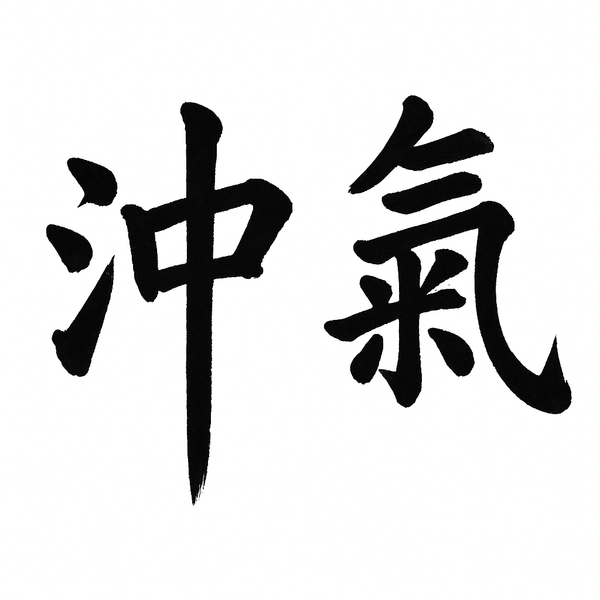
氣衝
Stomach 30 Qì chōng
Qi chong translates as Qi Rushing or Qi Throughfare.
Stomach 30 has two functions.
· It is a point of the Chong Mai or Penetrating vessel.
· It is the Sea of nourishment.
Chong in this point name has different meanings. Chong qi 充气 refers to the whirling abyss of Qi between Heaven and Earth that holds these two poles apart. It helps the Heaven and earth preserve the unity of the Dao.
The role of man is similar to Chong qi. Which is why man is one of the three treasures, along with Heaven and Earth.
Chong qi is also referring to the connection with the Chong mai or Penetrating vessel. The Chong mai regulates Heaven and Earth just like the chong qi does. The Chong mai, which is between the Ren mai and Du mai, regulates the flow of Blood and Yang qi.
This point nourishes the body by tonifying Earth.
It controls the upward movement of Earth in the pivot of the middle. The Spleen Yang raises the clear qi up top the chest.
This point is used when the upward movement is too strong, resulting in running piglet disease. The term running piglet refers to the feeling a piglet has when someone is trying to catch him for dinner. He feels like he is going to die. We call this panic attacks.
足三里
Stomach 36 Zú Sān Lǐ
Zú Sān Lǐtranslates as Leg Three Mile.
Stomach 36 has four functions.
· It is an Earth point
· Horary point which corresponds to the season late summer.
· Assembly point of the abdomen
· Sea of nourishment
Two organs belong to the Element of Earth, the Stomach and the Spleen. Stomach 36 is the Earth point of the Stomach official, it tonifies and nourishes Earth. Our body is synonymous with the concept of Earth. Therefore this point nourishes our whole body.
The functions of Earth are to add stability to the movement and transformation of Yang and Yin qi. Earth is omnipresent in our body and is a combination of Earth and Water Elements. Earth must be moist for things to grow. We call this harmonizing, and it is the function of Earth.
天柱
Bladder 10 Tiān Zhù
Tian Zhi is translated as Heavenly Pillar.
It has two functions.
· Window to Heaven point
· Meeting point of the Bladder, Small Intestine, Gall bladder, and San jiao vessels.
Bladder 10 strengthens the neck to hold the up the head. In this way Heaven and Earth can communicate. As a window point Bladder 10 can empower a heathy relationship to fear by placing us in a position of strength. The point is the pillar of the spirit empowering us to hold up our heads and stand tall.
Lonny Jarret suggests the combination of Bl 10, Bl 54, DM 3, and St 36 in order to empower an individual to stand up for himself.
上巨虚
Stomach 37 Shang ju xu
Stomach 37 translates as Upper Great Void.
It has two functions
· Lower He-sea point of the Large Intestine
· Sea of Blood point
The Chinese character xu in the point name can be interpreted to mean empty. This suggests that the points functions by moving the Yang ming stomach family. The function of the Stomach family is to transport. Failure to transport is seen in constipation.
Xu is also synonymous with the Dao as the eternal void that receives all beings and things that have returned to the source. Stomach 37 can empower us to not hold on to material things, while still being nourished by its value.
Chong mai is also known as the sea of blood. It connects to Bladder 10 in the upper body and to Stomach 37 and 39 in the lower. Stomach 37 strongly nourishes the whole body as synonymous with Earth.
大椎
Du Mai 14 Dà zhuī
Du Mai 14 translates as Great Vertebra.
Du Mai 14 has two functions.
· Strengthen Yang qi, which warms cold on the surface, and calms internal wind movement.
· It clears heat and Malaria.
Du Mai 14 is the meeting point of the six Yang vessels of the body. The Du Mai is known as the Sea of Yang, and Du Mai 14 is the meeting point with the other Yang vessels. It strongly tonifies Yang qi in the body, which manifest externally and internally.
Du Mai 14 is a Tai yang tonifying point. Let me explain. Tai yang is all the Yang of the body.
Externally this tonifying restores function on the surface. This means it warms the surface and stops excessive sweating due to function loss.
Internally this tonifying function restores Yang function in all three warmers. In the upper it tonifies the Heart and Lungs. It the middle it tonifies the Stomach, Spleen and Liver. In the lower it tonifies the Large Intestine, Kidneys and Bladder.
The point Du Mai shines like the sun on the Water of the body. This creates warmth and vapor which rises from the lower to the upper, which is then spread over the body to the hands and feet.
In modern terms, it calms the body and mind by strengthening the ability to handle external and internal impulses. This creates calmness and confidence in solving everyday problems.
人迎
Stomach 9 Rén yíng
Stomach 9 translates as People Welcome.
It has two functions.
· Window to Heaven point
· Intersection point of the Stomach and Gall Bladder
信
The virtue of Earth is xin 信, representing trustworthiness, integrity, and faithfulness. These are the stabilizing and reliable qualities that mirror the nature of Earth itself.
The Chinese character of xin, the virtue of Earth, is a man standing by his words. Virtue can be understood to mean effectiveness. Stomach 9 creates the virtue of integrity by empowering sincerity of intention as conveyed by speech.
By empowering speech it has a dual function. It can help us to establish boundaries by allowing us to say “no”. For when we are free to say “no”, then our decision to give comes from a position of strength.
百会
Du Mai 20 Bǎi huì
Du Mai 20 is translated as Hundred Meeting
It has three functions.
· Strengthens Yang, which has a calming and raising effect in the body.
· It tonifies the head and sense organs
· Nourishes the sea of marrow
Du Mai treats the 100 hundred diseases. The name reflects its meeting with all the Yang qi of the body. It strongly tonifies the Yang qi of the body which can raise the Yang qi to the upper body and head. It can also calms internal wind movement. Remember that strong Yang descends.
There is a saying, “That which is rooted in Earth will descend”. Fire is rooted in Earth. This is symbolized by the broken Yin line in-between two Yang lines in the trigram of Fire. Yin is the source of Fire. Earth is Yin and Yang descends.

Du Mai 20 nourishes the sea of marrow by tonifying the True Water of the body. Which then rises to the head and sense organs. It is Yang that is the source of movement for the Yin fluids and Blood. “That which is rooted in Heaven will rise”. Water is rooted in Heaven and this is symbolized by the Yang line in-between two Yin lines in the trigram of Water. Water is Yin and therefore needs Yang to bring it to life.

风府
Du Mai 16 Fēng fǔ
Du Mai 16 is translated as Palace of Wind
Du Mai 16 has two functions.
· Strengthen Yang to clam wind and the mind
· Nourishes the sea of marrow and strengthens the head and neck
Du Mai 16 is also a meeting point with all the Yang vessels of the body just like Du Mai 14 and Du Mai 20.
The Du Mai vessel is known as the sea of Yang, and Du Mai 16 is the most effective point in regulating Yang to calm external and internal wind movement.
Du Mai 16 is used more often for external patterns like Tai yang wind cold and Tai yang wind strike.
Restoring Balance Through the Shao Yang Pivot
One of the most common issues I see in my clinic relates to a dysfunction in what Chinese Medicine calls the Shao yang - the body’s “pivot” between activity and rest. When this pivoting function fails, people often experience a wide range of stress-related symptoms such as headaches, fatigue, anxiety, digestive problems, or insomnia. In Western terms, this can be compared to an imbalance in the autonomic nervous system, sometimes called dysautonomia or burnout.
Through the Kiiko Matsumoto Style of Japanese acupuncture, I’ve observed that tension in the right neck muscle (sternocleidomastoid) is a key sign of this imbalance. In Chinese Medicine, this tension reflects a disturbance in the body’s ability to move smoothly between states of action and relaxation, which is the essence of Shao yang function.
By using specific acupuncture points such as San jiao 5 Outer Frontier Gate and Gall Bladder 41, treatment helps restore this regulating mechanism. Patients often feel an immediate sense of deep relaxation as their energy begins to move more freely.
When the pivot function is reestablished, treatment may continue with San Jiao 9 Four Rivers and points connected to the Four Seas of the body. These systems that nourish and tonify the mind, blood, energy, and marrow. Together, these treatments harmonize the whole body, helping clients recover from chronic stress and regain vitality, emotional stability, and a sense of ease.