Wei Qi

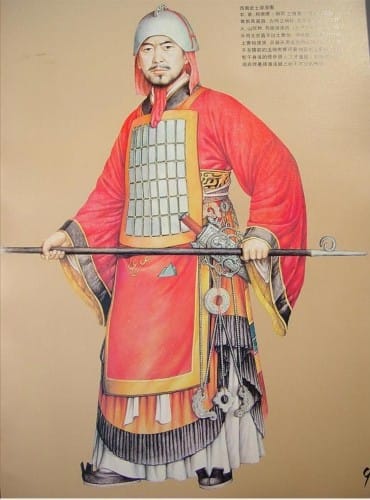
Wei qi is also known as Defence qi in English.
This is our bodies ability to recover from and resisit any sickness.
Introduction
I recently followed a Western Medicine course about the Lymph system for my required schooling points. The Lymph system is a part of the Immune system, and naturally we ended up discussing how we, as therapists can strengthen the Immune system.
The teacher of the course recommended the use of Astragali radix, which we know in Chinese Herbal Medicine as Huang qi.
According to the science Astragali radix contains all sorts of compounds that indeed strenghten the function of the immune system.
In the classic text Treatise on Cold Damage or Shang Han Lun there is no mention of Wei Qi. The text does however discuss how to restore function of the body, and it gives us the signs and symptoms that we should see to recognize the disease. The following formulas from the Shang Han Lun contain the herb huang qi, and the associated texts makes no mention of Wei Defence qi.
The reason for this is because huang qi restores the function of Yang qi. The author assumes that we know that when we tonify Yang qi we are also tonifying Wei Defence qi. This is made clear in the text from the Yellow Emperor’s Classic Ling Shu, which I will discuss later on.
Gui zhi jia huang qi tang
huang qi 30 gui zhi 9 bai shao 18 sheng jiang 9 da zao 9 zhi gan cao 6
For yellow sweat disease, with spontaneous pain on both tibias, if there is fever, then it belongs to digit articulation disease, also if the body often displays sweating before lying down at night, then this is taxation qi. After the sweat has emitted, and there is now only fever, after prolonged periods of time, there will be complex scaling of the skin, and if the fever does not stop, there imperatively will be malicious sores. If the body feels heavy, and sweating has gradually lightened, after prolonged periods of time, there will be quivering all over the body, and upon quivering there will be pain in the chest, and also there will imperatively be sweating everywhere above the waist, and no sweat below, for there is moving pain in waist and loins, as if there is an object moving under the skin, for severe cases will have inability to take in food, with heavy bodily sensation, restlessness, and difficult urination, for this is yellow sweat, and gui zhi jia huang qi tang governs.
Huang qi jian zhong tang
gui zhi 9 bai shao 18 sheng jiang 9 da zao 9 zhi gan cao 6 yi tang 30 huang qi 30
For deficiency taxation with internal urgency, and all kinds of insufficiency, huang qi jian zhong tang governs.
Huang qi gui zhi wu wu tang also known as Huang qi wu wu tang
huang qi 30 gui zhi 9 bai shao 9 sheng jiang 18 da zao 6
For blood impediment with dual debilitation of yin and yang, faint pulses at the inch opening and bar position, small and tight pulses at the cubit position, and the external sign of generalized numbness resembling that of wind impediment, huang qi gui zhi wu wu tang is indicated.
Fang ji fu ling tang
fang ji 9 fu ling 18 huang qi 30 gui zhi 9 zhi gan cao 6
Water qi formula, skin water causing edema in the lower body, no sweating.
In skin water, with swelling of the four extremities, water qi is in the skin, and there is wavering movement of the four extremities, fang ji fu ling tang governs.
Fang ji huang qi tang
fang ji 9 huang qi 30 sheng jiang 12 bai zhu 6 da zao 3 zhi gan cao 3
In disease of skin water, the four extremities are swollen, for there is water qi in the skin, and the four extremities move and contract, fang ji huang qi tang governs.
In wind dampness, with a floating pulse, heavy body, sweating and aversion to wind fang ji huang qi tang governs. If there is abdominal pain, add bai shao.
Qi shao gui zhi ku jiu tang
huang qi 15 shao yao 9 gui zhi 9 ku jiu (vineger) 20 ml
Yellow sweat disease manifests with generalized swelling [another version reads heaviness], heat effusion, and sweating with thirst; this condition resembles wind water. Sweat soaks through the clothes with a full yellow color resembling huang bai juice, and the pulses are sunken. How does one develop this condition? The master said: "When sweating, if one takes a bath, water enters through the pores; this is how one contracts this disease. Qi shao gui jiu tang is indicated".
Wu tou tang
chuan wu tou 9 ma huang 9 huang qi 9 bai shao 9 zhi gan cao 9
Wu tou tang formula treats foot dropsy pain (hernia), and inability to bend or stretch.
For digit and articulation disease with inability to bend or stretch, and pain, wu tou tang governs.
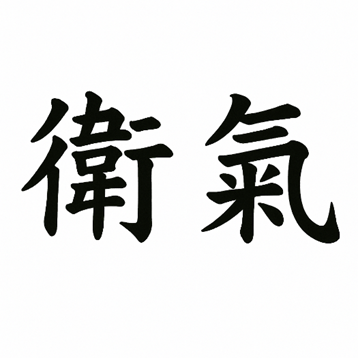
Wei qi is also known as Defence qi in English.
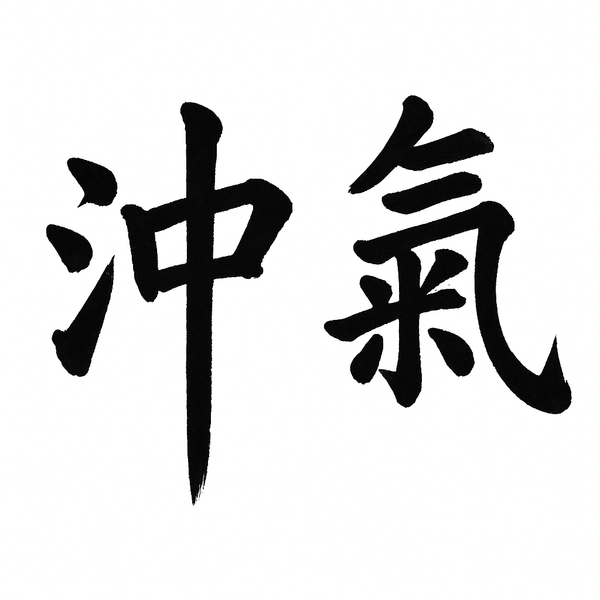
衛氣
The first character is Wei and the second is Qi.
衛 wèi
This character means to guard, protect, defend, or shield.
Its structure historically depicts a person near an enclosure or boundary, symbolizing protection of the outer borders. We know this as Guard qi.
In Chinese Medicine, 衛 refers to the body’s outer defence system that circulates on the exterior, protecting us from Wind, Cold, Damp, and other external pathogens.
Tai yang represents all the Yang in the body, on the surface and in the interior. Wei qi and Tai yang are the same. Wei qi just describes one of the functions of Yang qi.
Camp and Guard Qi
Chapter 8 from the Ling Shu, which is also commonly translated as the Spiritual disclosure, describes the secret to living long and healthy.
It revels the source of our energy, and describes the different kinds of Qi. Commonly known as Ying Nutritive Qi and Defence Wei qi.
Chapter 8 Ling Shu Camp and Guard Qi Generating and Meeting
Where from does man receive his Qi? Where do yin and yang meet? Which Qi constitute the camp Qi? Which Qi constitute the guard Qi? Where are camp and guard Qi generated? And where do they meet?
Man receives his Qi from somewhere. They are referring to Qi in a general sense. The gathering of Qi gives rise to form. Our body is formed from something, so please tell me where does it come from.
Camp and Guard Qi are terms used in an army. The Camp Qi is the aspect of the army that stays home and the Guard Qi is the aspect of the army that goes out on patrol. Both the Camp and the Guard Qi are part of one army.
We define Camp Qi as the Yin aspect of the Qi that gives rise to form. We define Guard Qi as the Yang aspect that brings life to the Yin aspect. They work together in nourishing and protecting the body.
Yang rises, Yin grows, Yang declines, Yin stores. This expression illustrates the relationship between Yin and Yang. Together they bring life to beings.
The Qi of the old and the Qi of the strong differ. The yin and the yang Qi change their positions. I wish to be informed of where they meet.
Beginning with the age of fifty one is old. Beginning with the age of twenty one is strong.
Man receives his Qi from the grain. The grain enters the stomach, and from there its Qi are transmitted to the lung. This way, all the long term depots and the short term depots receive Qi.
The grain is referring to all that we eat that nourishes our body. The Qi from what we eat enters the Stomach, where the process of rotting and ripening occur. What we can use is called Gu food Qi and this is separated out in the Small intestine. The Small intestine receives the useful part as a sacrificial gift. The grain Qi is then raised to the Lung by the Tai yin Spleen Qi. If the Spleen is not strong the raising is lacking and there will be less nourishment for the Lung to distribute.
The Tai yin Spleen must raise the grain Qi to the chest. This is known as middle Qi or raising of clear Qi. The Spleen raises the clear Qi and the Stomach family descends the unclear part. This is referred to as the pivot of the middle. The pivoting function of Earth, the Spleen and Stomach, must perform its duty correctly.
The raising of clear Qi to the chest and then Lungs depends on the Original Qi from the Kidneys in the lower burner. The Original Qi is referring to the Shao yin Heart and Kidneys that work together as True Fire and True Water. The Fire and Water must be balanced and strong.
This whole system is what brings Spirit brightness to the head as beauty. It is what brings life to our face. It is our radiance. It also connects us to the eternal Dao.
The long term depots is referring to the storage of Essence Qi. We call these Yin organs because they store Qi just like Earth stores Yang Qi and nourishment.
The short term depots is referring to the Stomach family, which is the Stomach, Small intestine and Large intestine. The short term depots are Yang because they circulate Qi and transport along the way, just like the Heavenly Qi.
Their clear parts become the camp Qi. The turbid parts become the guard Qi. The camp Qi are in the vessels. The guard Qi are outside the vessels. They circulate without stop. After fifty circulations a grand meeting happens. Yin and yang Qi penetrate each other’s realm. This is like a ring without an end.
The part that is raised to the Heart and Lungs contains two parts of one whole. We call it clear Qi. The Gathering Qi spreads this around the body.
The clear Qi are Yin and their nature is that of Essence purity. Hence they transform to blood and are situated in the vessels. They move inside the channel vessels and are called the Camp Qi.
The turbid Qi are Yang and their nature is that of being wild, smooth, and fast. Hence their flow does not follow the channel vessels. Rather, they proceed directly into the skin and they are the exterior. They fill the space in the skin and are the partings of the flesh. They are the Guard Qi.
After fifty circulations the Yin and Yang become one Qi that flows in the channel vessels.
The tai yin controls the interior. The tai yang control the exterior. They pass through twenty five units each, divided by day and night. Midnight is the yin apex. After midnight the yin weakens. At dawn the yin Qi are exhausted and the yang channels vessels receive the Qi.
Interior refers to the Camp Qi and exterior refers to the Guard Qi. The Guard Qi begin their flow in the foot Tai yang vessel and they return to the foot Tai yang vessel. Hence the Tai yang Qi controls the exterior. The Camp Qi begin their flow in the hand Tai yin vessel, and they return to the Tai yin vessel. Hence the Tai yin Qi control the interior.
At noon the yang has reached its apex. When the sun is in the west, the yang Qi weaken. When the sun goes down, the yang Qi are exhausted and the yin vessels receive the Qi. At midnight there is a grand meeting. All the people are asleep. That is called the link up of the yin Qi. At dawn the yin Qi are exhausted and the yang vessels receive the Qi. This continues without end. It is the same set-up as that of heaven and earth.
When old people cannot close their eyes during the night, which Qi causes this to be so? When young, strong people are unable to close their eyes during daytime , which Qi cause this to be so?
In strong persons the yang Qi and blood abound. Their muscles and their flesh are smooth and the paths in the vessels are passable. The movement of their camp and guard Qi never loses its regularity. Hence, they are of a clear mind during the day time, and they close their eyes at night.
In old persons the yang Qi and blood are weak. Their muscles and their flesh wither and the paths in the vessels are rough. The Qi of the long term depots strike at each other. The camp Qi are weak and diminished, and the guard Qi attack their own interior. Hence, they are not of a clear mind during the daytime, and they do not close their eyes at night.
The Yin organs over control and strike at each other in the movement of the Five Agents of Transformation. The person loses their connection to the Dao. The Spirit brightness becomes weak. The radiance becomes weak.
I wish to be informed of the places where the camp and guard Qi move. On which paths do they come?
The camp Qi emerge from the central burner. The guard Qi emerge from the lower burner.
The Camp Qi start their circulation with the Lung. Which is also the starting place in the traditional meridian and channel system used in acupuncture.
The central burner is the Stomach and Spleen. They each have their own Yang Qi transformational energy. Yet they are very dependent on the body’s own source of circulating Yang Qi.
Tai yang and Shao yin are internally and externally connected and represent the body’s True Fire and Water.
The Guard Qi emerges from the lower burner and is dependent on the Yang Qi just like the center burner.
I wish to be informed of the locations where they emerge from the san jiao.
The Qi of the upper burner emerge from the upper opening of the stomach. They ascend parallel to the throat, penetrate the diaphragm and dissipate in the chest. They extend further into the armpit, follow a section of the tai yin vessel, turn around to the yang ming vessel, ascend to the tongue and descend the foot yang ming vessel.
They usually move together with the camp Qi in the yang vessels over twenty five units, and in the yin vessels over twenty five units. This constitutes one circulation. The fact is, After fifty units another grand meeting occurs in the hand tai yin vessel.
When a person has heat in his body and ingests beverages and food that move down into the stomach, and before the Qi are stabilized this results in sweating, sometimes in the face, sometimes in the back, sometimes involving half the body, that is, the sweat does not follow the paths of the guard Qi and leaves the body, why is that?
That is a harm caused by wind from the outside. Internally the skin structures open. The body hair is steamed with heat, and the skin structures experience outflow. The guard Qi is processed there. Hence they are unable to follow their regular paths. These Qi are wild, smooth and fast. When they see that the skin structures have opened they leave from there. Hence they are unable to follow their regular paths. Hence, that is called leakage outflow.
I wish to be informed of the location where the Qi emerge from the central burner.
The Qi of the central burner, they to emerge from the stomach opening, they emerge from behind the upper burner. The Qi received there are discharged as dregs, steamed as jin and ye body liquids, and transformed to fine essence. The latter pours upwards into the lung vessel where it is transformed to blood which in turn is supplied to the entire body. There is nothing more precious! Hence it may pass only through the vessels. It is called camp Qi.
Now, blood and Qi, their names differ, but they are the same type. What does that mean?
The camp and guard Qi are essence Qi. The blood is spirit Qi. Hence blood and Qi may have different names, but they are of the same type.
The fact is, When someone has lost his blood, he has no sweat.
When someone has lost his sweat, he has no blood.
The fact is, in his life man has two things that may causes him to die, but he does not have two independent items that keep him alive.
When blood and sweat are absent, man cannot generate himself.
I wish to be informed of the location where the Qi emerge from the lower burner.
The lower burner discharges into curved intestine and pours out into the urinary bladder where its liquid seep in.
The fact is, Water and grain are regularly present together in the stomach. There they are transformed to dregs and together they descend into the large intestine. Where they constitute the lower burner, where its liquid seep in. A separate juice is secreted along the lower burner and seeps into the urinary bladder.
When someone drinks wine, the wine enters the stomach. The grain consumed earlier has not been digested yet, and the urine is discharged separately first. How is that?
Wine is a liquid made from fermented grain. Its Qi are wild and clear. Hence even if its is digested only after an earlier ingestion of grain, it will precede the grain and leave the stomach as a liquid first.
Good, I have been informed.
The upper burner is like a fog.
The middle burner is like a humidifier.
The lower burner is alike a ditch. That is what is meant here.
In T.C.M. we tend to think that the Wei Defensive qi or Guard qi is outside the vessels and the Ying Nutritive qi or Camp qi is inside the vessels.
This is incorrect according to chapter 8 of the Ling Shu.
Their clear parts become the camp Qi. The turbid parts become the guard Qi. The camp Qi are in the vessels. The guard Qi are outside the vessels. They circulate without stop. After fifty circulations a grand meeting happens. Yin and yang Qi penetrate each other’s realm. This is like a ring without an end.
After fifty circulations a great meeting happens and the Guard and Camp qi become one. Like a ring.
So Wei Defensive qi or Guard qi is not separate from the Ying Nutritive qi or Camp qi.
This makes sense when we know that not even Yin and Yang are separate in the concept of Qi.
This is reflected in the expression, The one is two, and the two are one.
Qi has two aspects, and the two aspects are describing one thing.
The warm Yang circulates with the Yin fluids in the Blood vessels. It does radiate outward, which is its energetic nature. Yet, it is nourished by the Yin fluid.
Which is why we can feel the pulse to determine the nature of Yin and Yang.
Yellow Emperor’s Classic, The pulse allows us to observe yin and yang.
Conclusion
Understanding Wei qi means understanding how the body protects and sustains itself at the deepest level.
From the Shang Han Lun to the Ling Shu, the classical texts show us that Defence qi is not a separate force, but a dynamic expression of Yang qi working together with Ying qi to nourish, warm, protect, and keep us connected to the rhythm of life known as Dao.
When our Spleen transforms food, when our Lungs distribute clear Qi, when Kidney Yang rises to support transformation - this is Wei qi at work. It is the natural intelligence of the body, circulating day and night, adapting, guarding, and restoring balance.
By learning how these systems move together, we gain more than theoretical knowledge - we gain a practical way to support our clients’ health: strengthening Yang where it is weak, harmonising the middle burner, and cultivating the radiant clarity of Qi that expresses itself as vitality, resilience, and longevity.
This understanding is not only clinical; it is also deeply human.
It reminds us that healing is a collaboration between nourishment and protection, Yin and Yang, structure and movement - a continuous circulation without end.