Xiao Jian Zhong Tang

Minor Center-Fortifying Decoction
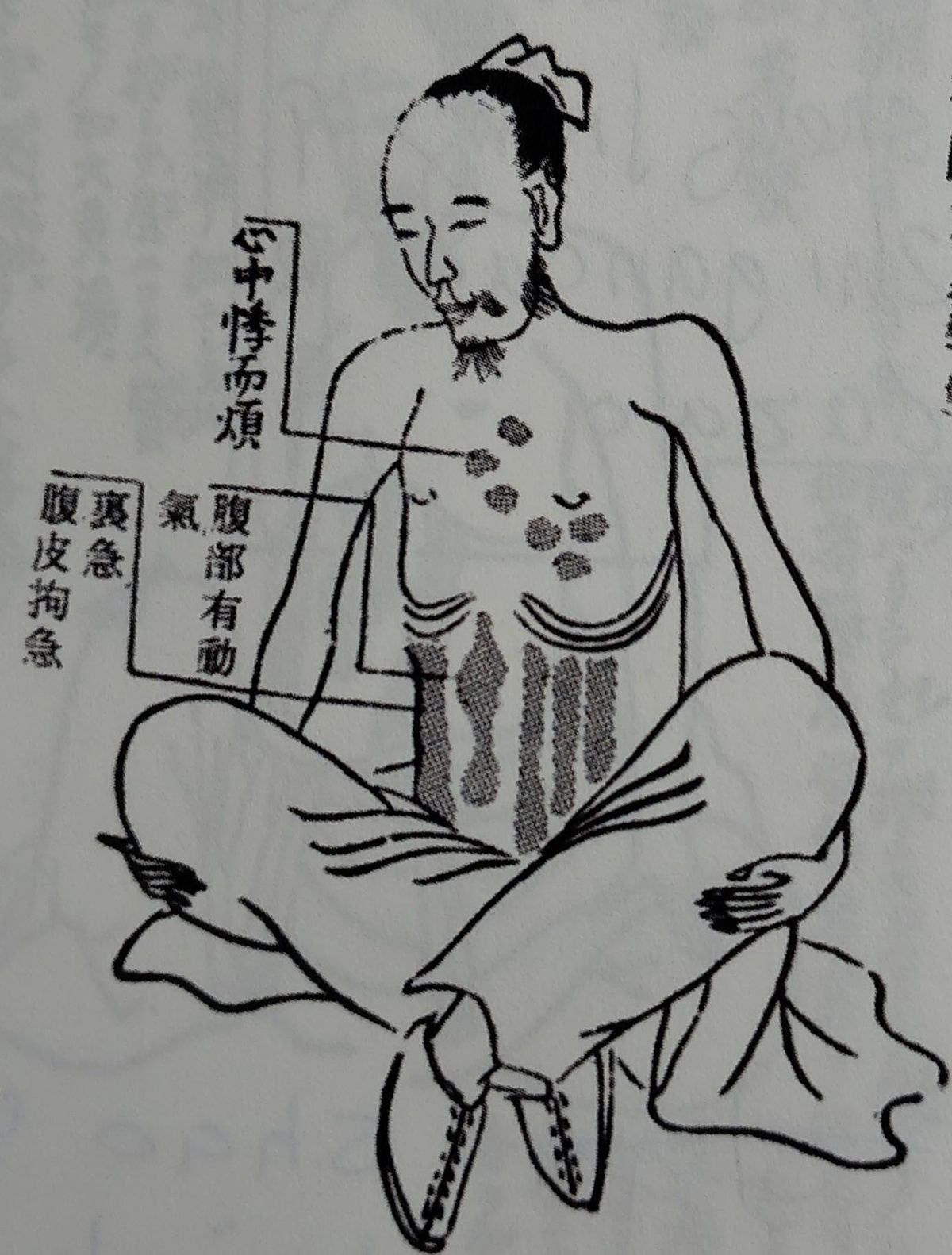
When in cold damage that has lasted for two or three days, there are palpitations and vexation in the Heart, Xiao Jian Zhong Tang governs.
— Shang Han Lun, line 102
小建中汤 — Xiǎo Jiàn Zhōng Tāng
Xiao Jian Zhong Tang is usually translated as Minor Center-Fortifying Decoction.
But what exactly is the Center?
Is Zhong 中 simply the Middle Burner—the Spleen and Stomach? Or does the word point toward something more fundamental: the center or axis of the person, the place from which Yin and Yang can maintain their proper relationship?
And what does Jian 建 mean? Is the formula tonifying the Center, nourishing it, or actually establishing it?
These questions become particularly interesting when we look at the way Zhang Ji constructs the formula. Rather than presenting an isolated collection of herbs, he appears to build the formula from relationships we have already encountered elsewhere in the Shang Han Lun. He is, in a sense, constantly teaching us.
What does 建中 mean?
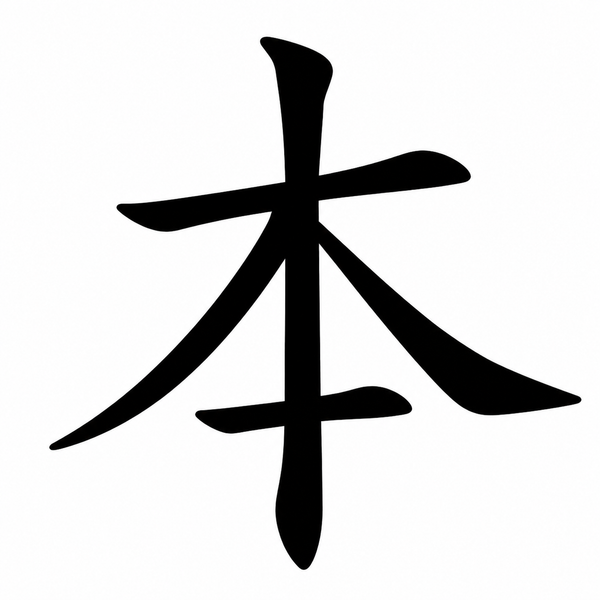
The character 建 means to establish, construct, set up, or make something stand.
It is therefore not exactly the same as 補 bǔ, to supplement or tonify.
This distinction is useful.
Nourishing supplies substance.
Tonifying supplements what is deficient.
Fortifying makes something stronger and more capable of functioning.
But establishing goes a little deeper. Something that has become unstable is made to stand again.
Thus, 建中 can be understood as:
to establish the Center, to build the Center, to make the Center stand.
This does not mean that the formula has nothing to do with the Spleen and Stomach. The physiological Center is certainly the Spleen–Stomach axis, the place where food and drink are transformed and from which Qi and Blood are generated.
But I think Zhong can be understood at more than one level.
Middle
The functional digestive center: Spleen and Stomach.
Center
The central axis around which the Yin and Yang of the person maintain their relationship.
Earth
The cosmological Center. Earth receives, transforms, nourishes and supports the movements of the other phases.
In the Five-Phase arrangement, Earth occupies the Center. It is therefore not simply another phase located alongside Wood, Fire, Metal and Water. It is the ground through which their movements can occur.
Seen this way, Jian Zhong is not simply “tonify the Middle.”
It is:
Make the Center stand again.
That gives us a very different way of approaching Xiao Jian Zhong Tang.
The formula as a lesson in Yin and Yang
The formula is:
Gui Zhi, Bai Shao, Sheng Jiang, Da Zao, Zhi Gan Cao, Yi Tang
One of the remarkable things about Xiao Jian Zhong Tang is that it can be understood as a development of relationships already found in other formulas.
It is essentially a Gui Zhi Tang structure, but with more Bai Shao and the addition of Yi Tang.
That change is important.
The formula moves away from the primary emphasis of Gui Zhi Tang on restoring the exterior and toward nourishing, warming and establishing the Center.
The increased Bai Shao and the addition of Yi Tang make the formula considerably more nourishing.
But Zhang Ji does not simply tell us this. He shows us through the herb relationships.
Gui Zhi and Zhi Gan Cao — Heaven and Earth
We have already encountered the pair Gui Zhi and Zhi Gan Cao in Gui Zhi Gan Cao Tang.
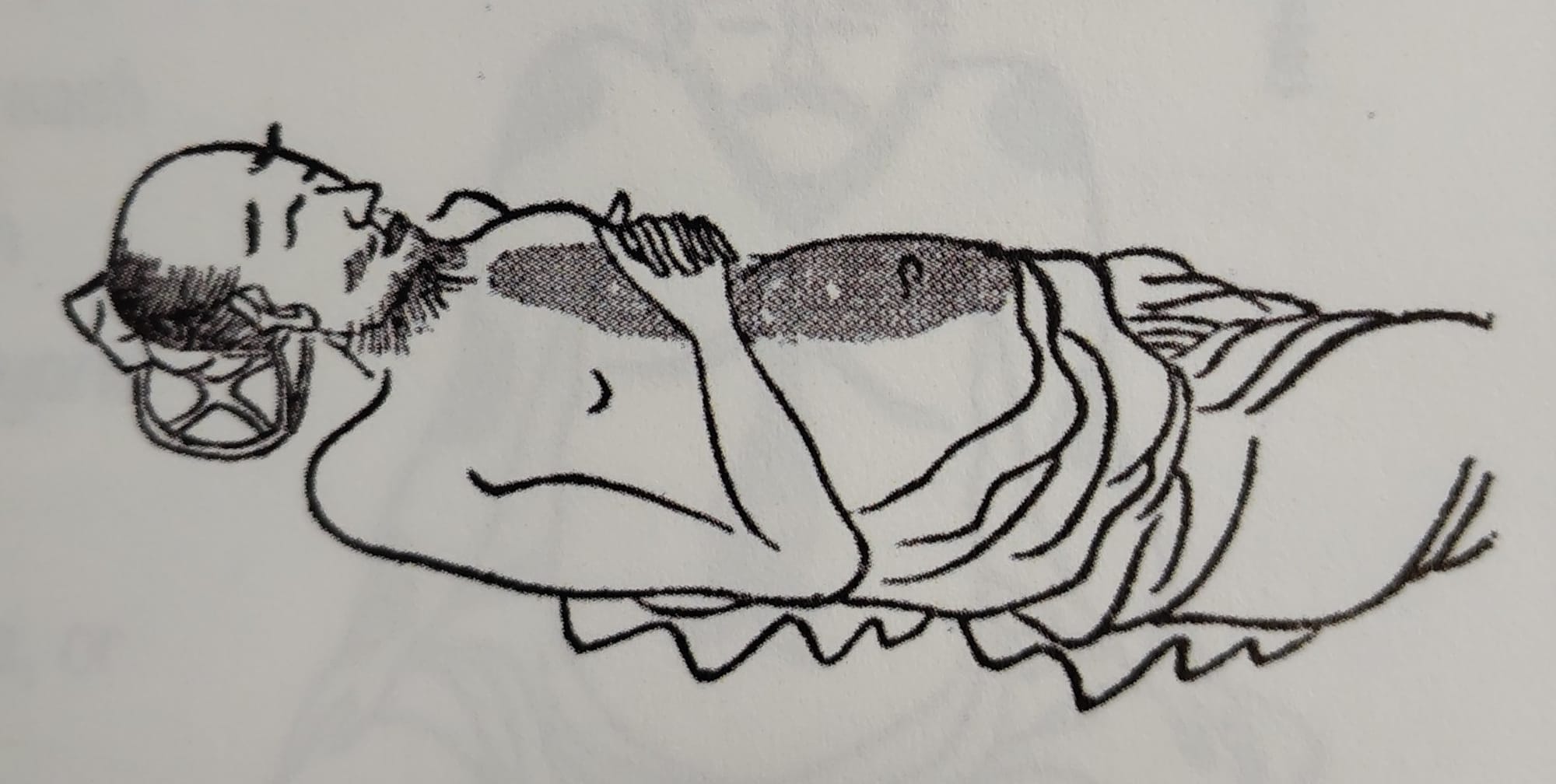
When copious sweating has been promoted and the person's hands are crossed over the Heart and there are palpitations below the Heart, with a desire for pressure, Gui Zhi Gan Cao Tang governs.
The person wants to place their hands over the Heart and apply pressure.
This is an important image of deficiency. The pressure provides comfort.
The combination of pungent Gui Zhi and sweet Zhi Gan Cao brings together two apparently opposite movements.
Gui Zhi warms and assists Yang.
Zhi Gan Cao nourishes and supports Yin.
The Yang provides the ability to function.
The Yin provides the material basis from which that function can arise.
This is a simple but profound expression of the interdependence of Yin and Yang.
And the same relationship appears inside Xiao Jian Zhong Tang.
We can therefore see Gui Zhi and Zhi Gan Cao as expressing something larger than the properties of two herbs.
They can be understood through the ancient image of Heaven and Earth.
Heaven represents the Utmost Yang.
Earth represents the Utmost Yin.
Neither exists independently.
Yang requires Yin as its foundation, while Yin requires Yang to become functional.
Xiao Jian Zhong Tang takes this relationship and places it within the Center.
Bai Shao and Zhi Gan Cao — nourishing Earth
We encounter another important pair in Shao Yao Gan Cao Tang.
There, Bai Shao and Zhi Gan Cao address the hypertonicity and cramping of the muscles.
The sourness of Bai Shao and sweetness of Zhi Gan Cao nourish and relax.
The Heart vexation also becomes part of the picture.
This pair therefore gives us another teaching.
Bai Shao and Zhi Gan Cao nourish Earth and relax what has become tense.
In Xiao Jian Zhong Tang, this relationship becomes even more important because Bai Shao is increased.
The formula therefore becomes more deeply oriented toward nourishment, relaxation and the restoration of the Yin side of the organism.
This is especially significant when the person is weak, contracted and unable to maintain the proper relationship between Yin and Yang.
The Heart is part of the Center
The chief indication given in line 102 is not simply abdominal pain.
It is:
心中悸而烦 — Xin zhong ji er fan
Palpitations and vexation in the Heart.
This is worth pausing over.
If Xiao Jian Zhong Tang were simply a formula for a weak Spleen and Stomach, why does Zhang Ji place palpitations and Heart vexation at the centre of the indication?
The Heart is showing us something about the condition of the whole system.
The Center has become weak.
The relationship between Yin and Yang has become unstable.
The person can therefore experience both deficiency and agitation.
There may be cold, weakness and contraction, yet also vexation and signs that appear somewhat warm or agitated.
This combination makes more sense if we stop thinking of the pattern simply as “Spleen Qi deficiency” and instead see it as a loss of stability in the central relationship between Yin and Yang.
The formula does not merely supply something that is missing.
It rebuilds the conditions in which Yin and Yang can function together.
The abdominal pain reveals the same pattern
Line 100 gives us another important indication:
When the Yang pulse is rough and the Yin pulse is stirring, as a rule there should be acute pain in the abdomen. One should first give Xiao Jian Zhong Tang. If there is no improvement, Xiao Chai Hu Tang governs.
The phrase is:
腹中急痛 — Fu zhong ji tong
Acute or urgent pain in the abdomen.
The abdomen gives us a physical image of the Center.
In the Kampo description of the Xiao Jian Zhong Tang pattern, the abdominal wall may be thin and weak. There may be visible intestinal cramping, rope-like vertical abdominal muscles, tenderness on palpation and deeper tightness. The abdomen may be cold, while palpitations are felt in the Heart.
The whole person appears contracted, depleted and lacking substance, rather than simply being “cold.”
This is an important distinction.
The person may manifest cold.
They may also manifest warmth or vexation.
They may be weak but tense.
They may be deficient but uncomfortable.
They may be Yin deficient and Yang deficient at the same time.
This is precisely why the formula's architecture is so interesting.
The taxation pattern
This leads naturally toward the concept of Taxation found in the Jin Gui Yao Lue.
Taxation can be understood as a state of exhaustion in which both Yin and Yang have become deficient.
This is not simply a failure of one substance or one organ.
The whole organism has been weakened.
That gives us another way of understanding the word Center.
The Center is not merely a digestive organ.
It is the ground of the whole person.
When that ground becomes weak, the manifestations can spread throughout the organism.
The abdomen becomes weak and contracted.
The Heart becomes palpitated and vexed.
The person becomes unable to eat and drink properly.
The muscles may cramp.
There may be weakness and emaciation.
And there may be apparently contradictory manifestations of cold and heat.
The Center has lost its ability to hold the organism together.
Shao Yin and Root and Tip
This also helps explain why Xiao Jian Zhong Tang can be understood within the broader picture of Shao Yin.
The Huang Di Nei Jing describes Tai Yang and Shao Yin in terms of Root and Tip.
Shao Yin has Heat as its Root and Yin as its Tip.
This gives us an important image.
Shao Yin is capable of expressing both the Yang aspect and the Yin aspect of the organism.
When the underlying Yin and Yang are weakened, the presentation does not necessarily become simply cold.
There can be cold and heat.
There can be weakness and vexation.
There can be contraction and agitation.
There can be deficiency and pain.
The person has lost the stable Center from which these polarities can remain in relationship.
This is why the image of Earth is so useful.
Earth is the Utmost Yin, but Earth is also the Center.
The Center does not eliminate the polarity of Yin and Yang.
It provides the ground in which their relationship can be maintained.
The postpartum formula makes the meaning even clearer
In Chapter 21 of the Jin Gui Yao Lue, we encounter the related formula Nei Bu Dang Gui Jian Zhong Tang.
It is indicated for postpartum vacuity and emaciation, insufficiency, persistent abdominal pain, shortness of breath, tension and contraction, pain extending into the lower abdomen, lumbar region and back, and inability to eat and drink.
The formula is explicitly associated with rebuilding strength.
Historically, Dang Gui Jian Zhong Tang becomes an important development of the Jian Zhong idea. Dang Gui replaces Yi Tang, and the formula is preserved in the tradition of Sun Simiao.
This is revealing.
The central idea is not confined to a single digestive complaint.
The Jian Zhong concept can be applied wherever the organism has become depleted, contracted and unable to sustain itself.
The Center needs to be rebuilt.
So why is it called Xiao Jian Zhong Tang?
This brings us to the question I find most interesting.
Why did Zhang Ji call the formula:
小建中汤 — Xiao Jian Zhong Tang
rather than something like:
Gui Zhi Jia Shao Yao Yi Tang
after the ingredients that have been added to the Gui Zhi Tang structure?
The name is telling us something.
Zhang Ji is not simply describing the ingredients.
He is describing the work of the formula.
It is not:
“Gui Zhi Tang with extra Bai Shao and Yi Tang.”
It is:
Xiao Jian Zhong Tang — Minor Decoction for Establishing the Center.
The name tells us where to look.
The herbs demonstrate how it works.
The clinical signs show us what happens when the Center has become weak.
And the relationship between the herbs teaches us about Yin and Yang.
This is why I think Zhang Ji is always the teacher.
He gives us the formula, but he also gives us a series of relationships through which we can understand it.
What does “Minor” mean?
Then there is the word Xiao 小 — Minor.
“Minor” does not mean unimportant.
It suggests a smaller or more limited degree of intervention.
This becomes particularly interesting when we compare Xiao Jian Zhong Tang with Huang Qi Jian Zhong Tang.
Both contain the idea of Jian Zhong—the establishment or strengthening of the Center—but Huang Qi Jian Zhong Tang takes that movement further.
We might therefore see Xiao Jian Zhong Tang as the small or initial establishment of the Center.
The Center is weakened, but it can still be rebuilt through warming, nourishing and harmonising Yin and Yang.
The formula does not violently correct the system.
It does not attack.
It does not purge.
It does not strongly warm.
It nourishes and warms gently enough for the Center to stand again.
Xiao Jian Zhong Tang as a teaching about the Center
Perhaps, then, we can bring all of this together.
The Center has a physiological expression:
Spleen and Stomach.
It has a functional expression:
the transformation and generation of Qi and Blood.
It has a relational expression:
the place where Yin and Yang maintain their relationship.
And it has a cosmological expression:
Earth, the Center and the Utmost Yin.
Xiao Jian Zhong Tang works through all of these levels.
Yi Tang, Gan Cao, Da Zao and Bai Shao nourish.
Sheng Jiang and Gui Zhi warm.
Gui Zhi supports Yang.
Bai Shao supports Yin.
The sweet herbs nourish Earth.
The sour and sweet combination relaxes contraction.
The pungent and sweet combination warms and nourishes.
And the entire formula brings these relationships together around the Center.
So perhaps the deepest meaning of 建中 is not simply:
“Tonify the Middle.”
It is:
Restore the ground from which the organism can once again maintain its proper relationships.
That is why the Heart and abdomen belong together in this formula.
That is why palpitations and vexation can occur alongside abdominal cramping.
That is why weakness can coexist with tension.
That is why cold can coexist with apparent heat.
And that is why the name of the formula is so important.
Xiao Jian Zhong Tang is not merely a formula that nourishes the Middle.
It is a formula that teaches us what the Center is.