Ren Shen in Formulas

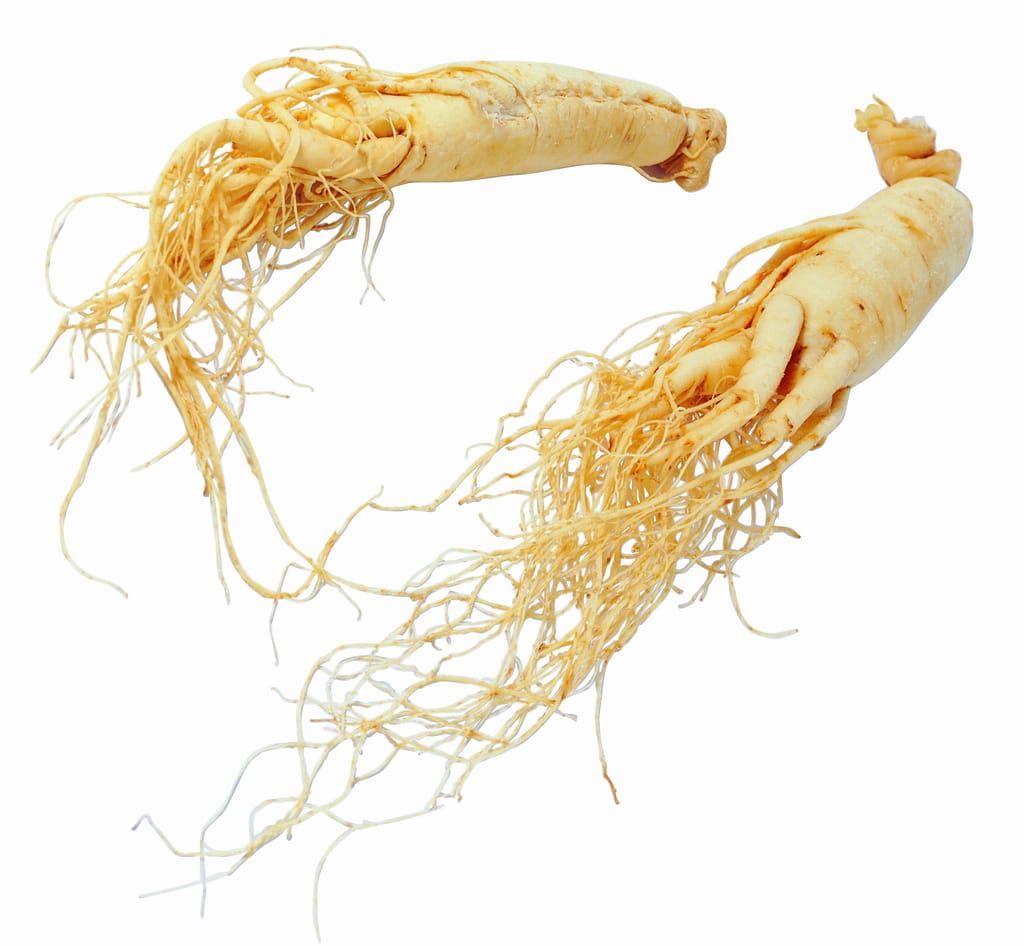
In clinical practice, it is easy to assign fixed functions to herbs, tonifies Qi, warms the middle, generates fluids. While useful, these descriptions can limit our understanding if taken too literally. The classical formulas do not present herbs as static substances, but as dynamic participants within a physiological process.
In this discussion, we will explore the use of Panax ginseng through the lens of classical formulas, particularly those found in the Shang Han Lun. By observing when Ren Shen is added, removed, or modified, we begin to understand its true nature, not as a simple “Qi tonic,” but as a substance that supports the regulation of fluids, the function of the middle, and the filling of the pulse.
This way of studying herbs moves us closer to the Dao of medicine. Rather than memorising functions, we begin to perceive patterns. Rather than applying rules, we start to understand relationships. It is from this perspective that the clinical use of Ren Shen becomes both clearer and more precise.
Ren Shen in Xiao Chai Hu Tang
In line 96 of the Shang Han Lun, a modification is given for Xiao Chai Hu Tang:
If there is thirst, remove Ban Xia and add Ren Shen.
If there is cough, remove Da Zao and Ren Shen and add Sheng Jiang.
These modifications reveal important aspects of Ren Shen’s nature.
A Xiao Chai Hu Tang pattern is one of harmonization. The Shao Yang conformation presents a dynamic imbalance—neither fully interior nor exterior, neither purely excess nor deficiency. Treatment must balance opposing actions without causing further disruption.
When thirst is present, fluids have been damaged by heat. Ban Xia, being drying, is removed. Ren Shen is added, not simply to “tonify Qi,” but to support fluids while stabilising function.
In contrast, when cough is present due to fluid accumulation in the Lungs, both Da Zao and Ren Shen are removed. Their moistening and supporting qualities would worsen the accumulation.
Key insight:
Ren Shen does not act in isolation, it participates in the management of fluids depending on the context.
Ren Shen and Dryness: Bai Hu Jia Ren Shen Tang
This fluid-supporting function is further illustrated in Bai Hu Jia Ren Shen Tang:
168 When in cold damage, if vomiting is used, or if precipitation is used and after seven or eight days there is no resolution, the heat is bound in the interior, with heat in the exterior and interior, frequent aversion to wind, great thirst, dry tongue, vexation, and a desire to drink several sheng of water, then bai hu jia ren shen tang governs.
In this pattern, excessive heat damages fluids to a critical degree. The original Bai Hu Tang clears heat, but the addition of Ren Shen strengthens the body’s ability to restore and maintain fluids.
Here, Ren Shen:
- supports fluid generation
- protects against further depletion
- stabilises the physiological response to intense heat
An Apparent Contradiction: Li Zhong Wan
At first glance, the use of Ren Shen in Li Zhong Wan appears contradictory.
Li Zhong Wan treats cold and dampness in the Tai Yin:
- Gan Jiang and Bai Zhu → warm and dry
- Ren Shen and Zhi Gan Cao → nourish and moderate
386 When in sudden turmoil, there is headache, heat effusion, and generalized pain, if there is more heat and the patient desires to drink water, wu ling san governs; but if there is more cold and the patient does not drink water, li zhong wan governs.
We are advised to use li zhong wan to treat sudden turmoil with more cold and no thirst. Sudden tumoil is when there is spontaneous diarrhea or vomiting, or both at the same time.
382 What of the disease of sudden turmoil? Retching and vomiting and diarrhea is called sudden turmoil.
Key insight:
Ren Shen does not simply “moisten”—it preserves and supports the body’s fluids while restoring function, even in the presence of cold and dampness.
This makes Li Zhong Wan a form of harmonizing strategy, balancing drying and supporting actions.
Ren Shen and the Pulse
In formulas such as Gui Zhi Jia Shao Yao Sheng Jiang Ge Yi Liang Ren Shen San Liang Xin Jia Tang, Ren Shen is added to address:
- a sunken pulse → deficiency
- a slow pulse → weakened movement
When after the promotion of sweating, there is generalized pain, and a pulse that is sunken and slow, gui zhi jia shao yao sheng jiang ge yi liang ren shen san liang xin jia tang governs.
Here, Ren Shen fills and raises the pulse, not through warming like Gui Zhi or Fu Zi, but by:
- supporting the middle and lower burners
- nourishing fluids
- restoring volume and functional movement
A similar strategy appears in Zhi Gan Cao Tang, where:
For cold damage with a pulse that is bound and intermittent and stirring heart palpitations, zhi gan cao tang governs.
Again, Ren Shen supports the Heart by restoring the substance and movement behind the pulse, allowing proper rhythm to return.
The Nature of Ren Shen
From these examples, a clearer picture emerges:
Ren Shen:
- supports the middle (Earth)
- nourishes fluids (Water)
- fills, moves, and stabilises the pulse
- assists the body’s ability to regulate itself
It is a Yang tonic, but not strongly warming or dispersing. Its strength lies in restoration of force rather than warming.
Clinical Application: Modern Patterns
This understanding becomes especially relevant in modern clinical practice.
Conditions such as infertility, PMS, low libido, and hot flashes are often approached symptomatically. However, from a classical perspective, these are expressions of underlying imbalance.
Ren Shen does not directly treat these conditions. Instead:
“Ren Shen can be added to formulas to support conditions such as infertility, PMS, and hot flashes when Qi deficiency, fatigue, or weakness of the middle is part of the presentation.”
Or more simply:
“Ren Shen does not treat gynecology—it supports the physiology that makes treatment possible.”
A Clinical Consideration: Dampness
A common dilemma arises when Qi deficiency coexists with dampness.
For example, in Shao Yang patterns with menstrual issues:
- fatigue and weakness suggest Ren Shen
- dampness (soft stools, cough, heaviness) cautions against it
In such cases, careful modification is required.
One approach:
- remove Da Zao (to reduce dampness)
- retain Ren Shen (to support Qi)
- add Bai Zhu (to address dampness)
This maintains support without aggravating accumulation.
Conclusion
When we follow Ren Shen through the classical formulas, we see that it is neither simply tonifying nor purely moistening. It is a substance that supports the body’s ability to regulate fluids, stabilise function, and restore balance.
For the student, the lesson is clear:
Do not ask, “What does this herb treat?”
Ask instead, “What situation calls for this herb?”
When Ren Shen is used in the right context, it strengthens the foundation upon which all treatment depends. When used without consideration, it can easily contribute to imbalance. This is why Ren shen should never be used as a single herb, or without professional guidance.
Understanding this distinction is what transforms knowledge of herbs into clinical skill.
Qi Bo, Is this clear?
Huang Di, Yes, very!