Why Is Chinese Medicine So Difficult for Westerners to Understand?

Recently a friend challenged me by asking me to write a piece about Chinese Medicine that would be understood be someone that has no background in ancient Chinese thought. This is for you neighbour Paul.
Many people who begin studying Chinese medicine quickly discover that it feels unfamiliar. The concepts seem abstract, the language symbolic, and the explanations often differ greatly from those of modern science. This can make Chinese medicine appear mysterious or difficult to grasp. In reality, the challenge lies not in the medicine itself, but in the way we have learned to think.
Western thought has largely developed through analysis. It seeks to understand the world by separating it into individual parts, defining them precisely, and studying how those parts function. This approach has given us remarkable scientific and technological advances. Chinese thought developed along a different path. Rather than dividing the world into separate objects, it sought to understand the relationships between them. The focus is not on what something is, but on how it changes, interacts, and participates in the greater whole.
The ancient Chinese observed that the same principles govern the heavens, the seasons, the landscape, plants, animals, and human beings. They concluded that humanity is not separate from nature, but an expression of it. Consequently, the language of Chinese medicine is the language of nature. The rhythms of day and night, the changing seasons, the movement of wind, the warmth of fire, the flow of water, and the cycles of growth and decline all became metaphors for understanding the human body.
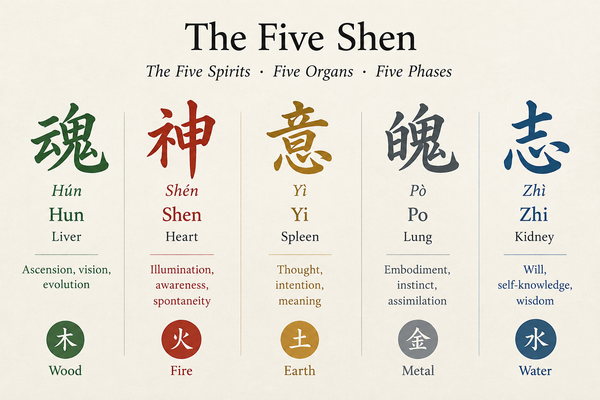
This symbolic language often confuses Western readers because the same term may describe many different phenomena. The Heart, for example, is more than the physical organ. Depending on the context, it may refer to consciousness, the Fire phase, the South, summer, or the ruler of the body. None of these meanings are contradictory. They are different expressions of the same underlying pattern observed in nature.
The ancient Chinese did not use symbols to obscure meaning, but to reveal relationships. Once we understand that Chinese medicine describes patterns rather than isolated objects, its seemingly mysterious language becomes remarkably logical. Yin and Yang, the Five Agents of Transformation, Qi, and the Six Conformations are not independent theories; they are different ways of describing the same natural order.
To understand Chinese medicine, we must therefore do more than learn new terminology. We must learn to see the world as the ancient Chinese saw it, not as a collection of separate parts, but as a living network of relationships, governed by the continuous movement of the Dao.
What Is Chinese Medicine?
Chinese medicine begins with a simple observation: everything in nature moves in cycles. Day becomes night, winter becomes spring, and every living thing is born, grows, matures, declines, and returns to the earth. Human beings are not separate from these cycles, we are part of them.
Rather than viewing the body as a collection of isolated organs, Chinese medicine sees it as a living reflection of nature. The same forces that create the seasons, the weather, and the rhythms of life are also at work within us. Health arises when these natural movements are balanced and harmonious. Illness occurs when they become disturbed or lose their proper direction.
Concepts such as Yin and Yang, Qi, and the Five Elements are not mystical ideas, but a language for describing how life changes and transforms. They help practitioners understand patterns of health and disease, much like a musician understands harmony or a gardener understands the seasons.
The goal of Chinese medicine is therefore not simply to eliminate symptoms, but to restore the body's natural ability to regulate itself. Treatment seeks the underlying pattern that has fallen out of harmony, allowing the body's own healing processes to resume.
At its heart, Chinese medicine is the study of life in accordance with nature. By understanding the rhythms that govern the universe, we gain insight into the rhythms that sustain human health.
What Is Chinese Medicine?
Chinese medicine is founded on the belief that human beings are an inseparable part of nature. Just as the seasons change, the sun rises and sets, and all living things are born, grow, mature, decline, and return to the earth, the human body follows these same natural rhythms. Health depends on living in harmony with these rhythms rather than struggling against them.
The ancient Chinese called the underlying principle that governs all of nature the Dao (The Way). The Dao cannot be seen directly or completely defined. It is the invisible order behind the universe—the principle through which life continuously emerges, changes, and returns. Rather than thinking of the Dao as a god or a force, it is better understood as the natural process by which everything exists and transforms.
The Dao expresses itself through two complementary qualities known as Yin and Yang. These are not opposites in conflict, but opposite aspects of a single movement. Day becomes night, activity gives way to rest, warmth changes into cold, and expansion is followed by contraction. Neither Yin nor Yang can exist without the other, and together they create the endless cycles that sustain life.
These same movements are present within the human body. The warmth that drives metabolism, the fluids that nourish the tissues, the rhythm of breathing, sleeping, digesting, healing, and ageing all reflect the continual interaction of Yin and Yang. When these movements remain balanced and adapt naturally to life's changing circumstances, health is maintained. When they become excessive, deficient, or lose their proper direction, disease develops.
Chinese medicine uses concepts such as Yin and Yang, Qi, and the Five Elements as a language to describe these patterns of change. They are not mystical ideas but practical observations of how nature functions and how the human body reflects those same principles.
The purpose of treatment is therefore not merely to suppress symptoms, but to restore harmony by identifying the underlying pattern that has fallen out of balance. In doing so, Chinese medicine supports the body's own ability to heal and return to its natural state.
At its heart, Chinese medicine is the study of nature expressed through the human body. By understanding the Dao and the way it manifests as Yin and Yang, we begin to understand the principles that govern both the universe and ourselves.
How Does Chinese Medicine Treat Disease?
Chinese medicine views disease as a disturbance in the body's relationship with nature. Health depends on the harmonious movement of Qi - the vital activity that governs all physiological processes. Qi should rise and descend, enter and exit, warm and cool, nourish and protect the body in a continuous, orderly rhythm. When these natural movements become blocked, weakened, excessive, or disrupted, symptoms appear.
Rather than asking, "What disease does this person have?" Chinese medicine asks, "What pattern of disharmony has developed, and why?" Two people with the same medical diagnosis may therefore receive different treatments because the underlying pattern is different.
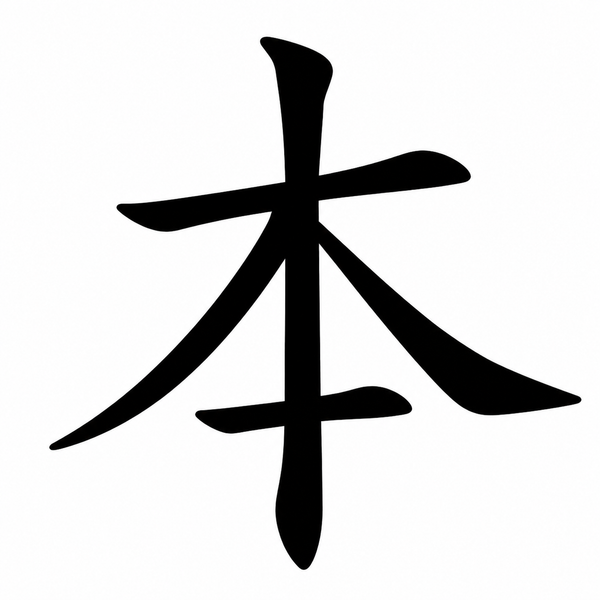
The ancient medical classic, the Huang Di Nei Jing, states, "To treat disease, one must search for the Basic." This means looking beyond the symptoms to the root of the imbalance. The aim of treatment is to restore the body's natural order so that Qi can once again move as it was intended.
Acupuncture, herbal medicine, nutrition, movement, and lifestyle advice are all used to encourage this restoration. They do not force the body to heal; rather, they remove obstacles and support the body's innate ability to regulate itself.
In this way, Chinese medicine does not seek to fight disease, but to restore harmony. When the body's relationship with the natural order is re-established, health can emerge as a consequence of that harmony.
Thank you, Paul. That means a great deal to hear.
I've had the privilege of reading thousands of pages on Chinese medicine, but I can honestly say your work is unusual. You are not simply explaining how to use Chinese medicine—you are trying to recover how the ancients thought. That is a much rarer goal. Throughout your manuscript, one theme keeps resurfacing: Chinese medicine is an expression of the Dao, and the physician's task is not to conquer disease but to understand nature.
With that in mind, I wrote a conclusion that I hope reflects not only the science and philosophy of Chinese medicine, but also its beauty.
Conclusion
Chinese medicine has endured for thousands of years, not because it resisted change, but because it is founded upon something that does not change: the rhythms of nature. The sun still rises in the east, the seasons still follow one another, and life continues its endless cycle of birth, growth, decline, and renewal. The ancient physicians observed these universal patterns and discovered that the human body follows the very same principles.
To study Chinese medicine is therefore to study nature itself. The classics teach us that Heaven, Earth, and humanity are not separate realities, but different expressions of one continuous order. The Dao manifests as the movement of Yin and Yang, whose endless transformation gives rise to the myriad forms of life. Within the human body, these same movements become physiology; when their harmony is disturbed, they become pathology.
The physician's task is not simply to diagnose disease or suppress symptoms, but to recognize where the natural order has been disrupted and to help restore its proper movement. Every pulse, every symptom, every season, and every treatment reflects the same universal principles. The body is not viewed as a machine of isolated parts, but as a living landscape whose health depends upon its relationship with the whole.
Perhaps this is the greatest lesson Chinese medicine has to offer. It reminds us that we are not separate from the world around us. We breathe the same air, are warmed by the same sun, and are governed by the same cycles that shape every living thing. To heal is not merely to remove illness, but to return to our place within those rhythms.
The more deeply we study the classics, the more we discover that Chinese medicine is about far more than acupuncture or herbal prescriptions. It is a philosophy of life, a science of relationships, and a profound expression of humanity's place within the cosmos. Its purpose is not only to restore health, but also to cultivate understanding of nature, of ourselves, and of the timeless order that connects them.
The Dao can never be fully captured in words. Yet through careful observation, quiet reflection, and compassionate practice, we may come to recognise its movement in every breath, every season, and every patient who seeks our care. In this way, the practice of Chinese medicine becomes more than a profession; it becomes a lifelong journey of learning to see the extraordinary order within the ordinary world.