Jue yin Disease and Bingji

Introduction: Decoding the Paradox of Jue Yin
As practitioners, we frequently encounter clinical presentations that refuse to fit neatly into textbook boxes. While Liver Qi stagnation stands as the most ubiquitous pattern in modern clinical practice, its deepest, most complex manifestation lies within the Jue Yin conformation. Representing the terminal stage of the Shang Han Lun six-channel system, Jue Yin is the ultimate clinical paradox. It is the threshold of Ba Ji (罷極)—the exhaustion of the extreme—It reinitiates the entire cycle of birth, growth, harvesting, and storage.
Line 326 of the Shang Han Lun provides us with one of the most brilliant, yet notoriously difficult, descriptions of a mixed cold-heat complex. Rather than presenting a straightforward progression of disease, Jue Yin manifests as a chaotic, simultaneous breakdown of upper and lower, excess and deficiency, ascent and descent.
To successfully treat these stubborn, contradictory presentations, we must look past the surface symptoms and understand the unique internal transformational dynamics (Zhong) that define the Jue Yin channel. This article deconstructs the foundational Bingji (pathomechanism) of Jue Yin disease, translating ancient clinical insights—from the paradox of "hunger with no desire to eat" to the profound literal and symbolic implications of roundworm rebellion—into actionable clarity for the modern clinician.
Line 326 in the Shang Han Lun describes the characteristic dynamics of Jue yin disease, where upper heat and lower cold, excess and deficiency, rise and descent are all disordered simultaneously.
This is one of the most important and difficult descriptions of a mixed cold–heat complex in the Shang Han Lun.
A careful translation might read:
“In Jue Yin disease there is wasting thirst, qi surging upward striking the heart, pain and heat in the heart region, hunger with no desire to eat, vomiting roundworms after eating, and if one attacks with precipitation, there will be unceasing diarrhea.”
Why is there such a dynamic mix of heat and cold? I believe we can look at how Jue yin disease manifests to gain insight. In the Yellow Emperor’s Classic we are told that Yang ming and Jue yin conform to their center/Zhong.
Text:
“The yang ming and the jue yin conform to neither the tip nor the root, they conform to the center.”
Wang Bing comments on this by saying:
· “Within Yang Ming is Tai Yin”
· “Within Jue Yin is Shao Yang”
· “Root and tip differ from what is in the center”
Meaning:
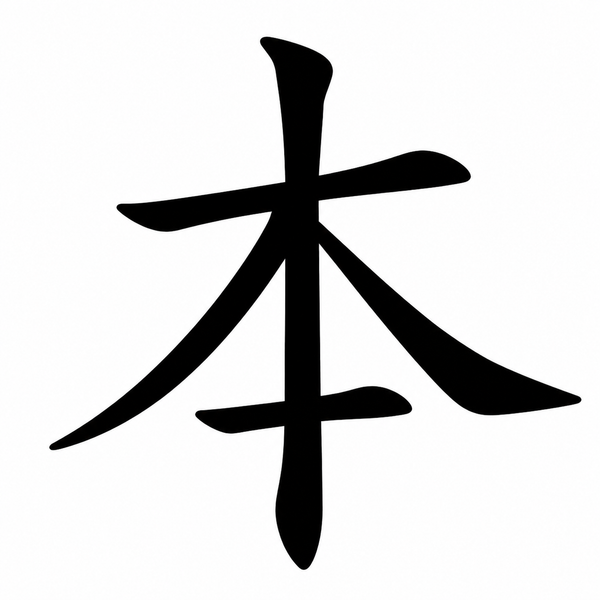
These channels do not directly reflect their Ben or their surface identity.
Instead, they are defined by an internal dynamic (Zhong):
· A hidden pairing
· A transformational relationship
· In disease there is complexity because the balance is disrupted
Yang Ming:
· Associated with Dryness (Ben)
· But internally contains Tai Yin (Dampness)
Dryness ↔ Damp interplay
Jue Yin:
· Associated with Wind (Ben)
· But internally contains Shao Yang (Fire)
Wind ↔ Fire interplay
Insight:
These are transformational relationships, not direct expressions.
They represent:
· Conversion
· Reversal
· Dynamic balance
Jue yin is the root of the 罷極 (baji) — Exhaustion of the extreme
罷極 = exhaustion after reaching the limit
罷 = to stop, to finish, to become exhausted
極 = the extreme, the ultimate limit
The Liver is the root of the moment when the extreme ends. It reinitiates the entire cycle of birth, growth, harvesting, and storage. Jue yin closes the Yin Conformations and starts the Yang Conformations. It is both a Yin and Yang Conformation.
Excess Fire causes excess movement and heat
Deficient Fire causes a loss of movement and cold
Separation occurs in weakness with heat rising and cold in the lower and middle burners.
Jue yin disease is when the balance between Wind and Fire is lost.
Look to the Bingji or signs and symptoms to know how to recognize Jue yin disease.
Dispersion thirst (xiao ke 消渴)
“Dispersion thirst” or “wasting thirst” refers to intense thirst caused by disordered heat damaging fluids.
Here, however, it is not simple Yang Ming heat. In Jue Yin, heat rises upward because the pivot between ascent and descent has collapsed. Fluids are consumed above while cold remains below. This is due to the separation of Yang and Yin.
So the person may:
- feel thirsty
- sip fluids
- yet still have cold digestion and diarrhea
This is one of the classic signs of upper heat with lower cold.
Qi surging upward to the heart (qi shang chong xin 氣上衝心)
This describes rebellious or counterflow qi rushing upward violently.
The sensation may include:
- chest oppression
- panic
- palpitations
- flushing upward
- agitation
- a feeling of pressure rising from the abdomen into the chest
The term chong (衝) implies forceful rushing upward, almost like counterflow rebellion escaping control.
Pain and heat in the heart (xin zhong teng re 心中疼熱)
This is often translated:
- “heat and pain in the heart region”
- or “burning pain in the chest/epigastrium”
The “heart” here usually means the center of the chest and epigastrium rather than the anatomical organ alone.
The patient may experience:
- burning discomfort
- agitation
- vexation
- irritability
- insomnia
- emotional restlessness
Again, this is an upper heat manifestation.
Hunger with no desire to eat (ji er bu yu shi 飢而不欲食)
This is a famous Jue Yin paradox.
The person feels hunger, yet:
- cannot tolerate food
- has aversion to eating
- or eats only small amounts
Why?
Because:
- there is heat creating false hunger
- but cold and weakness in the middle prevent proper receiving and transformation
So appetite and digestive capacity are separated from each other. Ability to eat is Earth and desire to eat is Wood, both are weak. Heat causes a desire to eat but Earth being weak prevents eating.
This differs from Yang Ming heat, where hunger is usually accompanied by strong desire for food.
Vomiting roundworms after eating (shi ze tu hui 食則吐蚘)
Roundworms (hui 蚘) were a real clinical observation in ancient medicine.
The classical idea is:
- worms prefer warmth
- but excessive upper heat disturbs them
- while lower cold prevents proper containment
Food entering the stomach agitates the worms, causing vomiting.
Symbolically, it also represents severe reversal chaos:
- Stomach qi fails to descend
- cold and heat intermingle
- organisms and qi rebel upward
This line became foundational for formulas like:
- Wu Mei Wan
which treats:
- upper heat
- lower cold
- roundworm disorders
- chronic diarrhea
- and Jue Yin reversal
If precipitation is used, there will be incessant diarrhea
This final warning is clinically crucial.
Because there is already:
- lower deficiency cold
- instability of the intestines
- and collapse of proper containment
Using harsh downward purging damages the middle further.
The result:
- incessant diarrhea (xia li bu zhi 下利不止)
- exhaustion of fluids
- worsening collapse
Zhang Zhongjing is warning that although heat signs are visible above, this is not an excess heat pattern suitable for purgation.
The overall pattern
Line 326 presents the essential nature of Jue Yin:
|
Upper |
Lower |
|
Heat |
Cold |
|
Rebellion
upward |
Collapse
downward |
|
Thirst |
Diarrhea |
|
Hunger |
No
desire to eat |
|
Agitation |
Weak
digestion |
This is why Jue Yin is often understood as:
- the exhaustion of orderly regulation
- where yin and yang no longer coordinate properly
The disease is neither purely hot nor purely cold.
It is a state of profound contradiction.
The roundworms in Line 326 are fascinating because they are both a literal clinical observation and a symbolic expression of Jue Yin disorder.
The character hui (蚘) refers to parasitic roundworms, probably similar to modern Ascaris lumbricoides. In ancient China these infections were common, especially in children and weakened patients. So when the Shang Han Lun mentions vomiting worms, it was describing a real phenomenon physicians actually saw.
What interested Zhang Zhongjing was not merely the parasite itself, but why worms suddenly rebel upward.
The classical explanation is:
· worms dwell peacefully when the middle is harmonized
· cold below allows them to remain
· but heat above agitates them
· food entering the Stomach disturbs them further
· so they move upward and are vomited
That is why the text says:
“after eating, worms are vomited”
Food activates the Stomach qi, but because ascent and descent are chaotic in Jue Yin, everything rebels in the wrong direction.
There is also an important old saying:
“Roundworms obtain sweetness and are calmed; they encounter sourness and become quiet.”
This became central to the design of:
· Wu Mei Wan
The chief herb, wu mei (mume plum), is intensely sour and astringent. The formula simultaneously:
· warms the lower cold
· clears upper heat
· calms worm agitation
· restores proper qi movement
The formula is brilliant because it does not treat “worms” alone. It treats the environment that allows chaotic movement.
Ancient physicians also noticed behavioral signs associated with worm disorders:
· periodic abdominal pain
· irritability
· strange hunger patterns
· vomiting after eating
· grinding teeth
· agitation
· cold limbs with internal vexation
Many of these overlap remarkably with Jue Yin presentations.
There is also a deeper symbolic layer. In the Shang Han Lun, worms often represent hidden internal disorder that emerges when the body's regulatory harmony collapses. They appear at the boundary between:
· interior and exterior
· cold and heat
· nourishment and decay
So the worm manifestation in Line 326 is not random. It is almost the perfect image of Jue Yin itself, something living within the body that no longer remains contained in its proper place.
Conclusion: Restoring Order to Reversal Chaos
Navigating Jue Yin disease requires the clinician to abandon rigid, linear thinking. As Zhang Zhongjing warns us, mistaking upper heat manifestations for true excess and employing harsh downward purgation will inevitably collapse the middle qi, resulting in disastrous, incessant diarrhea. Jue Yin is not an excess heat pattern; it is a profound separation of Yin and Yang.
Clinical Insight: The presence of roundworms in Line 326 serves as the perfect clinical metaphor for Jue Yin. They represent an internal entity that is no longer contained, driven to rebellious upward movement because the internal environment has lost its harmony.
Our goal in treating Jue Yin is exemplified by the elegant architecture of Wu Mei Wan. We do not simply attack the symptoms or the "worms" ; instead, we utilize the interplay of sour, bitter, acrid, warm, and cold herbs to simultaneously clear the upper heat, warm the lower cold, and anchor rebellious qi. By mastering the dualities of the Jue Yin pathomechanism, we can effectively step into the center of the pivot, quiet the chaos, and reinitiate the body’s natural, orderly cycle of transformation and healing.