The Five Shen
Spirit becoming life
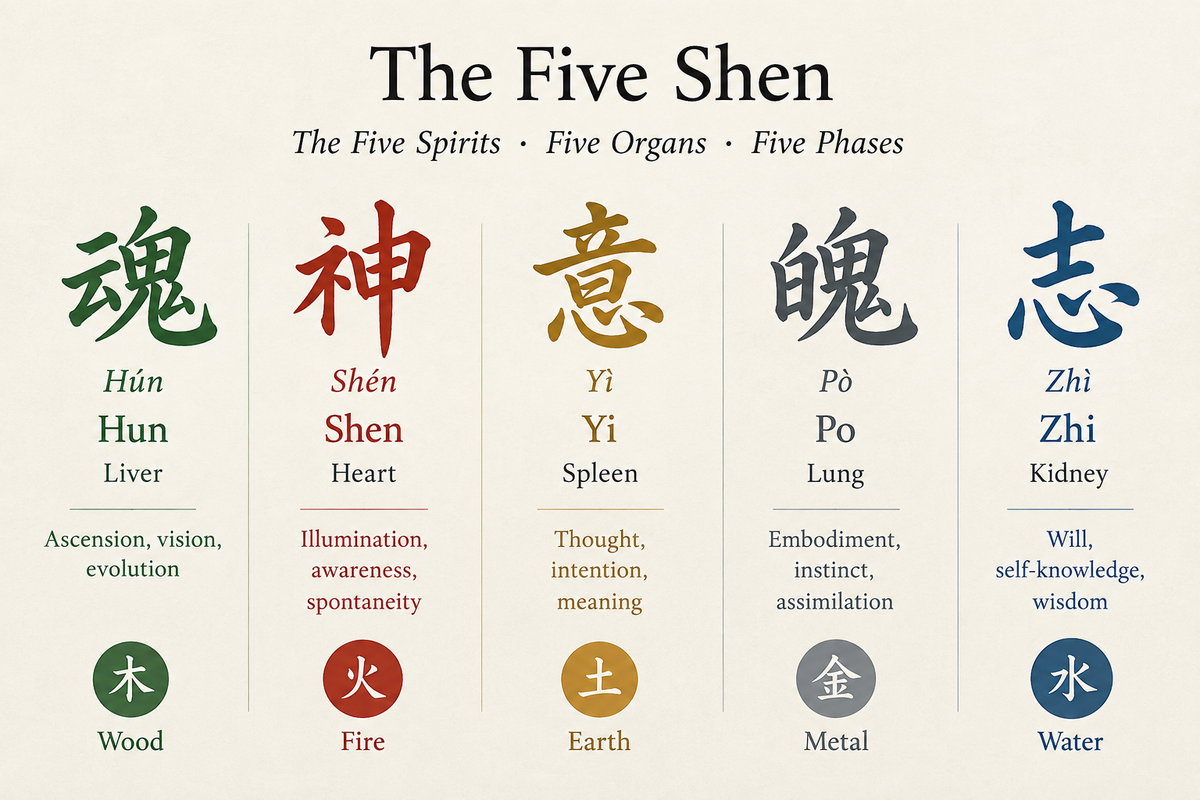
In Chinese medicine, the Five Shen describe how the Spirit of the Heart manifests through the five Yin organs.
The Shen is an emanation of Heaven within the human being. Although it resides in the Heart, it is expressed through each of the Yin officials as a particular aspect of our human capacity to experience, understand and participate in life.
The Five Shen are:
- Heart — Shen 神 — Fire
- Liver — Hun 魂 — Wood
- Spleen — Yi 意 — Earth
- Lung — Po 魄 — Metal
- Kidney — Zhi 志 — Water
They are not five separate spirits. They are five expressions of the one Spirit.
The Five Shen allow us to change our lives through conscious intention. The Shen, as an emanation of the Heart, is the active impulse from Heaven within us. It can ignite the potential contained in our Jing and bring that potential into manifestation.
The quality of this interaction is determined by the Zhi 志, the human Will.
Before the Five Shen: Ling
To understand why the Shen are associated with the Yin organs, we need to go back to the beginning.
Before Heaven and Earth, there was the Dao.
Let us go back to the beginning
Before the beginning was the Dao
Let us call the Dao, neither negative nor positive, pure potential Ling.
We can think of the Dao here as pure potential — neither Yin nor Yang, neither positive nor negative. This potential can be described by the Chinese concept of Ling 靈.
Ling expresses the innate capacity for spiritual responsiveness and intelligent transformation. It is potential that has not yet become a particular thing.
This helps explain an important principle:
The Five Shen belong to the Yin organs because Yin represents potentiality.
The Yin organs store and nourish the potential from which manifestation can arise. Yet the Shen themselves are Yang in nature. They emerge from Yin and give expression to what Yin contains.
In this sense:
Yin holds potential.
Yang brings potential into manifestation.
Shen is the movement between the two.
The intelligence of the universe is expressed through Ling, and through the relationship of Ling, Zhi and Shen, human potential becomes capable of conscious expression.
The Chinese character Ling refers to the Dao as potentiality.
According to Porkert Jing takes over the role of Ling in medical contexts and means, structive force, or structive capacity in philosophical and Daoist technical writing.
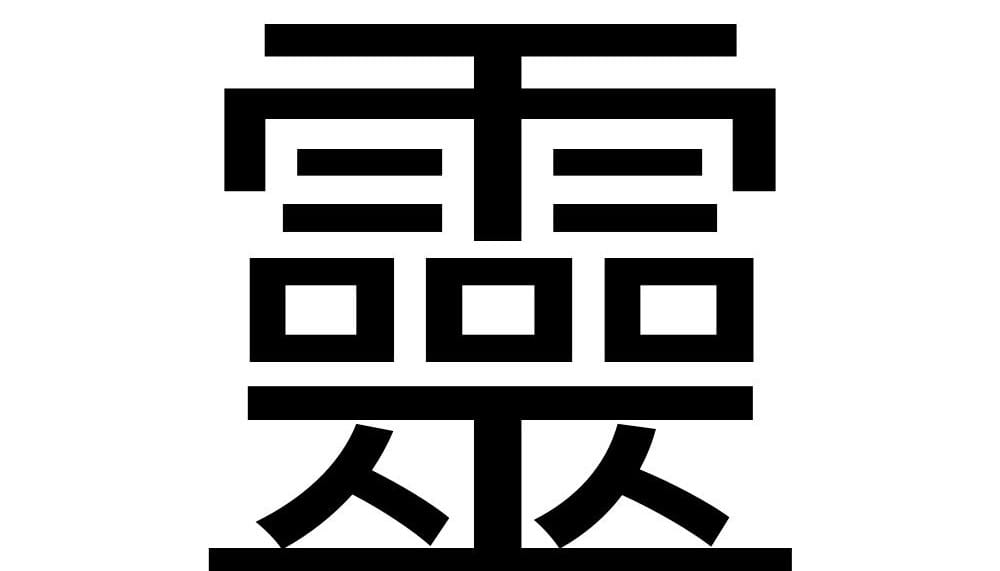
The Chinese character of Ling expresses that through appropriate ritual, Heaven is summoned.
Ling has other meanings namely, supernatural power, mysterious, spiritual, transcendent, and marvellous.
At the top of the Chinese character there are four drops of rain that fall from clouds under Heaven. In the middle there are three mouths, and at the bottom there are two female shamans, offering jade and dances to Heaven.
Ling describes the innate capacity for spiritual responsiveness and intelligent transformation.
The intelligence of the universe is expressed through Ling potential and together with Zhi Will and Shen Spirit we are complete.
The Five Shen and the Five Phases
The Five Shen can be understood as five movements through which Spirit becomes human life.
|
Phase |
Shen |
Character |
Fundamental movement |
|
Wood |
Hun |
魂 |
Ascension and vision |
|
Fire |
Shen |
神 |
Illumination and awareness |
|
Earth |
Yi |
意 |
Thought, intention and meaning |
|
Metal |
Po |
魄 |
Embodiment and assimilation |
|
Water |
Zhi |
志 |
Will and wisdom |
These are not simply psychological categories.
They describe different ways in which Spirit becomes embodied and participates in the movement of life.
Wood — Hun 魂
The Hun is the Shen associated with the Liver and Wood.
The Hun governs our ascension in life. Wood lies between Water and Fire on the Sheng cycle and therefore occupies an important position in the movement between the depths of Water and the illumination of Fire.
The Hun is described in Daoist thought as comprising the Three Treasures:
Jing — Qi — Shen
Jing contains the potential for manifestation.
Shen illuminates that potential.
Qi provides the movement through which potential becomes actual.
This makes the Hun closely connected with our ability to evolve through physical existence.
The Hun gives us vision — not simply the ability to see, but the capacity to perceive where life can go.
Chong Qi 沖氣
This is where the idea of Chong Qi becomes particularly interesting.
Dao De Jing, chapter 42, says:
道 生 一
一 生 二
二 生 三
三 生 萬 物
萬 物 負 陰 而 抱 陽
沖 氣 以 為 和
道生一,一生二,二生三,三生萬物。
Dao gives birth to One. One gives birth to Two. Two gives birth to Three. Three gives birth to the ten thousand things.
It then says:
萬物負陰而抱陽,沖氣以為和。
The ten thousand things carry Yin and embrace Yang; Chong Qi brings them into harmony.
Chong 沖 can convey movement, surging, penetration and also an open or empty space through which movement can occur. It blends the Yin and Yang together.
So Chong Qi need not be understood as a third substance sitting between Yin and Yang.
It can instead be understood as the dynamic movement through which Yin and Yang interact without losing their distinction.
In its simplest form:
Yin + Yang → Chong Qi → Harmony
This is important for understanding Wood.
Wood is not simply another element between Water and Fire. It represents movement and mediation. The Jue yin Liver and Heart Master (pericardium) regulate the relationship between the upper Fire and lower Water.
The Hun therefore represents a movement of Spirit through which potential can rise toward manifestation.
Fire — Shen 神
At the centre of the Five Shen is the Heart Shen.
The Shen of the Heart is the basis of the Spirit residing in each of the other Yin officials.
The Heart's fundamental function is illumination.
The Heart allows us to acknowledge momentary reality as it actually occurs rather than immediately replacing reality with our interpretation of it.
A well-functioning Heart therefore allows spontaneous and appropriate response.
The Heart illuminates what is present.
Liu Yiming describes this as the illumination of the Heart: an open awareness in which the original Spirit is in charge of affairs.
Liu Yiming: Illumination is the energy of open awareness in the palace of fire, it is the spirit of humans, the master of mind. When the mind is open it is aware, the original spirit is in charge of affairs, and illumination is managed properly.
The Heart allows us to recognise our true nature as it is stored within the Yuan Qi and Jing.
This makes Fire different from simply "thinking."
The Heart sees.
The Heart illuminates.
The Heart knows what is occurring.
And from that illumination, appropriate action becomes possible.
The virtue of Fire
The virtue associated with Fire is:
禮 Li — Propriety
Propriety means being in the right place, doing the right thing, at the right time.
It is not merely social etiquette.
It is the ability to respond appropriately to the reality of the moment.
Earth — Yi 意
The Yi is the Shen of the Spleen and Earth.
Yi is often translated simply as "thought," but this does not fully express its meaning.
意 carries the meanings of:
- intention
- thought
- idea
- meaning
- purpose
Yi gives thought a direction.
The Heart perceives and illuminates reality; Yi takes what has been perceived and forms it into meaning and intention.
In this sense, Yi is the process through which something arising from the Heart becomes an idea that can guide action.
Earth therefore provides the capacity to establish meaning in the world.
The virtue of Earth
The virtue of Earth is:
信 Xin — Trust / Integrity
Earth expresses trust in the Dao.
It does not need to favour one thing over another. It receives, supports and gives form.
Metal — Po 魄
The Po is the Shen of the Lung and Metal.
Where the Hun represents ascent, the Po represents descent.
The Po is closely associated with the physical and instinctive dimensions of human life.
It allows us to receive and assimilate life into ourselves.
Its function can be understood as:
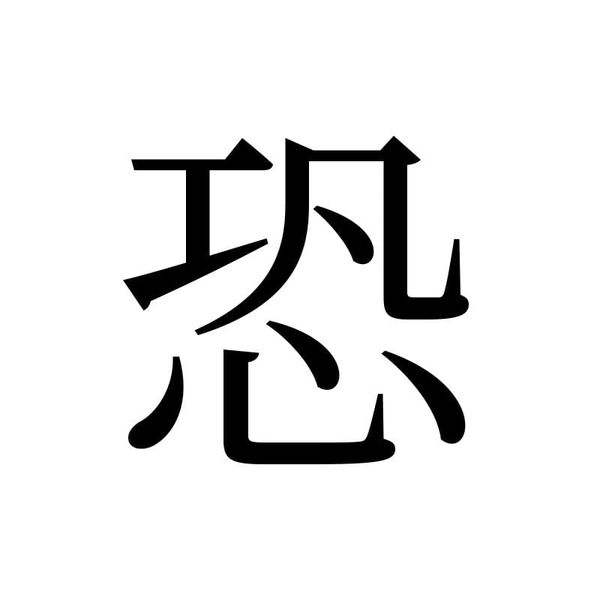
receive → absorb what is essential → discard what is not.
This is why the Po is associated with the seven emotions and with the more immediate, embodied responses of human existence.
Seven emotions, fear, fright, anger, joy, worry, sadness, and grief.
The character Po also evokes the image of a white, Earth-bound spirit. Upon death, the Po returns to Earth.
The Po therefore represents the descent of Spirit into physical form.
Where the Hun allows Spirit to ascend through physical existence, the Po allows the body to be constructed from Spirit.
Together they describe two complementary movements:
Hun — ascent toward Heaven
Po — descent toward Earth
Water — Zhi 志
The Zhi is the Shen of the Kidneys and Water.
Zhi is commonly translated as Will.
But this is more than determination or force of personality.
Zhi gives us the capacity for self-knowledge and alignment with Heaven.
Water represents the depths — that which lies beyond the illumination of ordinary consciousness.
The Heart can illuminate our depths, but it cannot illuminate everything.
There will always be something beyond our awareness.
And this is where fear arises: in relation to the unknown.
The Sage does not eliminate the unknown.
Instead, through a focused Will, the Sage develops the capacity to stand firmly in the face of it.
This is the beginning of wisdom.
Wisdom is not knowing everything.
Wisdom is the ability to remain steady before what is unknown and still take the appropriate action.
The virtue of Water
The virtue of Water is:
智 Zhi — Wisdom
The Hara — where the cosmology becomes bodily
These ideas can seem very abstract until we bring them back into the body.
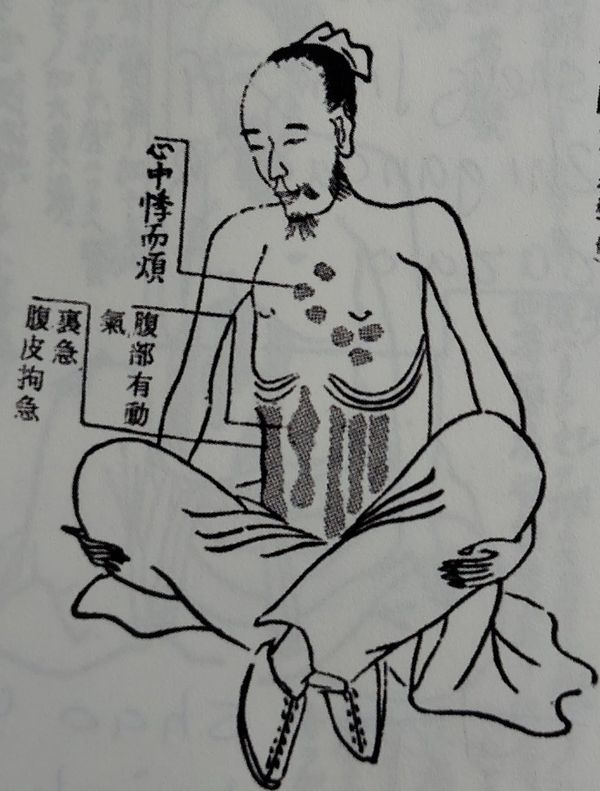
This is where the Japanese concept of the Hara 腹 becomes fascinating.
The Hara is the abdominal centre and an important field of diagnosis in Japanese medicine.
It can be considered alongside several related Chinese and Daoist concepts:
腹 Hara
↓
氣海 Qihai — Sea of Qi
↓
丹田 Dantian — Cinnabar Field
↓
命門 Mingmen — Gate of Life
↓
元氣 Yuan Qi — Source Qi
These should not be treated as simple one-to-one equivalents. They arise from different traditions and contexts.
Yet conceptually they overlap around a common theme: the lower centre as a field in which the fundamental organisation and transformation of Qi becomes perceptible.
The Mingmen is traditionally associated with the Kidneys and the life-giving power underlying physiological transformation.
The lower Dantian is closely associated with this transformative activity.
This gives the Hara a significance beyond simply being a place where we palpate for diagnostic information.
The Hara can be understood as a bodily field in which the fundamental organisation of Qi becomes perceptible.
And suddenly the Japanese clinical practice of Hara diagnosis and the Chinese ideas of Qihai, Dantian, Mingmen and Yuan Qi begin to occupy the same conceptual landscape.
The Five Shen and human transformation
We can now see the Five Shen as a continuous movement rather than five isolated functions.
Water — Zhi
The Will holds us steady before the unknown.
↓
Wood — Hun
Potential rises and develops vision.
↓
Fire — Shen
The Heart illuminates what is present.
↓
Earth — Yi
Perception becomes meaning and intention.
↓
Metal — Po
Spirit becomes embodied and assimilated into physical life.
And the movement returns again to Water.
This is not a straight line.
It is a living cycle.
The Dao manifests through movement, differentiation and relationship.
The Five Shen describe something similar within us: the movement through which potential becomes awareness, awareness becomes intention, intention becomes action, and action becomes lived experience.
The Five Shen and the Five Virtues
The Five Shen ultimately have an ethical dimension.
They are not merely descriptions of our inner psychology. Their healthy expression becomes virtue.
|
Phase |
Shen |
Virtue |
|
Wood |
Hun 魂 |
仁 Ren — Benevolence |
|
Fire |
Shen 神 |
禮 Li — Propriety |
|
Earth |
Yi 意 |
信 Xin —
Trustworthiness |
|
Metal |
Po 魄 |
義 Yi — Righteousness |
|
Water |
Zhi 志 |
智 Zhi — Wisdom |
The Five Shen therefore describe a journey from potential to lived virtue.
The Dao is not something separate from human life.
It becomes visible through the way potential is received, illuminated, understood, embodied and acted upon.
Spirit becoming life
Perhaps this is the simplest way to understand the Five Shen.
Ling is potential.
Jing holds potential within the human being.
Shen illuminates potential.
Qi moves it.
The Five Shen give it different expressions through the Yin organs.
And through these expressions, the invisible becomes visible.
The Hun gives us vision.
The Shen gives us illumination.
The Yi gives us intention.
The Po gives us embodiment.
The Zhi gives us the Will to meet the unknown.
Together they describe the extraordinary process by which Spirit becomes a human life.
And perhaps this is why the Five Shen are so important in Chinese medicine.
They are not simply five "spirits" living inside five organs.
They are five expressions of the fundamental relationship between Heaven, potential, embodiment and human action.
They show us how the Dao becomes alive in us.