When the Abdomen Chooses the Formula

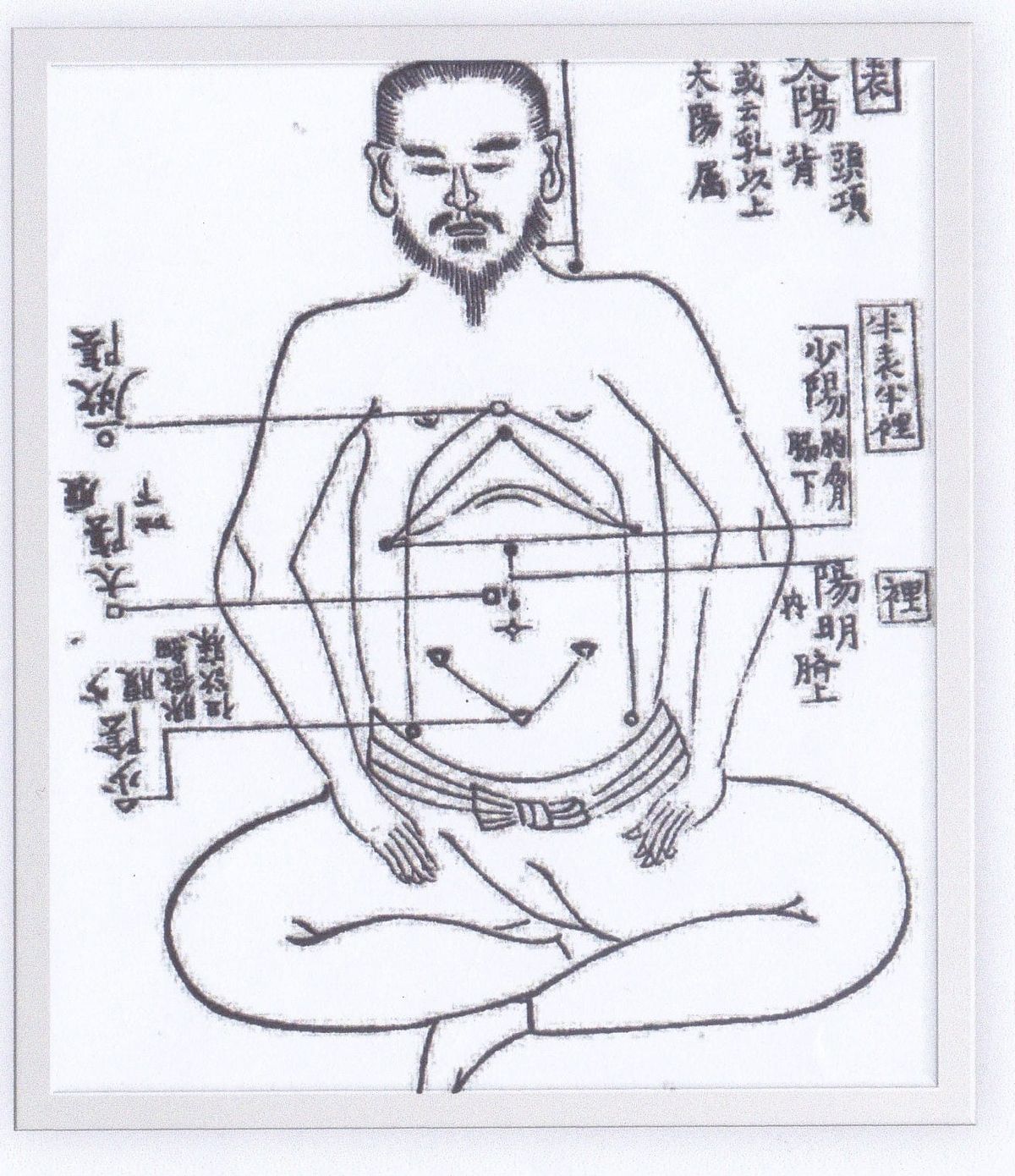
Most practitioners learn abdominal diagnosis as a collection of interesting pressure points and tender areas.
But what if the abdomen could tell you which herbal formula the patient needs?
This guide brings together the clinical wisdom of Kampo, Kiiko Matsumoto Style, and the classical formula tradition of the Shang Han Lun and Jin Gui Yao Lue. Instead of memorizing isolated abdominal findings, you'll learn to recognize functional patterns that lead naturally to the appropriate formula.
Inside you'll discover:
- Whole-abdomen patterns of deficiency and excess
- Epigastric, subcostal and lower abdominal findings
- Qi, Blood and Water patterns explained clinically
- The meaning of pulsations, Rikyu, Nobose and Oketsu
- More than one hundred classical formulas organized by abdominal presentation
- Practical explanations that connect palpation directly to treatment
This isn't a theoretical discussion of zang-fu patterns.
The abdomen never lies.
Pulse diagnosis may take years to master, but the abdomen gives immediate, physical feedback. Tension, softness, fullness, pulsations, rigidity and emptiness all tell a story.
In my latest guide I show how these findings lead directly to the classical formulas of the Shang Han Lun and Jin Gui Yao Lue, using the practical insights of Kampo and Kiiko Matsumoto Style Acupuncture.
If you're ready to stop guessing and start feeling what the body is telling you, this is a guide you won't want to miss.
Available now for paid Dragon Talks subscribers.
Excert from When the Abdomen Chooses the Formula
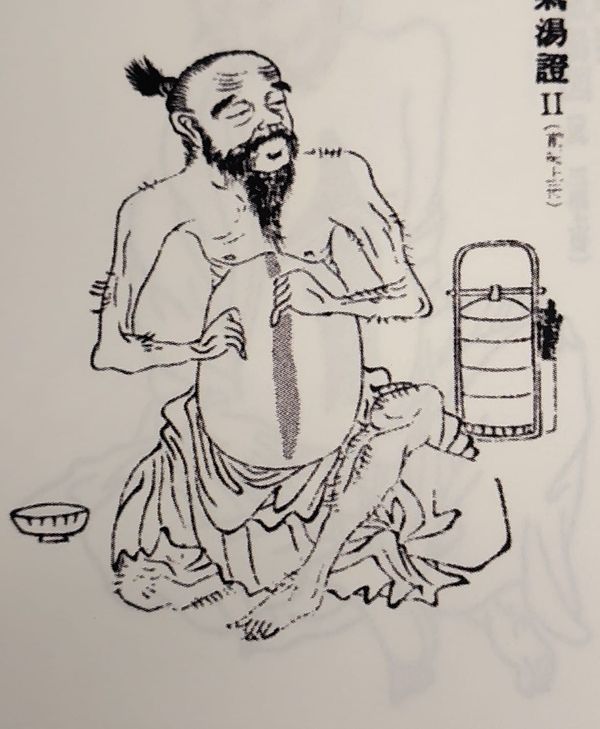
The Hara (腹) is the abdomen, but in practice it refers to a diagnostic and functional center of the body used especially in Kampo and Japanese bodywork traditions.
Using the information gathered from palpating the abdomen or Hara enables a way of gathering information for treatment that does not rely on pulse diagnosis. It gives the practitioner a way of getting better clinical results while pulse skills are developed.
Abdominal diagnosis, known in Kampo as Fukushin, is especially valuable for beginners because it gives you something that many early students struggle to find: clear, repeatable, physical feedback.
When people talk about abdominal palpitation in the Hara, they usually mean palpable pulsations felt through the abdominal wall during examination—this is called dōki (動悸) in Kampo.
In the KMS Kiiko Matsumoto Style of acupuncture the whole body is used to gather information. This style of acupuncture is readily available to learn in modern times.
It grounds you in something tangible
When you’re starting out in Chinese medicine, concepts like qi, blood, or pattern differentiation can feel abstract. The abdomen, however, is right there under your hands.
Instead of wondering “Is this heat? Is this deficiency?”, you can feel:
· tension vs softness
· fullness vs emptiness
· resistance, pulsation, or tenderness
That immediacy builds confidence much faster than relying only on theory.
It connects directly to classical formulas
In systems influenced by the Shang Han Lun, abdominal findings often point quite directly to formulas.
For example:
· Epigastric hardness → think of formulas like Ban Xia Xie Xin Tang-type patterns
· Lower abdominal weakness → think of deficiency patterns like Xiao Jian Zhong Tang
This is very much in line with the clinical style of Zhang Zhongjing, where the body tells you the formula, rather than building long theoretical chains.
It reduces overthinking
Beginners often get lost trying to “figure out” the perfect diagnosis:
· Is it Liver overacting on Spleen?
· Is it damp-heat or just heat?
Fukushin cuts through that. You’re not guessing—you’re feeling a pattern. It encourages a shift from intellectualizing to direct observation, which is closer to how classical medicine was practiced.
It improves palpation skills early
Touch is a core diagnostic tool, but pulse diagnosis can take years to develop sensitivity. The abdomen is:
· broader
· easier to interpret
· less subtle than the pulse
So it becomes a great training ground for your hands.
It builds a bridge between Kampo and Chinese medicine
Fukushin shows you that diagnosis doesn’t have to rely only on pulse and tongue. It complements them and often clarifies confusing cases.
In Kampo, this approach evolved into a central method, but its spirit still aligns with classical Chinese thinking, especially the formula-based approach preserved in texts like the Shang Han Lun Za Bing Lun.
The deeper value
For a beginner, Fukushin teaches an important lesson early:
The body is not hidden - you just need to learn where and how to listen.
It shifts your learning from “What should I think?” to “What can I feel?”—and that’s a major step toward clinical skill.
Introduction
Kampo is the Japanese system of herbal medicine that developed from classical Chinese medicine, especially the formula tradition found in texts like the Shang Han Lun and the Jin Gui Yao Lue.
What is Kampo
Kampo (漢方) literally means “Han method,” referring to medicine that originally came from China but was adapted in Japan over centuries. Today, it’s a highly systematized, formula-based practice used alongside modern biomedicine in Japan.
How it relates to Chinese classical formulas
The connection is very direct:
· Many Kampo formulas are the same as classical Chinese formulas, just pronounced in Japanese
o Gui Zhi Tang → Keishito
o Ma Huang Tang → Mao-to
o Xiao Chai Hu Tang → Shosaiko-to
· These formulas largely come from the Zhang Zhongjing lineage of medicine, especially the Shang Han Lun tradition.
Key differences from modern Chinese medicine
While the roots are shared, Kampo evolved in its own direction:
1. Strong focus on formulas, less on theory
Kampo practitioners often emphasize matching a patient to a specific formula pattern (sho) rather than building complex theoretical diagnoses (like zang-fu or five elements).
2. Abdominal diagnosis (Fukushin)
Physical palpation of the abdomen is central in Kampo—more so than in most modern Chinese practice.
3. Standardized formulas
In Japan, Kampo formulas are often produced as fixed combinations (granules), with less modification than in Traditional Chinese Medicine (TCM).
4. Integration into modern healthcare
Kampo is taught in medical schools and prescribed by physicians in Japan, often alongside Western medicine.
The big picture
You can think of Kampo as a preserved and refined branch of classical Chinese formula medicine:
· It keeps the spirit of early formula-based thinking from texts like the Shang Han Lun
· It simplifies and standardizes practice
· It relies heavily on clinical observation and matching patterns to formulas
In a way, Kampo is closer to how formulas may have been used in earlier periods—direct, practical, and centered on the formula itself.
Nobose 上衝, upward rushing
Nobose is a Japanese term, it refers to pathological upward surging sensations towards the chest, throat and ultimately head.
Symptoms are temporary palpitations, flushed face, dizziness, headaches, pulsing in the head.
Nobose is a form of ben tun, and it is an expression of counter flow and should be treated as such. It can be treated according to the background pattern of Qi, Blood or Water.
The following formulas treat upwards rushing, each with a different reason.
|
Formula |
How it treats upward rushing (Nobose) |
|
Xiao
Chai Hu Tang |
Harmonizes
the Shao Yang pivot, allowing constrained Qi to pivot and descend
instead of surging upward. |
|
Gui
Ling Wu Wei Gan Cao Tang |
Descends
rebellious Lung Qi by transforming retained fluids in the chest and
Lung, reducing coughing and upward rushing. |
|
Ling
Gui Zhu Gan Tang |
Warms
the Spleen and transforms retained fluids beneath the Heart, allowing Yang Qi
to descend rather than surge upward with dizziness or palpitations. |
|
Zhen
Wu Tang |
Warms
Kidney and Spleen Yang so water can be metabolized and Yang becomes rooted
below, preventing floating or rushing upward. |
|
Gui
Zhi Jia Gui Tang |
Heavily
warms and unblocks Yang to direct Ben Tun Qi downward when Cold causes
Qi to rush upward from the lower abdomen. |
|
Ling
Gui Gan Zao Tang |
Warms
Heart Yang and transforms fluids while calming the Spirit, settling upward
rushing associated with fright, palpitations, and chest fullness. |
|
Ben
Tun Tang |
Clears
Heat while descending the acute upward surge of Ben Tun Qi, especially
when emotional constraint generates Heat that drives Qi upward. |
|
Ban
Xia Hou Po Tang |
Moves
constrained Qi and transforms Phlegm in the throat and chest, relieving the
sensation of Qi rising and the classic "plum-pit" obstruction. |
Xiao chai hu tang
chai hu 24 huang qin 9 ban xia 12 sheng jiang 9 ren shen 9 da zao 9 zhi gan cao 9
Harmonizes the Shao Yang pivot, allowing constrained Qi to pivot and descend instead of surging upward.
This is the representative formula for a Shao yang pattern. It restores the Shao yang function of controlling the pivot, harmonizes the circulating Fire on the surface and interior, clears gall bladder congestion and strengthens the center.
Shao yang patterns are the most common because all weakness of the Emperor weakens the minister which causes unrest in the kingdom which then gives rise to accumulations such as dampness and phlegm, with flaring of the Ministerial Fire due to stagnation. Look for cold hands and feet, hot flashes, a stool that is alternating hard and soft, a sore throat, dizziness, and mental vexation.
Liones from the Shang Han Za Bing Lun
In cold damage of five or six days, there is wind strike, coming and going of hot and cold, uncomfortable fullness of chest and ribs, muted lack of desire of food and drink, mental vexation and desire to vomit, possibly thirst, possibly pain in the abdomen, possibly hard glomus under the ribs, possibly pulsations under the heart, or lack of thirst, mild fever all over the body, or with coughing, xiao chai hu tang governs.
For all yellowing, with abdominal pain and vomiting, chai hu tang in indicated. For vomiting with fever, xiao chai hu tang governs.
Gui ling wu wei gan cao tang
gui zhi 12 fu ling 12 wu wei zi 12 zhi gan cao 9
Descends rebellious Lung Qi by transforming retained fluids in the chest and Lung, reducing coughing and upward rushing.
The question is why is wu wei zi in this formula, it does not treat Water directly? Wu wei zi is slightly warm, sweet and sour, it collects the Metal Lungs. The function of the Lung is restored so Water is dispersed thru the Hundred vessels.
If after qing long tang was ingested, there is abundant salivation with a dry mouth, a deep cun pulse, and a faint chi pulse, with counter flow reversal of hands and feet and qi surging and qi surging from the lower abdomen to the throat and esophagus, obstruction of the hands and feet, a face that is flushing hot as if drunk and because consequently there is downward flowing to the groin and genital region, there is difficulty urination, and occasionally the recurrence of muddledness, give fu ling gui zhi wu wei gan cao tang to treat the surging qi.
Ling gui zhu gan tang
gui zhi 9 6 zhi gan cao 6 fu ling 12 bai zhu 12
Warms the Spleen and transforms retained fluids beneath the Heart, allowing Yang Qi to descend rather than surge upward with dizziness or palpitations.
It restores Earth's control over Water. It warms a cold center with fluid accumulation, fullness in the chest, dizziness, and palpitations, cough and loose stools.
It treats a chronic wu ling san pattern, Water invades Fire due to weak Earth, there is rheum in intestines, palpitations, shortness of breath, no thirst, fluids trapped in upper warmer. It can treat hypertension due to fluid retention that causes dizziness.
When in cold damage, after vomiting or precipitation, there is counter flow fullness below the heart, qi surges upward to the chest, the person experiences dizzy head upon standing, and the pulse is sunken and tight, if sweating is promoted, the channels will be stirred and there will be quivering and trembling then fu ling gui zhi bai zhu gan cao tang governs.
For shortness of breath with mild rheum, it should be expelled through urination, and ling gui zhu gan tang governs. Shen qi wan also governs.
For phlegm rheum under heart, there is poking fullness in chest and ribs, with dizzy vision, ling gui zhu gan tang governs.
Zhen wu tang
fu zi 30 ( 1 piece ) fu ling 9 bai zhu 6 bai shao 9 sheng jiang 9
Warms Kidney and Spleen Yang so Water can be metabolized and Yang becomes rooted below, preventing floating or rushing upward.
The representative formula for Shao yin cold Water accumulation. The True warrior zhen wu warms the icy cold Waters of the Tai yang cold by warming the Shao yin imperial heat of the South.
When in tai yang disease, sweating has been promoted and sweat issues but the disease does not resolve, the person still has heat effusion, and there are palpitations below the heart, dizzy head, generalized twitching and the person is quivering and about to fall, zhen wu tang governs.
When shao yin disease has not ceased after two or three days, and at four and five days there is abdominal pain, inhibited urination, heaviness and pain in the limbs, and spontaneous diarrhea, it means there is water qi and the person may cough, or have uninhibited urination, or diarrhea, or retching, therefore zhen wu tang governs. If there is a cough, add wu wei zi, xi xin, and gan jiang. If the urine in flows freely remove the fu ling. If there is diarrhea remove the bai shao and add gan jiang. If there is retching remove the fu zi and add gan jiang.
Gui zhi jia gui tang
gui zhi 15 bai shao 9 sheng jiang 9 da zao 9 zhi gan cao 6
Heavily warms and unblocks Yang to direct Ben Tun Qi downward when Cold causes Qi to rush upward from the lower abdomen.
Gui zhi jia gui tang is the representative formula for Heart yang deficiency which has resulted in ben tun or running piglet. Ben tun is the result of Heart yang deficiency where the Heart is unable to warm the kidneys in the lower jiao and the resulting accumulation of Water leads to an upsurge of water qi.
When red-hot needling was used to promoted sweating, and the needle location was invaded by cold, there will be a papule that will turn red, for then imperatively running piglet will arise, and qi will surge upward from the lower abdomen striking the heart, for then one should burn one moxa cone on each papule, and gui zhi jia gui tang can be given, which is an extra two lian of gui zhi.
Ling gui cao zao tang
fu ling 24 gui zhi 12 zhi gan cao 6 da zao 12
Warms Heart Yang and transforms fluids while calming the Spirit, settling upward rushing associated with fright, palpitations, and chest fullness.
This formula addresses the upward rushing of yang due to loss of fluids. It tonifies heart yang while nourishing heart blood.
The loss of fluids due to sweating has caused a weakness in the Shao yin Heart. Running piglet is a sensation of upward rushing over the abdomen caused by weakness of Shao yin. Weak yang floats, and this causes an upward rushing. In the formula Yang qi is being anchored with sweetness from zhi gan cao and da zao which creates yin and blood.
After sweating, the person has a probing palpitation under the umbilicus, for there is a tendency to have running piglet, so fu ling gui zhi gan cao da zao tang governs.
Ben tun tang
ge gen 15 sang bai pi 24 huang qin 6 ban xia 12 bai shao 6 chuan xiong 6 dang gui 6 sheng jiang 12 zhi gan cao 6
Clears Heat while descending the acute upward surge of Ben Tun Qi, especially when emotional constraint generates Heat that drives Qi upward.7
This formula treats a Jue yin Liver blood deficiency and upward rushing due to heat. It also treats the Shao yang flaring of the Ministerial Fire.
In running piglet qi surges upwards to strike the chest, with abdominal pain, and alternating hot and cold, ben tun tang governs.
Ban xia hou po tang
ban xia 24 hou po 9 sheng jiang 15 fu ling 9 zi su ye 6
Moves constrained Qi and transforms Phlegm in the throat and chest, relieving the sensation of Qi rising and the classic "plum-pit" obstruction.
It treats a stagnation in the throat of dampness and or phlegm, which is due to a congestion in the Yang ming Stomach family. The herbs of ban xia and sheng jiang form the formula xiao ban xia tang which restores the pivot of Earth.
For women as if with a piece of fried meat stuck in the throat, ban xia hou po tang governs.
Xiao ban xia tang
ban xia 24 sheng jiang 24
Vomiting patients should normally be thirsty, for thirst is a sign that it is about to resolve, but now there adversely is no thirst, because there is poking rheum under the heart, and xiao ban xia tang governs.
To see the whole text see the document