Do We Treat Western Medicine Diseases?
Lupus · Hashimoto · Lyme · Crohn’s
Huang Di asked,
Do we treat diseases as they are defined by Western medicine?
Qi Bo replied,
This is a wise question. Many students become confused about this, so I will answer carefully.
The essential point is simple:
We do not treat names.
We treat what is present.
We treat the movement of the disease as it appears before us.
Different systems of medicine describe illness in different ways.
Western medicine classifies disease according to pathology, laboratory findings, and structural change.
Chinese medicine observes the condition according to qi, yin–yang, cold–heat, excess–deficiency, and the movement of the conformations.
Therefore, even if four patients all carry the same Western diagnosis, their patterns may be completely different.
And if the patterns are different, the treatment must also be different.
During basic education it is often taught that certain acupuncture points correspond to certain Western diseases.
For example, rhinitis may be assigned the diagnosis of Liver qi stagnation.
This way of thinking is convenient, but it is not the method of the classics.
If four patients present with rhinitis, one may have Tai yang wind strike,
one may have Yang ming dryness,
one may have Shao yin deficiency,
and one may have Shao yang constraint.
If we treat them all the same, we are not practicing Chinese medicine.
In the Yellow Emperor’s Classic, Chapter 5, the method of treating disease is clearly stated:
Yin and yang are the Dao of Heaven and Earth,
The fundamental principles of the ten thousand beings,
The father and mother of change and transformation,
The root and beginning of life and death,
The palace of spirit brilliance.
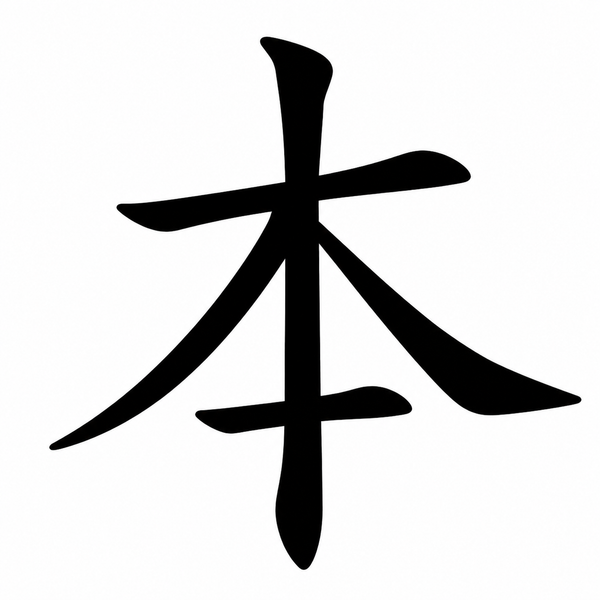
In treating disease, one must seek the root.
Yin and yang describe the movement of nature itself.
All transformation arises from them, and all life depends on their balance.
The “palace of spirit brilliance” refers to the source from which yin and yang emerge.
Before division, this source is called the Great Ultimate, the Taiji.
From the Taiji, lighter Yang rises to become Heaven,
and heavier Yin descends to become Earth.
Zhou Yi; The Great ultimate Taiji, is where the Basic qi is still blending or swirling before Heaven and Earth are
divided.
Shou Wen; The Basic qi divides. The light , clear, Yang part becomes Heaven.
The heavy, unclear, Yin part becomes Earth.
Basic qi is related to the cycles of birth, death, and rebirth.
Hou Han Shu; All living things have Qi, they are born and then they die. This is
the common cycle of Heaven and Earth. This is nature. Death is when the Basic
qi leaves the body and the Hun disperses, returning to the Root, returning to
the beginning, returning to the cycle.
Form the following it is clear that all disease must be treated by searching for the source. The source manifests as Yin and Yang.
All living beings receive this qi.
When the basic qi gathers, there is life.
When the basic qi disperses, there is death.
This is the common cycle of Heaven and Earth.
Because disease arises from imbalance in this movement,
treatment must search for the root of the imbalance,
not merely the name of the disorder.
In clinical practice, the classics instruct us even more precisely.
In Chapter 74 of the Yellow Emperor’s Classic it is said twice:
Carefully attend to the appropriate qi, and do not miss the disease trigger.
Carefully investigate the disease trigger, and do not miss the appropriate qi.
The term translated as “disease trigger” is 病機 (bìng jī).
病 means disease.
機 means pivot, mechanism, or the subtle turning point.
病機 therefore means
the dynamic mechanism of illness,
the hidden movement by which the disease develops.
It does not refer to a label.
It refers to the unfolding process.
The text teaches that there is a reciprocal relationship between
正氣 — the upright qi
病機 — the mechanism of disease
If the mechanism is understood, the upright qi will not be harmed.
If the upright qi is understood, the mechanism will not be mistaken.
This is the basis of treatment.
For this reason, the first priority in clinical work is to observe the state of Yang qi.
One must carefully examine the Tai yang, Shao yang, and Yang ming Conformations. If disorder is present there, it must be treated first.
The reason is simple.
Suppose a patient is diagnosed in Western medicine with rhinitis.
If we assume Liver qi stagnation and treat only that,
while ignoring a Yang ming bowel pattern arising from Shao yin dryness,
we may drive heat inward, injure the fluids,
and create vexation, agitation, or heat disease.
The name of the disease did not guide the treatment.
The mechanism did.
Therefore we do not treat Lupus, Hashimoto, Lyme, or Crohn’s.
We treat Tai yang disease.
We treat Shao yang constraint.
We treat Yang ming repletion.
We treat Shao yin deficiency.
We treat the movement of qi as it is at this moment.
This is the method of the classics.
This is the meaning of seeking the root.
This is the difference between treating the name of a disease
and treating the Dao of the disease.